
Beautiful Plants For Your Interior
Beautiful Plants For Your Interior
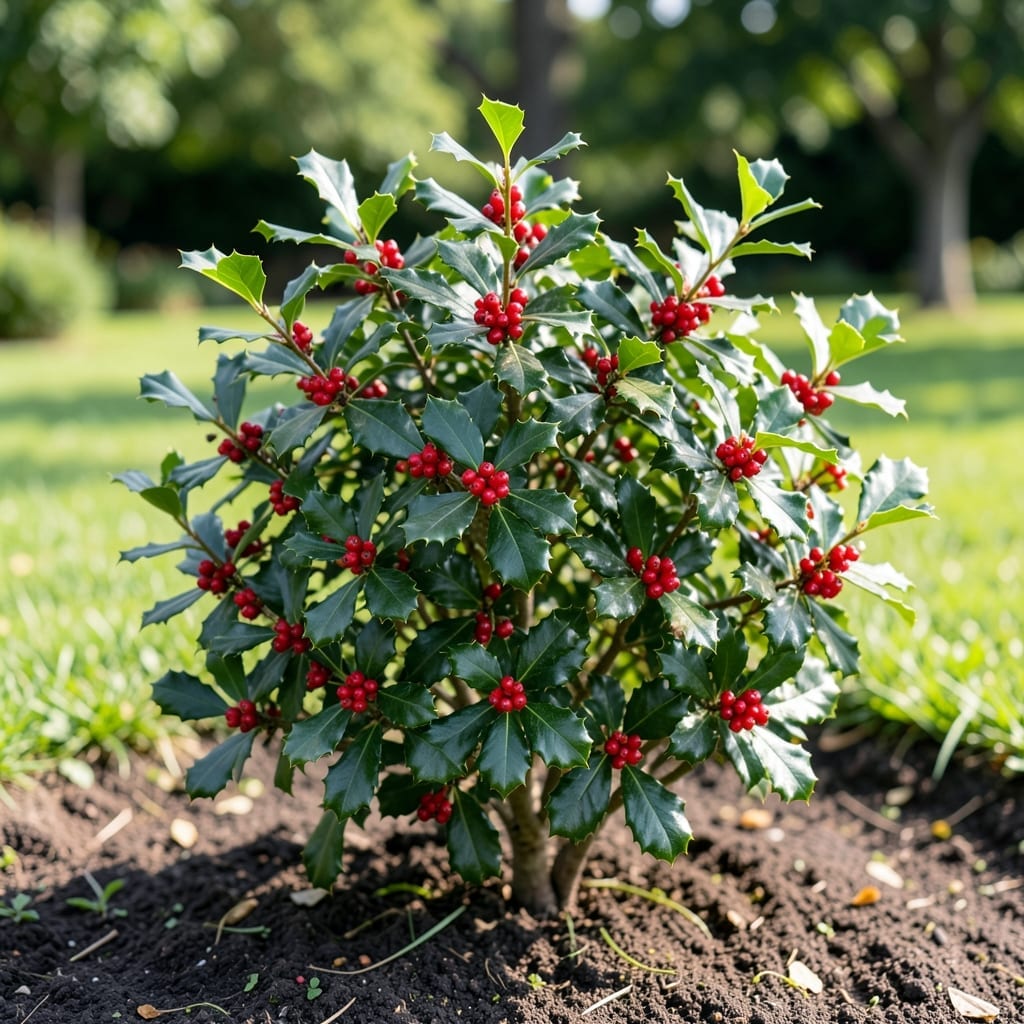
Want vibrant red berries on your 🌿 Holly Bush every winter? The secret lies in understanding the difference between male and female plants.
I learned the hard way that planting only female hollies leaves you with no berries. You need both for pollination to happen.
Male holly bushes produce pollen, while females create those iconic berries we all love. But they must be planted properly to work together.
Discover how to pair them effectively for a stunning year-round display. Your garden will thank you for this simple but game-changing knowledge.
If you’ve ever wondered why your female holly bush isn’t producing berries, I’ve got the answer. Holly plants are dioecious, meaning they have separate male and female individuals. This is nature’s way of ensuring cross-pollination.
The male holly bushes produce pollen-rich flowers, while the females develop the beautiful red berries we associate with holiday decor. But here’s the catch: the females need that pollen from males to create berries.
Holly bushes require male and female plants within 50 feet of each other for successful pollination and berry production.
Without a male holly nearby, your female plant will bloom but won’t set fruit. I learned this the hard way my first season when I planted three female hollies with no males in sight. Not a single berry appeared that winter.
The pollination process is fascinating. Male flowers release pollen that’s carried by wind or insects to the female flowers. Each female flower that’s successfully pollinated will develop into a bright red berry by fall.
It’s important to note that only female hollies produce berries. The males exist solely to provide pollen. This is why garden centers often sell them in pairs or recommend planting ratios of 1 male to 5-10 females.
Timing matters too. Both plants need to bloom simultaneously for pollination to occur. Most holly varieties bloom in late spring, so planting in early spring gives them time to establish before flowering season.
The berries themselves are more than just decorative. They provide winter food for birds and add vibrant color to your landscape when most other plants are dormant. A well-pollinated female holly can produce thousands of berries.
Remember that not all holly varieties are created equal. Some are self-pollinating, but most of the popular types like American Holly and English Holly require separate male and female plants. Always check the plant tag.
For the best results, I recommend planting your male and female hollies within 30-50 feet of each other. Any farther apart, and the pollen might not reach its destination. Also, ensure they receive full sun to partial shade for optimal health and berry production.
To get those vibrant red berries, you need the right male and female holly pairings. I’ve found that ‘Blue Prince’ and ‘Blue Princess’ work beautifully together in most gardens.
These cultivars are perfect partners because they bloom at the same time, ensuring successful pollination. Without a compatible male, female hollies won’t produce berries, no matter how healthy they look.
🌿 Holly Pairing Guide
Plant 1 male holly for every 5-10 female bushes within 50 feet for best berry production.
The ‘China Boy’ and ‘China Girl’ pair is another excellent choice, especially for warmer climates. They thrive in USDA zones 7-9 and produce abundant berries when paired correctly.
For smaller gardens, ‘Soft Touch’ (female) and ‘Blue Boy’ (male) are dwarf varieties that stay compact while still delivering a stunning berry display. Perfect for tight spaces!
Remember, spacing matters. Keep your hollies 10-15 feet apart to allow for proper air circulation and growth. Crowding can lead to poor pollination and increased disease risk.
Lastly, always check the mature size of your chosen varieties. Some hollies can grow 15-20 feet tall, so plan accordingly to avoid overcrowding your garden space.
With the right pairings and care, your hollies will reward you with years of beautiful berries 🌿