
Beautiful Plants For Your Interior
Beautiful Plants For Your Interior
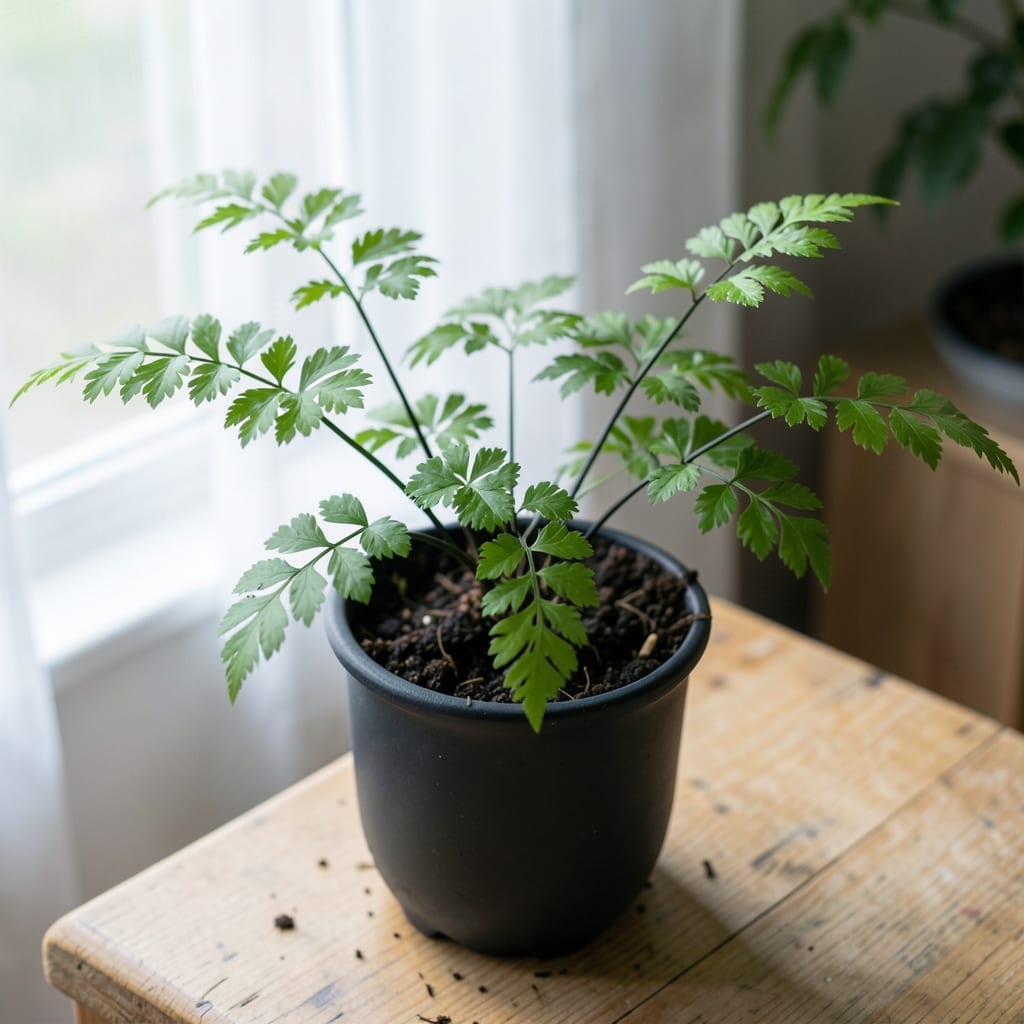
Delicate fronds that look too fancy to survive indoors—yet they do. I’ve kept maidenhair ferns thriving for years with just the right balance of light and moisture.
They demand consistent humidity and hate dry soil, but reward you with lush green that makes any room feel like a spa. Fair warning: they’ll let you know when they’re unhappy.
📚 In This Guide
This delicate beauty thrives indoors with the right approach—follow these steps for lush, elegant foliage.
Place your maidenhair fern in a spot with bright, indirect light—a north or east-facing window is perfect. Direct sunlight scorches the delicate fronds, while deep shade causes sparse growth. I position mine on a side table about 3 feet from a window where it gets gentle morning sun.
This plant prefers consistent temperatures between 60-75°F. Avoid drafty windows, vents, or doors where sudden temperature swings occur. You’ll notice stress immediately: fronds turn brown and crisp at the edges when conditions fluctuate too much.
Keep the soil consistently moist but never soggy. Water when the top ½ inch of soil feels dry to your fingertip. I use a long-spout watering can to deliver water directly to the base, avoiding wetting the fronds which can encourage fungal spots.
Use room-temperature water—cold water shocks the roots. The goal is evenly moist soil that drains freely. If the pot sits in a saucer, empty any standing water after 15 minutes to prevent root rot. You’ll develop a rhythm: mine needs water every 3-4 days in summer, less in winter.
Maidenhair ferns demand high humidity—aim for 50% or higher. I place my pot on a pebble tray filled with water to create a humid microclimate. The pot should sit above the water line, not in it. Grouping plants together also boosts local humidity effectively.
Use a well-draining potting mix with plenty of organic matter. I blend equal parts peat moss, perlite, and compost for the ideal texture. The mix should hold moisture yet allow excess water to flow through quickly. Repot every 2-3 years or when roots emerge from drainage holes.
Remove any brown or yellow fronds immediately with clean, sharp scissors. Cut at the base where the stem meets the rhizome. This isn’t just about looks—dying fronds drain energy from the plant. I do a thorough cleanup every 4-6 weeks to keep mine looking its best.
Feed monthly during active growth with a balanced liquid fertilizer diluted to half strength. Over-fertilizing causes brown leaf tips—a common mistake with maidenhairs. You’ll see new growth emerge from the center in a tight, circular pattern when conditions are right.
Real talk: this fern tells you exactly what it needs. Drooping fronds mean it’s thirsty, while brown tips signal low humidity or fertilizer burn. Adjust quickly and it bounces back beautifully.
Mastering the details makes all the difference with this delicate plant.
Lighting Precision: That 3 feet from a window placement in Step 1 isn’t arbitrary. Too close and you risk scorching those lacy fronds, too far and you’ll get leggy growth. I learned this the hard way after losing two ferns to sunburn before finding the sweet spot.
Watering Technique: The 15 minutes rule for emptying saucers in Step 2 is non-negotiable. I once left water standing overnight and woke up to yellowing fronds. Use your fingertip to test that top ½ inch of soil—this is more reliable than any moisture meter I’ve tried.
Humidity Hack: For the 50% or higher humidity requirement in Step 3, I’ve found that a pebble tray works better than any humidifier. The key is keeping the pot elevated above the water line. Grouping with other plants creates a microclimate that my fern absolutely thrives in.
Feeding Caution: That half strength fertilizer in Step 4 isn’t just a suggestion. Over-fertilizing is the fastest way to get those dreaded brown tips. I dilge more than the recommended amount once and spent weeks nursing my plant back to health.
Keep the soil consistently moist but not soggy. Water when the top inch of soil feels dry—typically every 2-3 days in warm climates or weekly in cooler conditions. Use room-temperature water to avoid shocking the roots.
Brown leaves often signal low humidity or underwatering. Mist the leaves daily or use a pebble tray to boost humidity. Trim brown fronds to encourage new growth and check for crispy edges, a sign of dry air.
They prefer bright, indirect light but can tolerate low light temporarily. Prolonged low light may cause leggy growth or yellowing fronds. Rotate the plant occasionally for even exposure.
Use a well-draining, peat-based mix with perlite or sand to improve aeration. Avoid heavy soils that retain too much moisture, which can lead to root rot.
Trim dead fronds, repot in fresh mix if root-bound, and ensure consistent moisture and humidity. Place it in indirect light and avoid fertilizing until it shows signs of recovery.