
Beautiful Plants For Your Interior
Beautiful Plants For Your Interior
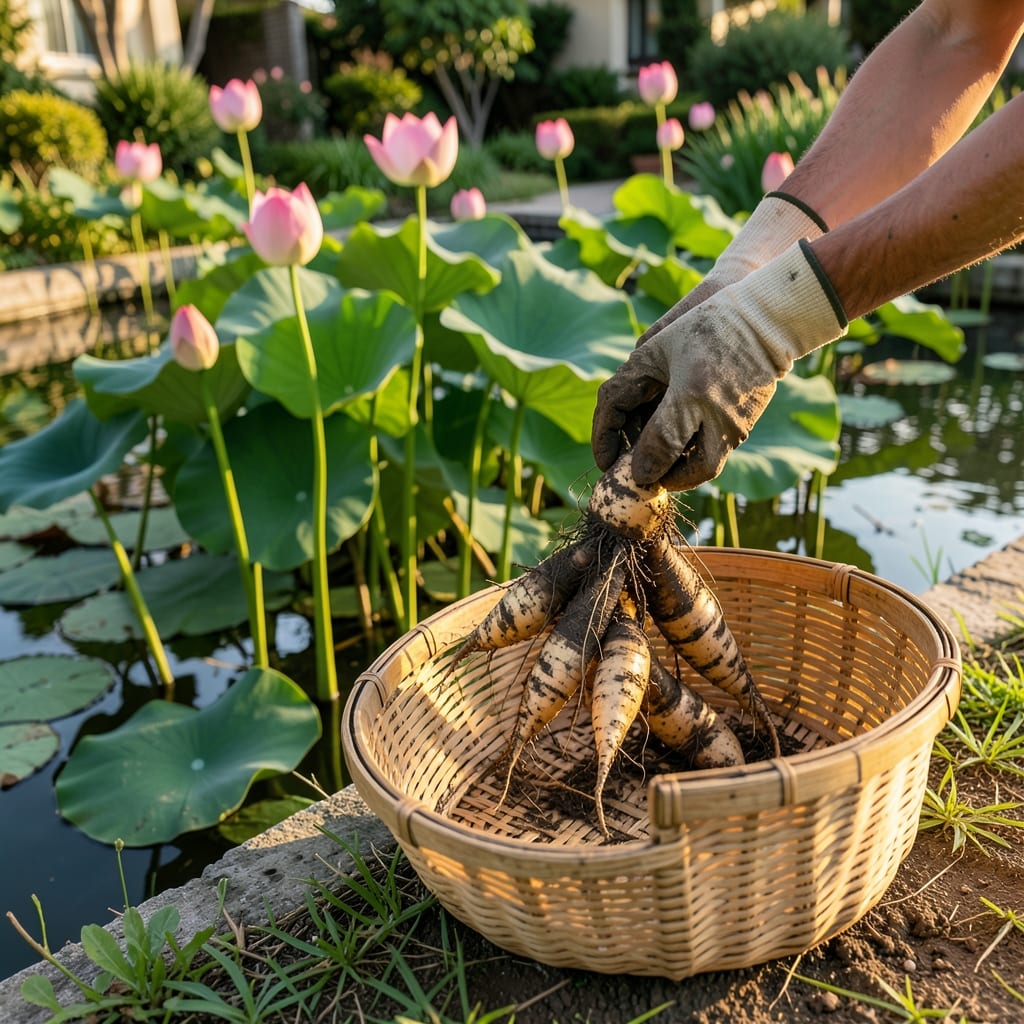
Lotus root candy is a traditional Asian sweet made from lotus root starch, offering a chewy texture and mild sweetness. It’s often used in desserts and valued for its digestive benefits.
I love how this treat connects ancient traditions to modern tastes. The starch extraction process preserves the root’s natural properties, giving it a unique jelly-like consistency. Many enjoy it as a light snack or dessert pairing, especially during festivals. Its gentle sweetness makes it a favorite for all ages. ✨
💡 In This Article
The process begins with fresh lotus roots, which are peeled and finely grated to release their starchy liquid. This milky extract is then filtered through cheesecloth to remove fibers, leaving behind pure lotus root starch that settles at the bottom after several hours. 🔥
Traditional methods involve pressing the wet starch into molds—often shaped like lotus flowers or small cakes—before steaming. The steaming process at 212°F for 30-45 minutes gelatinizes the starch, creating that signature translucent, jelly-like texture. Some regional variations add osmanthus flowers or red bean paste for extra aroma.
What makes this technique special is its simplicity. No artificial binders or preservatives are needed because lotus root starch naturally contains amylopectin, a polysaccharide that provides excellent gelling properties. This is why the candy holds its shape so well, even when sliced thin. ✨
Historically, this candy was a luxury item in imperial courts due to the labor-intensive extraction. Today, it remains a staple in Chinese New Year celebrations, symbolizing prosperity. The color ranges from ivory to pale pink, depending on whether beetroot juice or other natural dyes are added during production.
Temperature control is crucial during drying. The cakes are often sun-dried for 2-3 days or placed in low-temperature ovens at 140°F to remove excess moisture while preserving the chewy texture. This final step determines whether the candy will be soft and pliant or slightly firmer. ⚡
It has a mild, naturally sweet flavor with a subtle earthy note from the lotus root. The texture is chewy and jelly-like, similar to mochi but slightly firmer. Many compare it to a delicate marshmallow consistency.
When stored in an airtight container at room temperature, it lasts up to 2 weeks. For longer storage, refrigerate for up to 1 month or freeze for 3 months. Avoid moisture to prevent sticking.
Yes! You’ll need fresh lotus root, cheesecloth, and a steamer. The most labor-intensive part is grating and filtering the starch, but no specialized equipment is required. A fine-mesh sieve works as a cheesecloth substitute.
In Chinese culture, lotus symbolizes purity and prosperity. Its round shape represents family unity, making it popular for celebrations like Chinese New Year. The candy’s gold or pink hue also adds festive color to dessert tables.
Lotus root starch is naturally gluten-free, making this candy a safe option. However, always check store-bought versions for cross-contamination if you have celiac disease.