
Beautiful Plants For Your Interior
Beautiful Plants For Your Interior
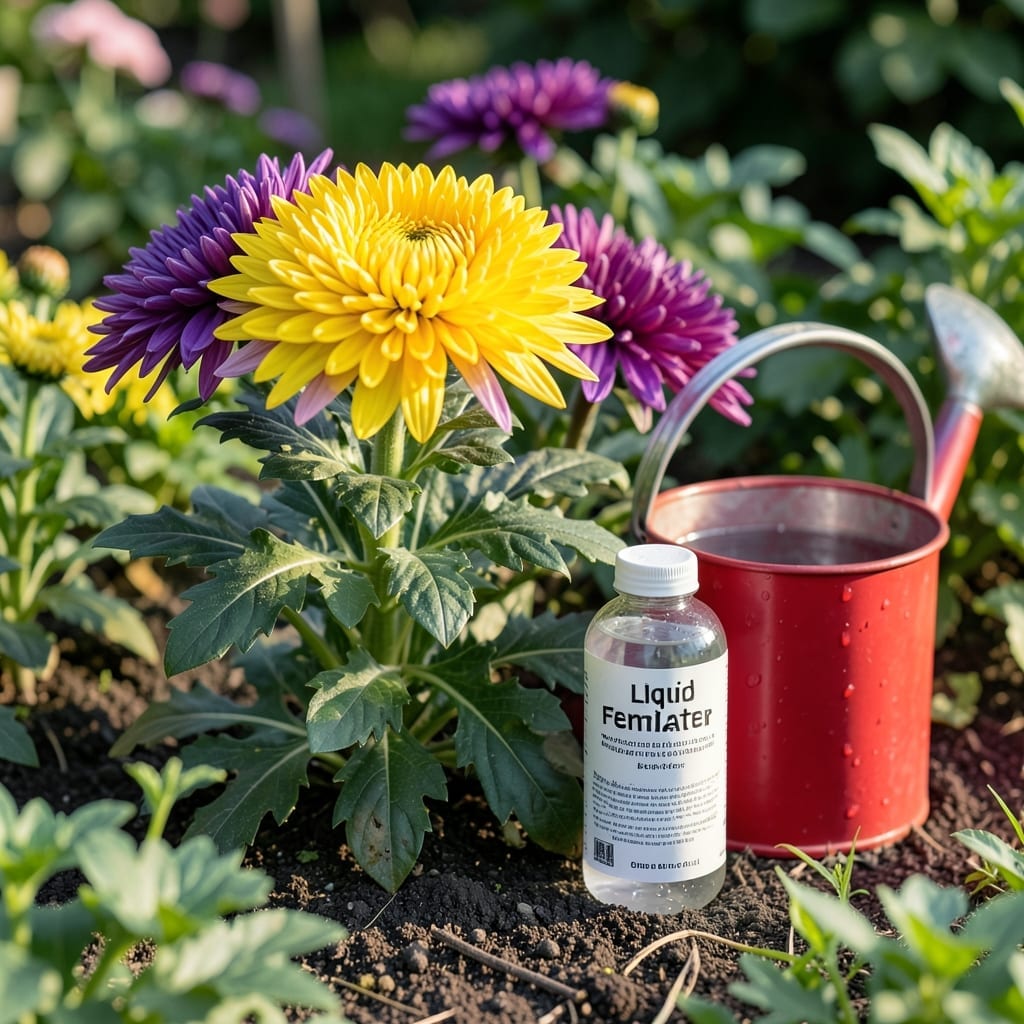
Want your Chrysanthemum 🌼 to burst with vibrant fall color? The right liquid fertilizer can make all the difference in achieving those stunning, long-lasting blooms.
I’ve tested countless methods, and the proper feeding schedule transforms these hardy perennials. Whether you’re a seasoned gardener or just starting out, understanding how to nourish your mums will give you that show-stopping display.
Discover the simple yet powerful techniques that will have your neighbors asking for your secret. Let’s get those mums thriving like never before.
Choosing the right liquid fertilizer for your chrysanthemums can feel overwhelming, but it doesn’t have to be. I’ve found that mums thrive best with balanced NPK ratios like 5-10-5 or 10-10-10, which support both foliage growth and flower production. 🌼
The phosphorus-heavy formulas are my go-to for pre-bloom stages, as they encourage vibrant, abundant flowers. Meanwhile, organic options like fish emulsion or seaweed extracts provide a gentler approach for those preferring natural solutions.
| Fertilizer Type | NPK Ratio | Best For | Application Time |
|---|---|---|---|
| Balanced Synthetic | 10-10-10 | Overall Growth | Early Spring |
| High Phosphorus | 5-10-5 | Flowering Boost | Pre-Bloom |
| Fish Emulsion | 2-4-1 | Organic Growth | Every 4 Weeks |
| Seaweed Extract | 1-0-2 | Root Health | Early Summer |
For early spring, I recommend a 10-10-10 to kickstart growth. As buds form, switch to a 5-10-5 to maximize bloom potential. This shift ensures your mums get the right nutrients at the right time.
Organic fertilizers like fish emulsion are excellent for sustained feeding without harsh chemicals. They’re especially useful if you’re growing mums in container gardens where nutrient depletion happens faster.
If you’re using synthetic fertilizers, be mindful of over-application. Stick to the recommended dilution rates—usually 1 tablespoon per gallon of water—and apply every 2-4 weeks during the growing season.
I’ve noticed that liquid fertilizers work faster than granular types because they’re immediately available to the roots. This is perfect for giving your mums a quick nutrient boost before a big bloom cycle.
Timing matters just as much as the type. Apply in the early morning to allow foliage to dry before the heat of the day. Avoid fertilizing during drought conditions or when your mums are stressed from extreme temperatures.
For those who prefer low-maintenance options, slow-release liquid fertilizers can be a great compromise. They feed your mums gradually, reducing the risk of nutrient burn while still delivering consistent results.
Finally, always water your mums thoroughly before and after applying liquid fertilizer. This helps distribute nutrients evenly and prevents root damage from concentrated solutions. 🌿
Applying liquid fertilizer to your chrysanthemums is straightforward when you follow a few key steps. I always start by watering the soil thoroughly before adding fertilizer to prevent root burn and ensure even distribution. 🌼
For best results, I use a dilution ratio of 1 tablespoon per gallon of water, applying it every 2-4 weeks during the growing season. This frequency gives mums the steady nutrient supply they need without overwhelming them.
I always apply fertilizer in the early morning when temperatures are cooler and plants can absorb nutrients most effectively. Avoid applying during the hottest part of the day or when rain is expected, as this can wash away the fertilizer before it’s absorbed.
For container-grown mums, I reduce the dilution slightly since pots can concentrate nutrients. Watch for yellowing leaves or stunted growth, which may indicate over-fertilization. If this happens, flush the soil with water to remove excess salts.
Remember, foliar feeding (spraying fertilizer on leaves) can be effective but should be done early in the day to allow leaves to dry. I prefer soil application for mums, as it provides more consistent results and reduces the risk of leaf damage.
Finally, stop fertilizing about 6 weeks before your expected first frost. This gives your mums time to harden off and prepare for dormancy without encouraging new, tender growth that could be damaged by cold weather. 🌿