
Beautiful Plants For Your Interior
Beautiful Plants For Your Interior
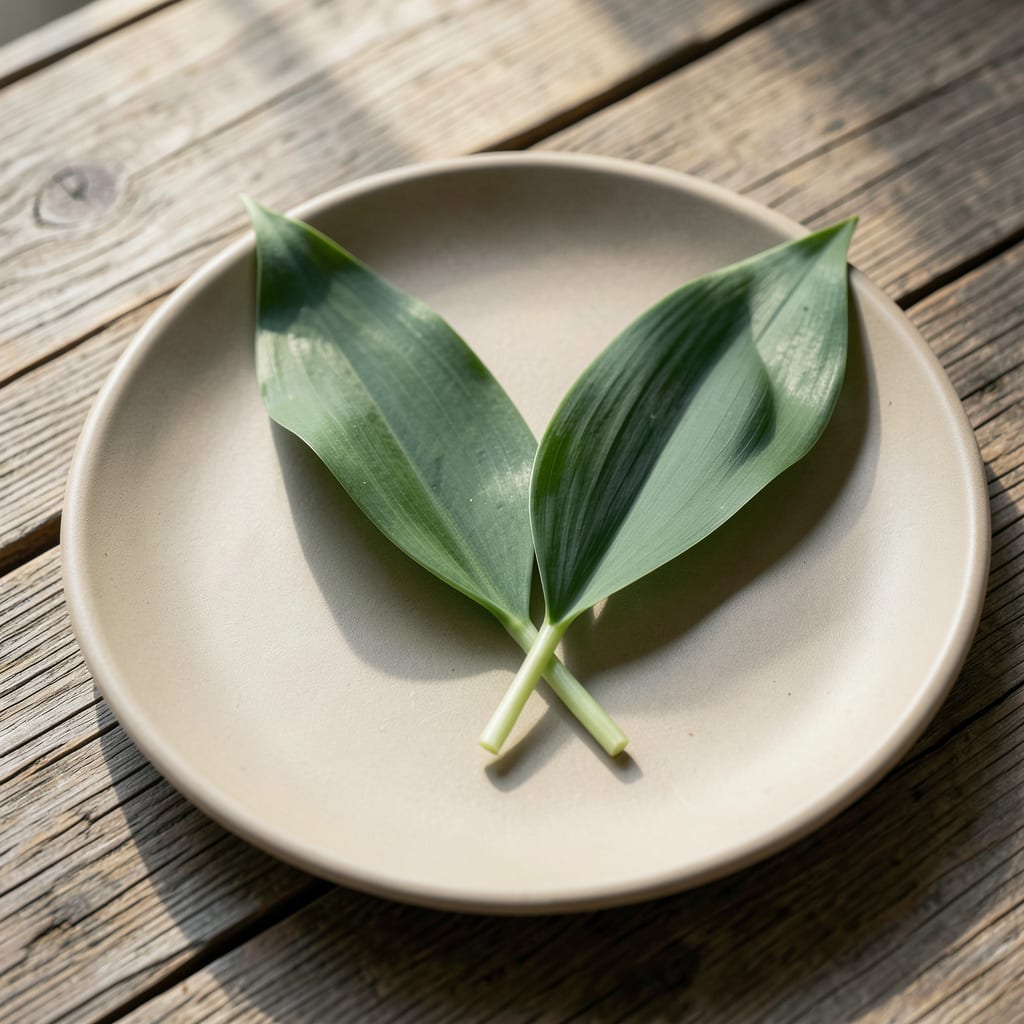
Those delicate green leaves can fool even experienced gardeners. I once nearly confused lily of the valley with wild garlic until I noticed the key differences in leaf shape and growth pattern.
Safe identification protects your garden and family. The right knowledge means you’ll spot the toxic lookalikes before they cause trouble, and you’ll appreciate the real thing even more.
📚 In This Guide
Here’s the method I trust to distinguish this plant from dangerous lookalikes in any garden setting.
Start by observing the leaf arrangement at the base of the plant. True lily of the valley features two broad, lance-shaped leaves that emerge from a single basal sheath, creating a distinct V-shape where they meet the stem. This is your first visual confirmation.
Each leaf measures about 4-8 inches long and 1-2 inches wide, with a smooth, glossy surface and parallel veins running lengthwise. The edges are entire—not serrated or lobed. I check for this pattern before considering any other characteristics.
Look at the growth pattern. Lily of the valley spreads via underground rhizomes, forming dense colonies. The flowering stems rise separately from the leaf pairs, typically reaching 6-12 inches tall.
These stems are smooth and unbranched, bearing a cluster of bell-shaped white flowers in spring. If you see branching stems or different flower structures, you’re likely looking at an imposter. I always trace stems back to their origin to confirm this growth habit.
Wild garlic and wild onion often get mistaken for lily of the valley. The key difference: these impostors have hollow, round stems and a distinct onion or garlic smell when crushed. True lily of the valley stems are solid and odorless.
Another common confusion is with Solomon’s seal, which has alternate leaves along the stem rather than the basal pair. I crush a leaf between my fingers—if it smells strongly, it’s not lily of the valley. This simple test prevents most identification errors.
Timing matters. Lily of the valley leaves emerge in early spring and persist through summer, while many lookalikes appear later. The flowers, when present, hang from one side of the stem like tiny white bells.
After flowering, small red berries develop—another confirmation point. I make it a habit to revisit the plant across seasons to observe these changes. This temporal pattern is unique to lily of the valley and helps eliminate doubt.
For absolute certainty, examine the leaf attachment. True lily of the valley leaves wrap around the stem at their base, creating a sheath. This is visible where the two leaves meet the flowering stem.
I also check the underside of leaves for color—lily of the valley leaves are uniformly green on both sides. Any white variegation or different coloration suggests another plant entirely. This final inspection gives me complete confidence in my identification.
These practical insights will help you confidently distinguish this plant from its dangerous imposters.
Leaf Pattern Priority: In Step 1, focus first on the V-shaped basal leaf arrangement—this is the most reliable initial indicator. The 4-8 inch length and 1-2 inch width measurements are secondary confirmations. I’ve found that even slightly immature specimens maintain this distinctive V-shape at the base.
Stem Verification: Step 2’s emphasis on unbranched stems is critical. Solomon’s seal, a common lookalike, often has stems that zigzag between leaf nodes. Always trace the stem from base to tip—true lily of the valley stems rise straight and smooth, bearing flowers only at the top.
Scent Test: The smell check in Step 3 is your fastest way to rule out wild garlic or onion. Crush a stem between your fingers—if there’s any onion-like aroma, discard the plant immediately. True lily of the valley stems remain odorless when crushed, and the leaves maintain a mild, fresh scent.
Seasonal Confirmation: Step 4’s timing clues are often overlooked. If you’re examining a plant in late summer or fall with no signs of red berries or prior flowering, it’s likely not lily of the valley. The early spring emergence of leaves is another key temporal marker that separates it from most lookalikes.
Yes, all parts of the lily of the valley plant, including the leaves, are highly toxic if ingested. They contain cardiac glycosides, which can cause nausea, irregular heartbeat, or even be fatal. Always handle with care and keep away from pets and children.
Lily of the valley leaves are smooth, lance-shaped, and grow in pairs along the stem. Edible lookalikes like wild garlic or ramps have a strong onion scent and hollow stems. Never eat a plant unless you’re 100% certain of its identity.
The leaves typically emerge in early spring, often before the flowers. They stay green through the growing season and may yellow or die back in late summer or fall.
Seek immediate medical attention or call Poison Control (1-800-222-1222 in the U.S.). Do not induce vomiting unless instructed by a professional. Bring a sample of the plant for identification.
