
Beautiful Plants For Your Interior
Beautiful Plants For Your Interior
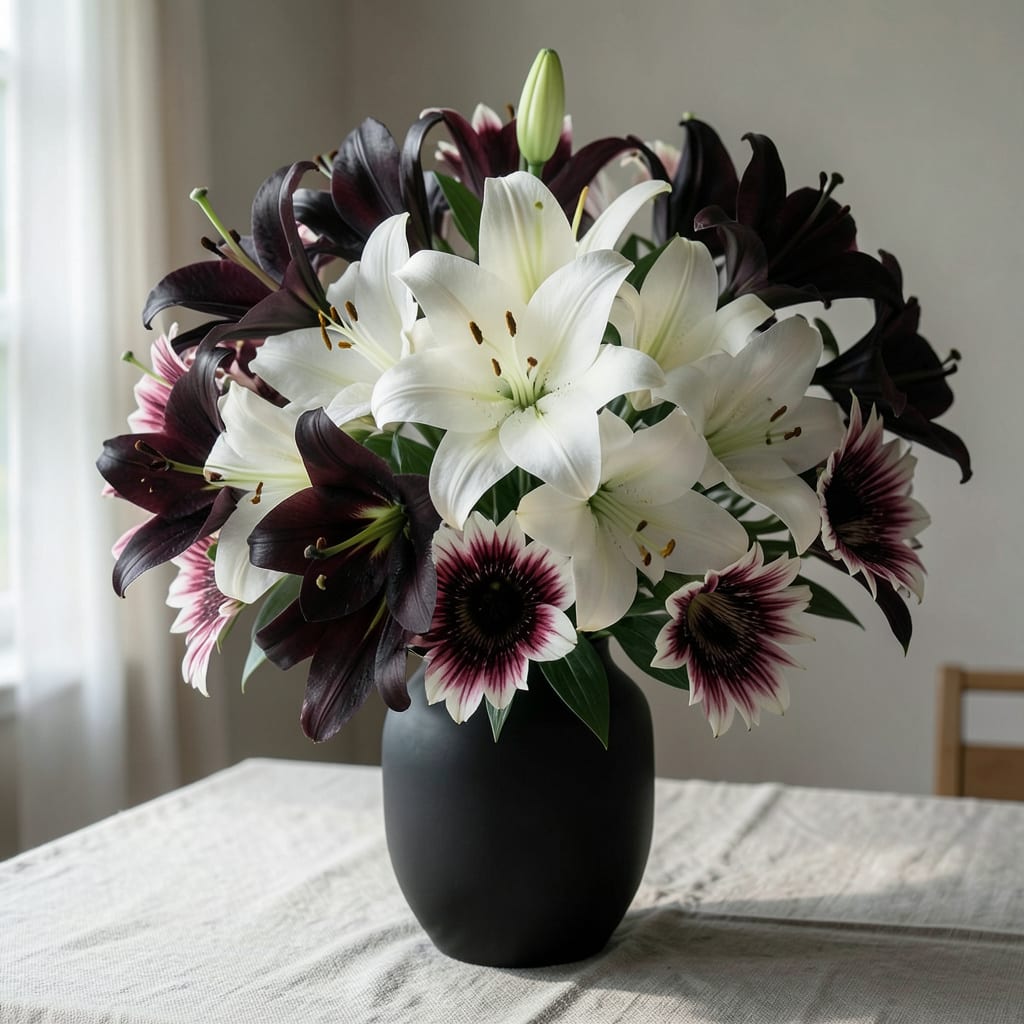
Black and white lilies bring dramatic elegance to any garden space. I’ve found their bold contrast creates a sophisticated look that stands out against greenery and other blooms.
These varieties thrive in well-draining soil with 6-8 hours of sunlight daily. With minimal care—consistent watering and occasional feeding—they’ll reward you with striking, long-lasting flowers year after year.
📚 In This Guide
Here’s my method for creating a bold, dramatic display that stops garden visitors in their tracks.
Choose pure white lilies like Candidum or Casa Blanca for the lightest tones. Pair them with near-black varieties such as Onyx or Black Beauty—their deep maroon-purple blooms read as black from a distance. For extra impact, add Stargazer with its dark pink centers to bridge the contrast.
I always plant in odd-numbered clusters (3 or 5 bulbs) for natural-looking groupings. This avoids the stiff, symmetrical look that can make dramatic plantings feel unnatural. Space bulbs 8-12 inches apart to allow for mature spread.
Select a location with full sun to partial shade—lilies thrive with 6+ hours of direct sunlight daily. The soil should be well-draining but rich in organic matter. I amend heavy clay or sandy soil with 2-3 inches of compost worked into the top 12 inches of bed.
Check soil pH; lilies prefer slightly acidic to neutral (6.0-6.5). If your soil tests outside this range, mix in sulfur to lower pH or lime to raise it. Avoid low-lying spots where water pools—lily bulbs will rot in soggy conditions.
Dig holes 4-6 inches deep—about three times the height of the bulb. Place bulbs pointy-side up (the flat side goes down). If you’re unsure, plant them on their sides; they’ll self-correct as they sprout. This is one of the few plants where side-planting actually works.
Cover with soil and water thoroughly to settle the earth and eliminate air pockets. I add a 1-inch layer of mulch to retain moisture and suppress weeds. Don’t pack the soil—lilies need room for roots to establish quickly.
Water deeply once weekly during active growth, increasing to twice weekly in extreme heat. Lilies are drought-tolerant once established but perform best with consistent moisture. Water at the base to keep foliage dry and prevent fungal diseases.
Apply a balanced 10-10-10 fertilizer when shoots emerge in spring, then again after flowering. Deadhead spent blooms promptly but leave foliage until it yellows naturally—this feeds the bulb for next year’s display. The contrast between black and white blooms looks sharpest when plants are healthy and vigorous.
Interplant with low-growing annuals like white alyssum or black mondo grass to extend the color theme. The white alyssum fills gaps at the base while black mondo grass echoes the dark lily blooms. This creates a cohesive look that draws the eye across the entire planting.
Divide clumps every 3-4 years in fall when foliage dies back. Dig up bulbs, separate offsets, and replant immediately. This prevents overcrowding and ensures your black-and-white display remains bold and vibrant for years to come.
Small details make the difference between a good display and a showstopping one.
Selection Insight: In Step 1, when choosing your varieties, remember that Candidum and Casa Blanca offer the purest white tones, while Onyx and Black Beauty deliver that dramatic near-black effect. The contrast works best when you stick to these specific cultivars rather than substitutions.
Planting Precision: For Step 3, those 4-6 inch planting depths aren’t arbitrary. Digging shallower than 4 inches risks exposing bulbs during freeze-thaw cycles, while going deeper than 6 inches may delay sprouting. And here’s what nobody tells you—planting on their sides actually works better than guessing pointy-end-up.
Soil Preparation: The 2-3 inches of compost in Step 2 should be worked into the full 12 inches of soil, not just sprinkled on top. This creates the well-draining yet nutrient-rich environment lilies need. I learned this the hard way after losing several bulbs to waterlogged soil in low spots.
Maintenance Secret: That once-weekly deep watering in Step 4 is more effective than frequent light waterings. It encourages deep root growth, which makes your lilies more drought-resistant. And don’t skip the mulch—it’s the difference between constant weeding and a low-maintenance bed.
Black and white lilies often represent elegance, purity, and transformation. White lilies symbolize innocence and renewal, while dark varieties add drama and sophistication, making them perfect for memorials or striking garden displays.
Plant lilies in early spring or fall for best results. This allows roots to establish before extreme temperatures. Ensure well-draining soil and partial sunlight for optimal growth and vibrant blooms.
Yes! Use a large pot with drainage holes and quality potting mix. Dwarf varieties like ‘Black Out’ or ‘White Triangle’ thrive in containers. Keep soil moist but not soggy, and place in a sunny to partially shaded spot.
This often happens due to excessive sunlight or nutrient deficiencies. Move them to a shadier spot and use a balanced fertilizer. Some dark lilies also lighten as they age—check if it’s natural fading.
Pair them with silver foliage plants like dusty miller or white blooms like baby’s breath for contrast. Or try dark companions like black mondo grass to enhance the dramatic effect.
