
Beautiful Plants For Your Interior
Beautiful Plants For Your Interior
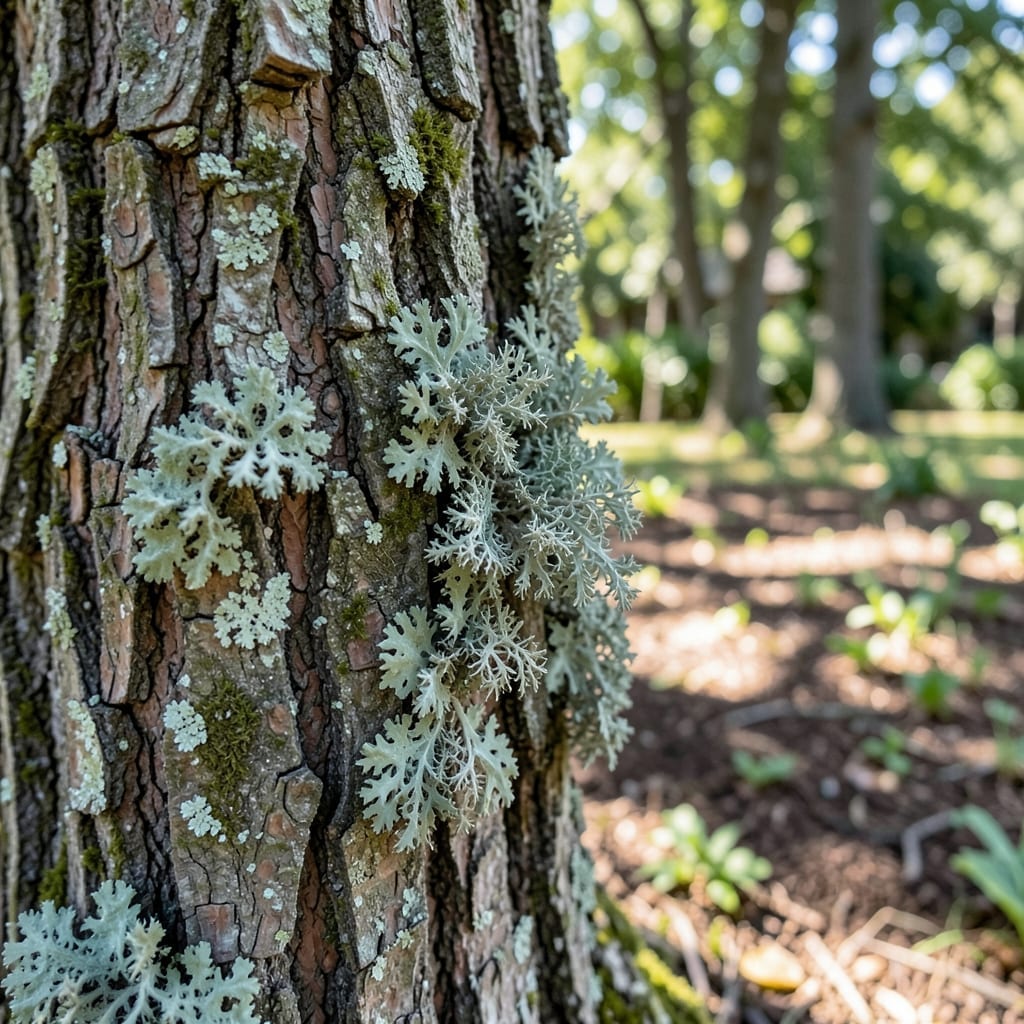
I noticed gray-green patches on my oak last summer and panicked. Turns out, lichen is more common than you think—and it rarely means your tree is in trouble.
These leafy or crusty growths appear when air quality is good and moisture lingers on bark. They don’t sink roots into wood, so they’re not stealing nutrients from your tree. Still, heavy growth can signal slower tree growth worth addressing.
Safe removal starts with a stiff brush or low-pressure water spray. Avoid harsh chemicals, which do more harm to the tree than the lichen itself.
Prevention is simpler: improve air circulation and sunlight around the trunk. Most trees coexist with lichen just fine—no intervention needed.
Lichen thrives on trees due to a combination of environmental and biological factors. These hardy organisms, a symbiotic partnership between fungi and algae or cyanobacteria, appear when conditions are just right. Here’s why you might spot them on your trees:
Lichen flourishes in areas with high humidity, ample rainfall, and clean air. Trees in misty, shaded, or fog-prone regions provide the perfect moist surface for lichen spores to settle and grow. Unlike parasites, lichen doesn’t harm the tree but simply uses it as a stable substrate to absorb water and nutrients from the air.
Older trees with rough, slow-growing bark are prime targets. The bark’s texture offers crevices for lichen to anchor, and the tree’s slower growth means less disruption to the lichen colony. Fast-growing trees with smooth bark (like young maples) are less likely to host lichen.
Lichen is a bioindicator of clean air. It struggles to grow in polluted environments because its algae component is sensitive to sulfur dioxide and other industrial pollutants. If you see lichen on your trees, it’s a sign your local air quality is likely good!
While lichen itself doesn’t damage trees, it often appears on stressed or declining trees. Trees weakened by drought, disease, or poor soil may grow more slowly, giving lichen a stable surface to colonize. However, the lichen isn’t the cause—it’s just taking advantage of the tree’s reduced vigor.
If lichen is growing on your trees, don’t panic—it’s usually harmless but can be unsightly. Here’s how to address it safely and effectively.
Lichen thrives in damp, still environments. Prune overgrown branches to allow better airflow and sunlight penetration. This not only discourages lichen but also promotes tree health. Use clean, sharp pruning shears and remove any crossing or dead branches first.
If your tree is in a consistently wet area, improve drainage around the base. Consider redirecting sprinklers or fixing leaky gutters that may be soaking the trunk. For potted trees, ensure the container has drainage holes and use a well-draining soil mix.
For small patches, gently brush or scrape off lichen with a soft-bristle brush or plastic scraper. Avoid metal tools, as they can damage the bark. Work carefully to prevent injuring the tree. If the lichen is stubborn, a mild soap and water solution (1 tbsp dish soap per gallon of water) can help loosen it—rinse thoroughly afterward.
Note: Never use bleach or harsh chemicals, as they can harm the tree and surrounding plants.
Lichen is more of a cosmetic issue than a health threat, but these steps will keep your trees looking their best!
No, lichen doesn’t damage trees. It’s not parasitic and doesn’t steal nutrients. It simply uses the bark as a surface to grow.
Avoid harsh chemicals like bleach—they can harm the tree. A mild soap solution works better for stubborn patches. Always rinse thoroughly afterward.
Not necessarily. Lichen often appears on slow-growing or mature trees. However, if the tree is already stressed, lichen may colonize more easily.
Improve air circulation and sunlight by pruning branches. Reduce moisture around the trunk and keep your tree healthy with proper care.