
Beautiful Plants For Your Interior
Beautiful Plants For Your Interior
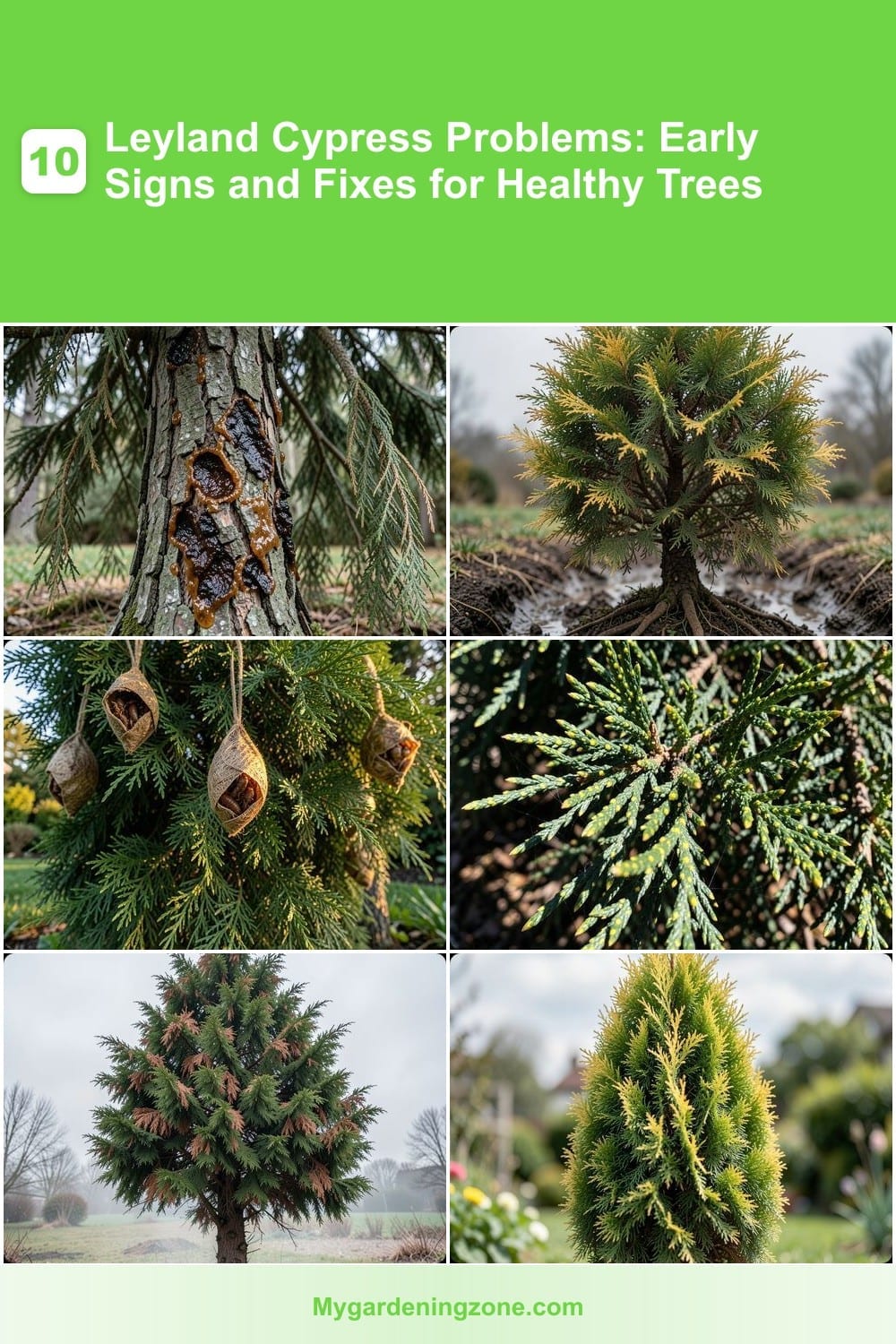
Leyland cypress trees are popular for their fast growth and evergreen beauty, but they’re prone to several common problems. Recognizing early signs of these issues can help you take quick action to save your trees and maintain a healthy landscape.
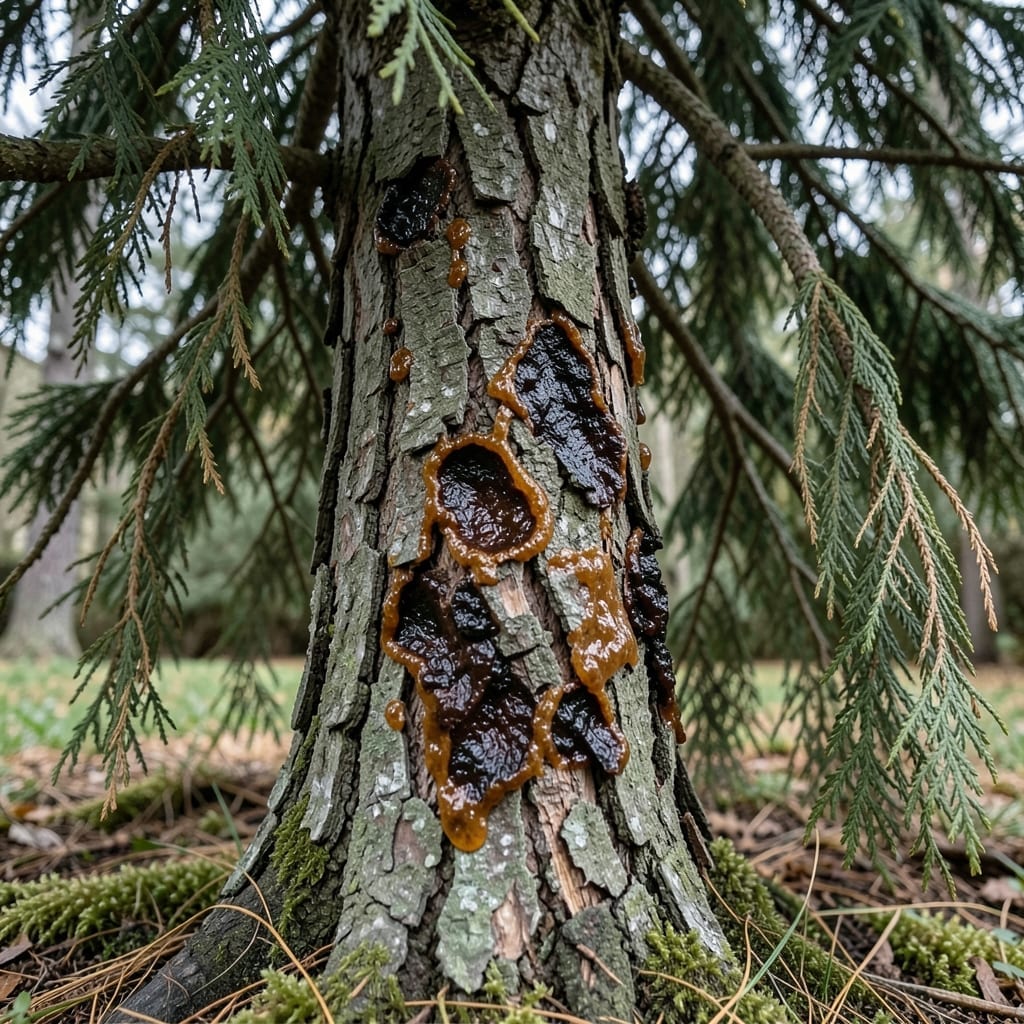
Your Leyland cypress may be in serious trouble if you spot dark, sunken lesions or sticky resin oozing from the bark. These are classic signs of Seiridium canker, the most destructive disease these trees face.
This fungal infection spreads quickly, causing branch dieback and often killing the tree without prompt treatment. It thrives in stressful conditions like drought or poor soil. Prune affected branches immediately—4-6 inches below visible damage—and sterilize tools between cuts to prevent further spread.
Regular inspection, especially after wet weather, helps catch this early. Homeowners with privacy screens should prioritize this check, as dense plantings spread the disease faster. 🌿
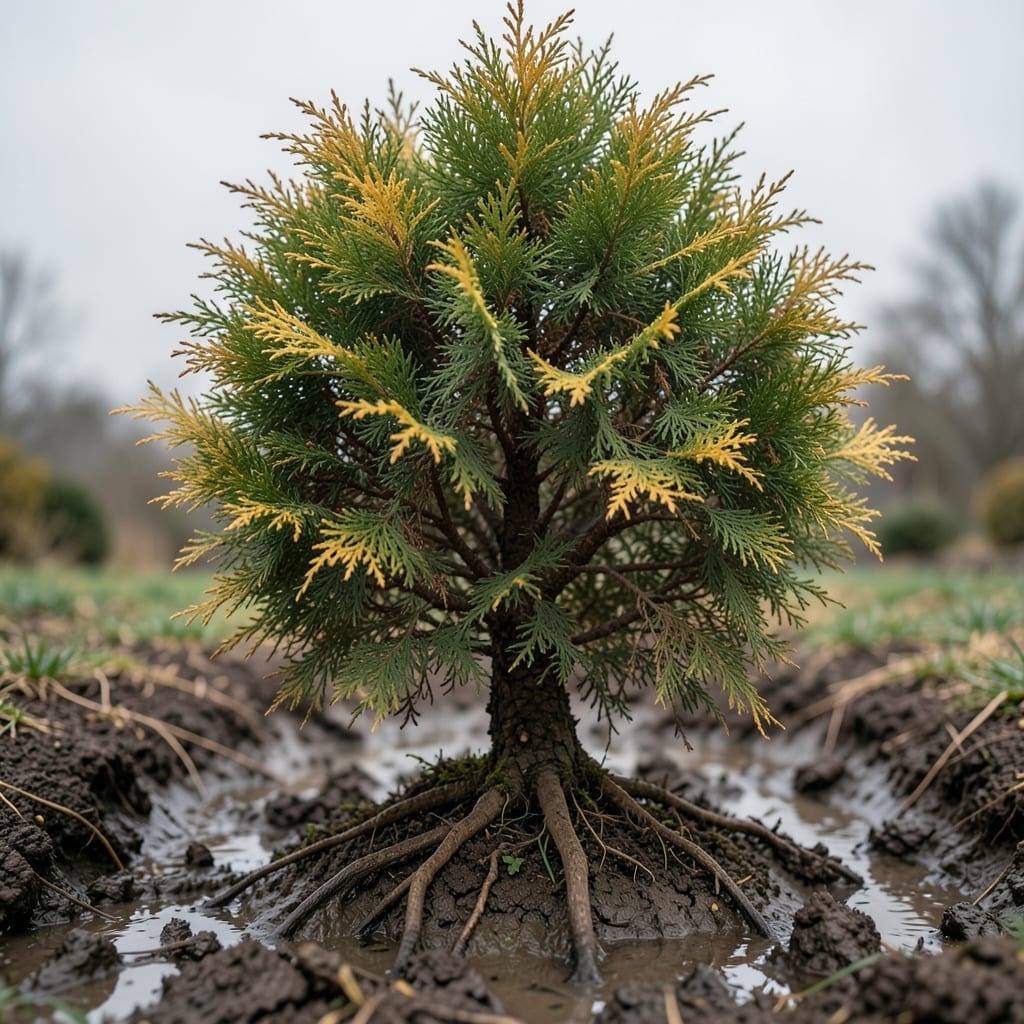
Your Leyland cypress might be drowning even if the soil looks dry on top. This sneaky fungal issue thrives in poorly drained soils, where water pools around roots instead of draining away.
Watch for yellowing leaves that don’t improve with more water, or wilting despite wet conditions. The roots suffocate and rot, unable to absorb nutrients. To prevent this, ensure your planting site has good drainage or amend heavy clay with organic matter.
This problem often catches beginners off guard, as overwatering can look just like underwatering at first glance. 🌱
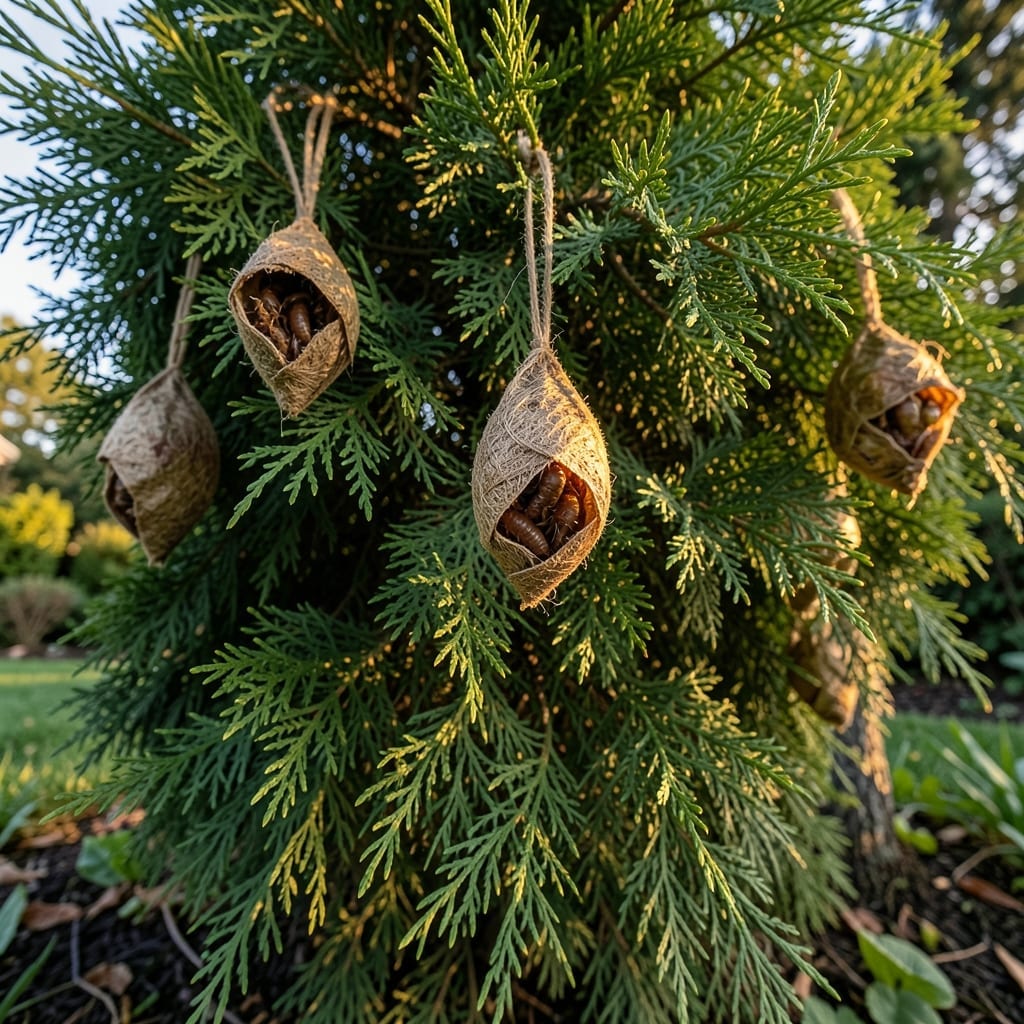
Those odd spindle-shaped bags hanging from your Leyland cypress branches aren’t decorative—they’re a red flag. Bagworms create these protective cases from silk and foliage, and left unchecked, they’ll systematically defoliate your tree.
Each bag can contain hundreds of eggs, and the larvae emerge in spring to feed on needles. Handpick and destroy bags in late fall through early spring before eggs hatch. For severe infestations, apply bacterial insecticide containing Bacillus thuringiensis.
Regular inspection, especially after winter, helps catch these pests early. This simple vigilance saves your cypress from becoming a bagworm buffet. 🌿
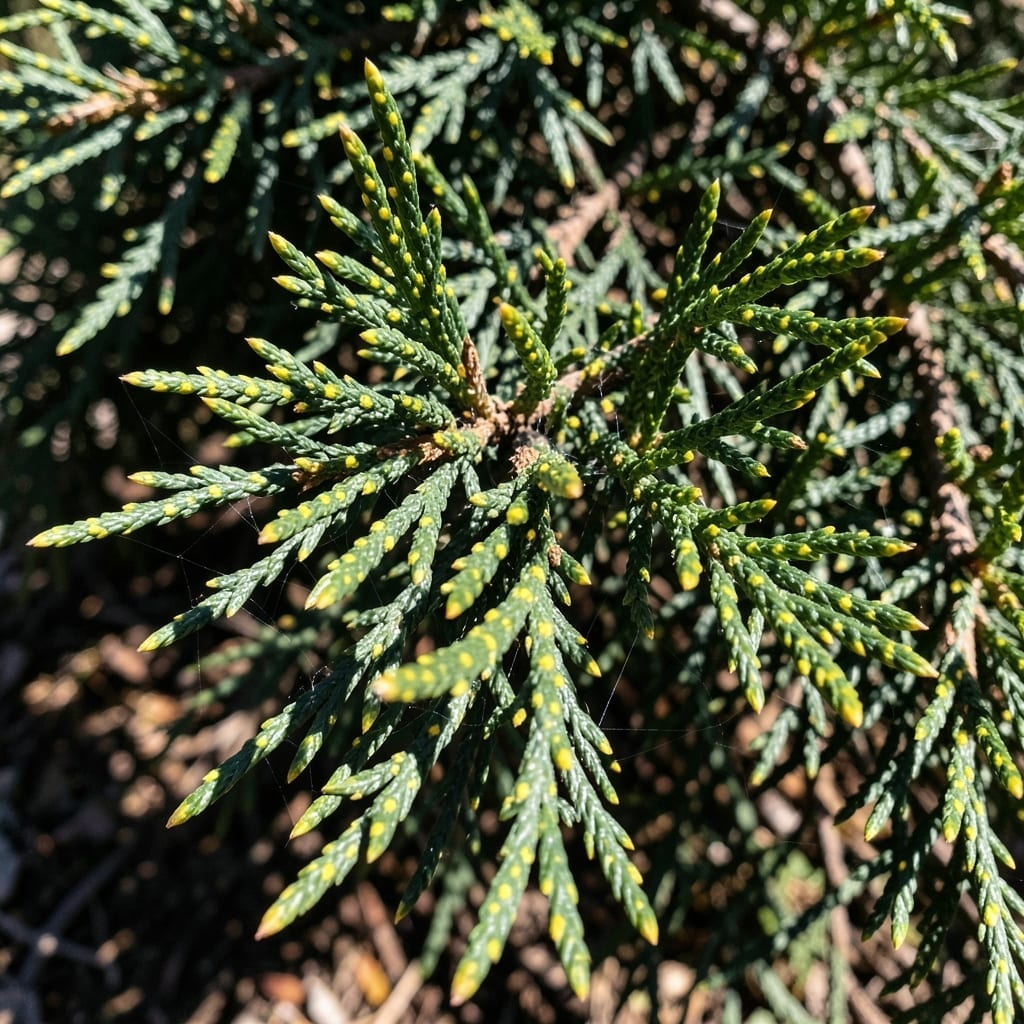
Notice stippled yellow leaves on your Leyland cypress? These tiny dots often signal spider mite activity, a common issue that thrives in hot, dry weather.
These microscopic pests suck plant juices, causing yellow speckling and fine webbing on needles. They multiply rapidly in drought conditions, so regular misting or hose spray can disrupt their lifecycle. Check undersides of foliage for confirmation.
Early detection prevents severe damage. Gardeners in arid climates should monitor closely during summer months to keep these pests in check. 🌿
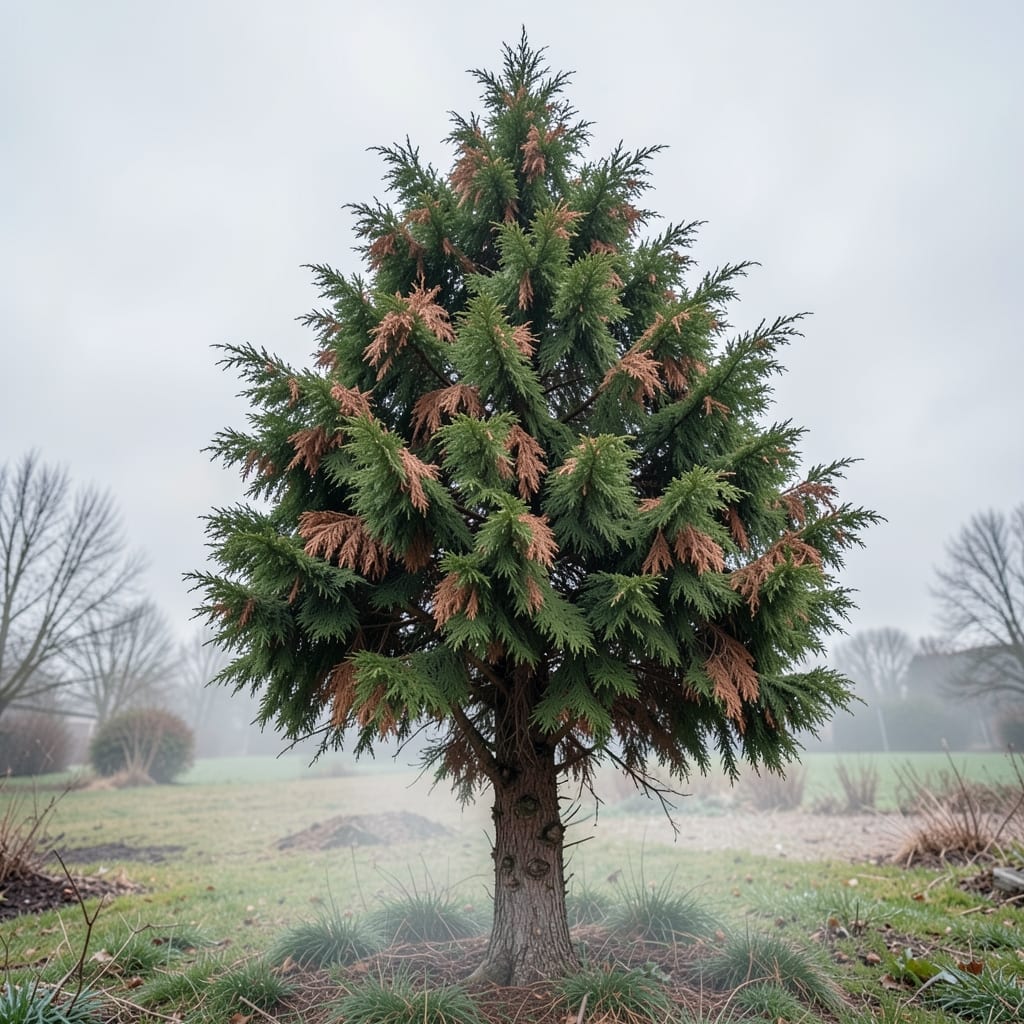
Don’t panic if your Leyland cypress sports brown foliage in spring—it might be winter burn, a common cold-weather injury. This damage appears after harsh winters, especially in exposed or unprotected trees.
Freezing winds and temperature fluctuations desiccate needles, turning them brown. Young or unprotected trees are most vulnerable. The good news: this is often superficial. Trim off dead growth in early spring to encourage new, healthy foliage.
This issue serves as a reminder to protect trees with burlap wraps or windbreaks before winter hits. Gardeners in colder climates should plan ahead to prevent this seasonal setback. 🌿
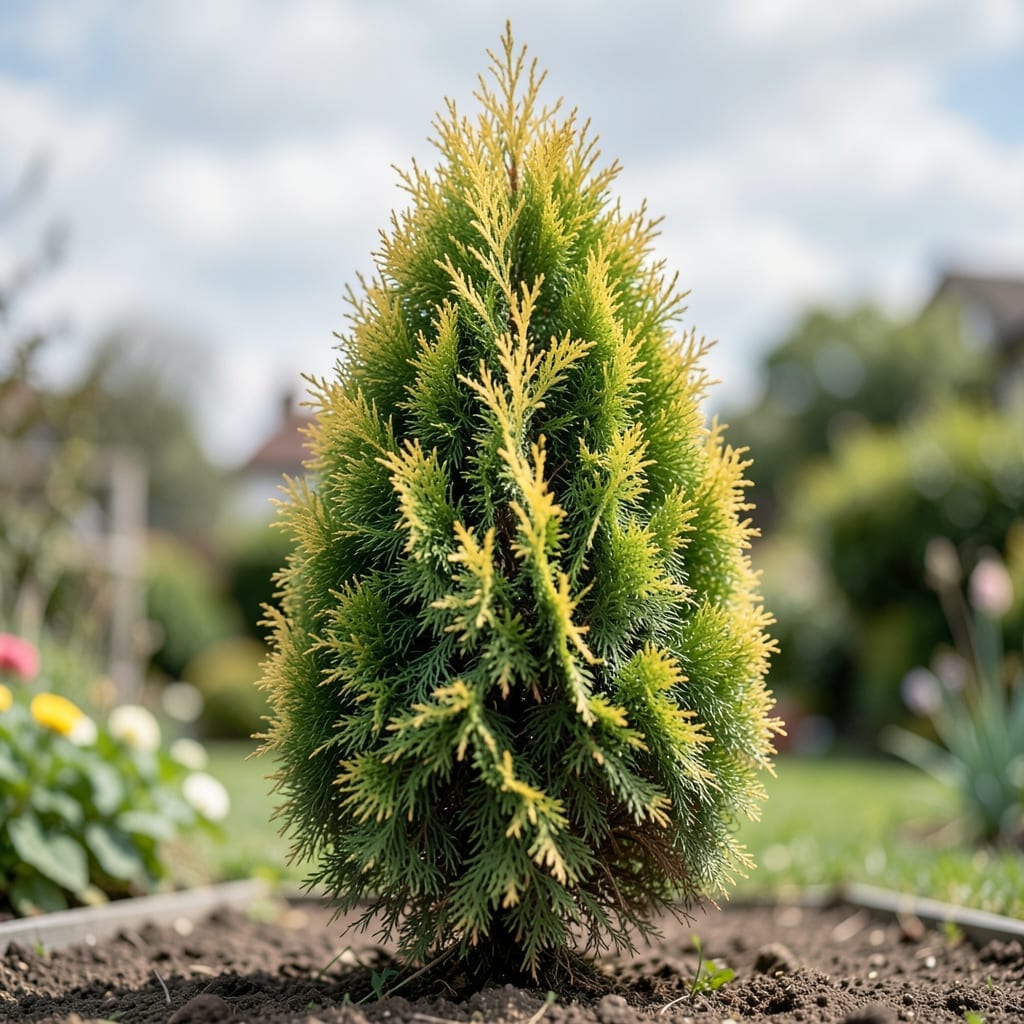
When your Leyland cypress shows uniform yellowing of new growth while older foliage stays green, it’s likely screaming for nutrients. This classic sign often points to nitrogen or iron deficiency, common in fast-growing evergreens.
A soil test confirms which element is lacking. Nitrogen shortages cause overall paleness, while iron deficiency typically yellows new growth first. Apply a balanced evergreen fertilizer or iron chelate supplement, following label instructions carefully to avoid overfeeding.
This issue often affects trees in poor or compacted soils. Regular feeding in early spring and fall keeps your cypress vibrant and growing strong. 🌱
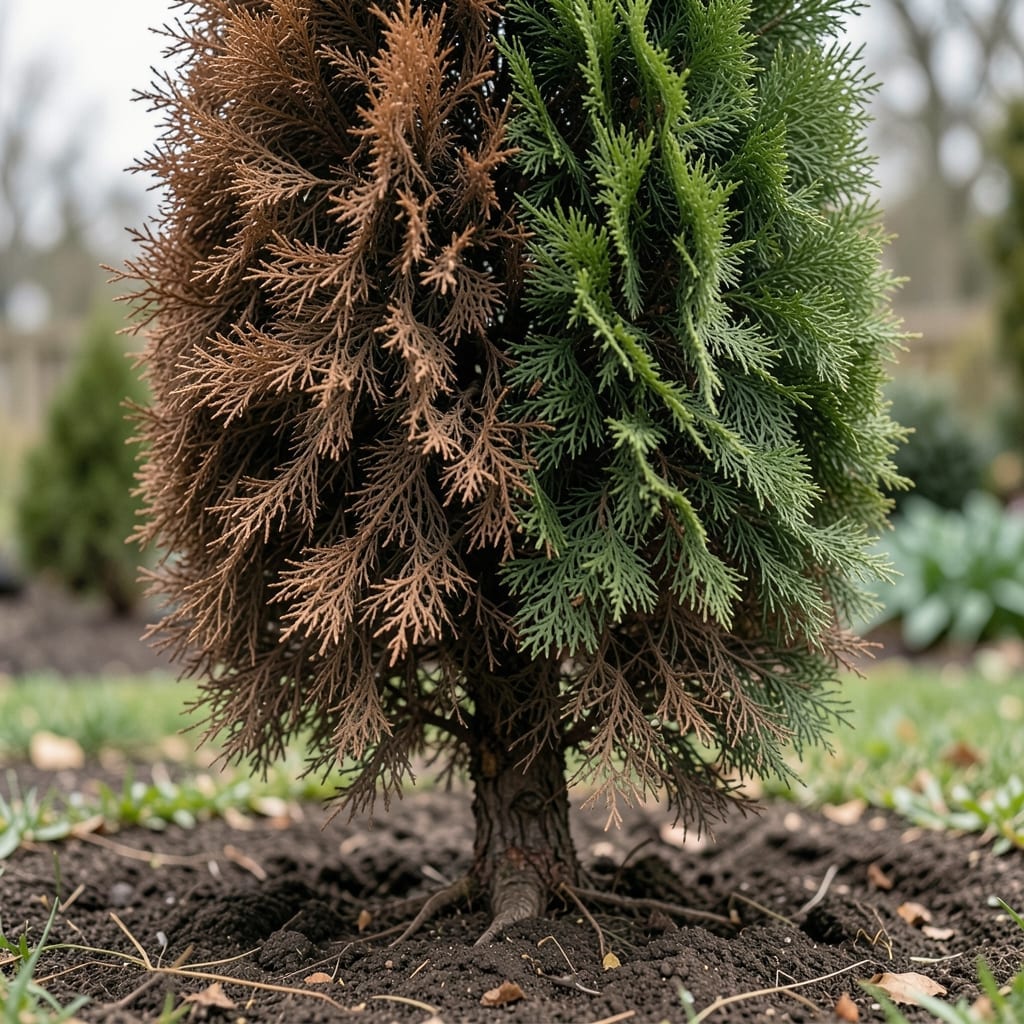
If your Leyland cypress suddenly turns brown overnight, don’t assume it’s just thirsty—it could be Fusarium wilt, a soil-borne fungus that mimics drought stress.
This aggressive disease blocks water flow inside the tree, causing rapid browning and death, often starting on one side. Unlike drought, affected trees won’t recover with watering. There’s no cure, so prevention is key: plant in well-drained soil and avoid stressing trees with poor care.
This issue often stumps gardeners because symptoms resemble underwatering. Regular soil checks and proper planting conditions help keep this silent killer at bay. 🌿
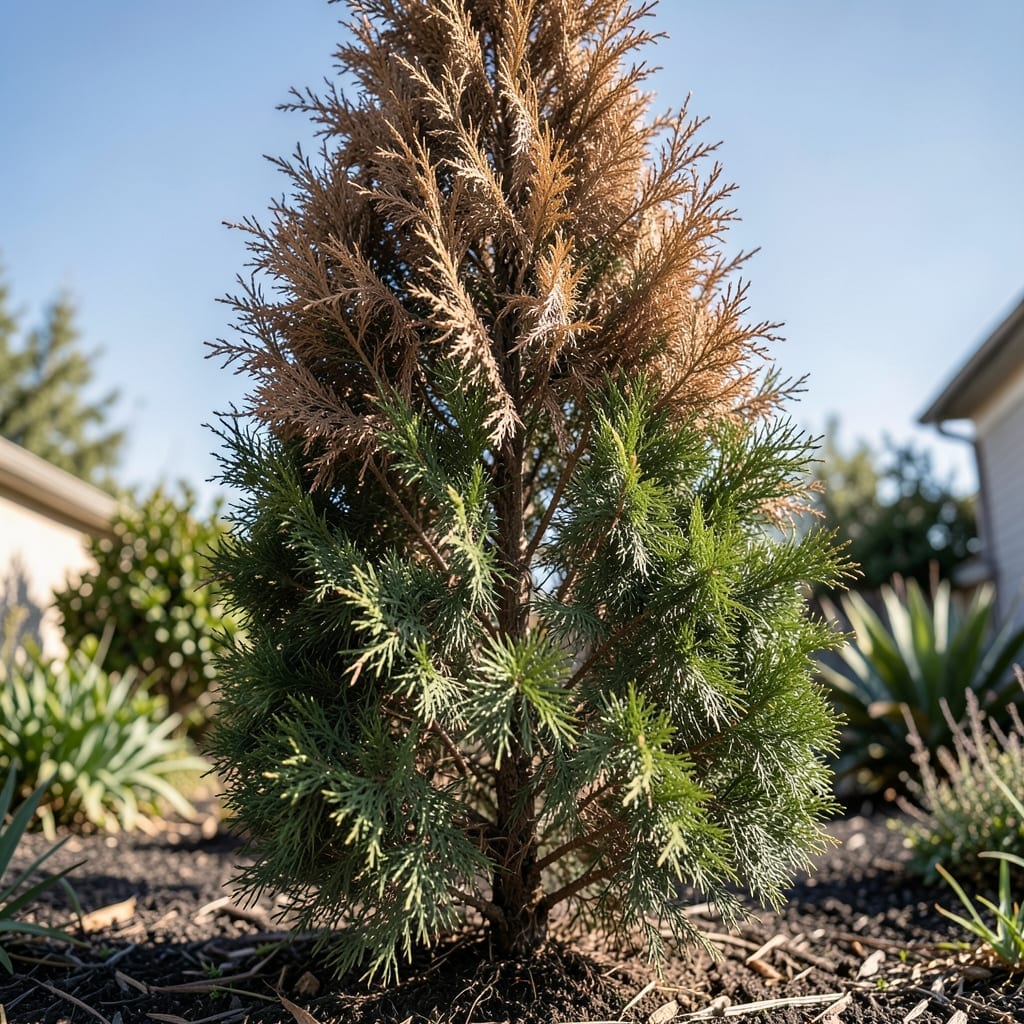
If your Leyland cypress needles are curling, turning brittle, and gradually browning from the top down, drought stress is likely the culprit. This is especially common in new plantings that haven’t established deep root systems yet.
These symptoms appear when the tree isn’t getting enough water to support its fast growth. Unlike some issues that strike suddenly, drought stress develops slowly, giving you time to intervene. Deep watering—1-2 inches per week—helps roots grow stronger and reach moisture deeper in the soil.
Newly planted trees need extra attention during dry spells. A layer of mulch can help retain soil moisture and protect your investment. 🌿
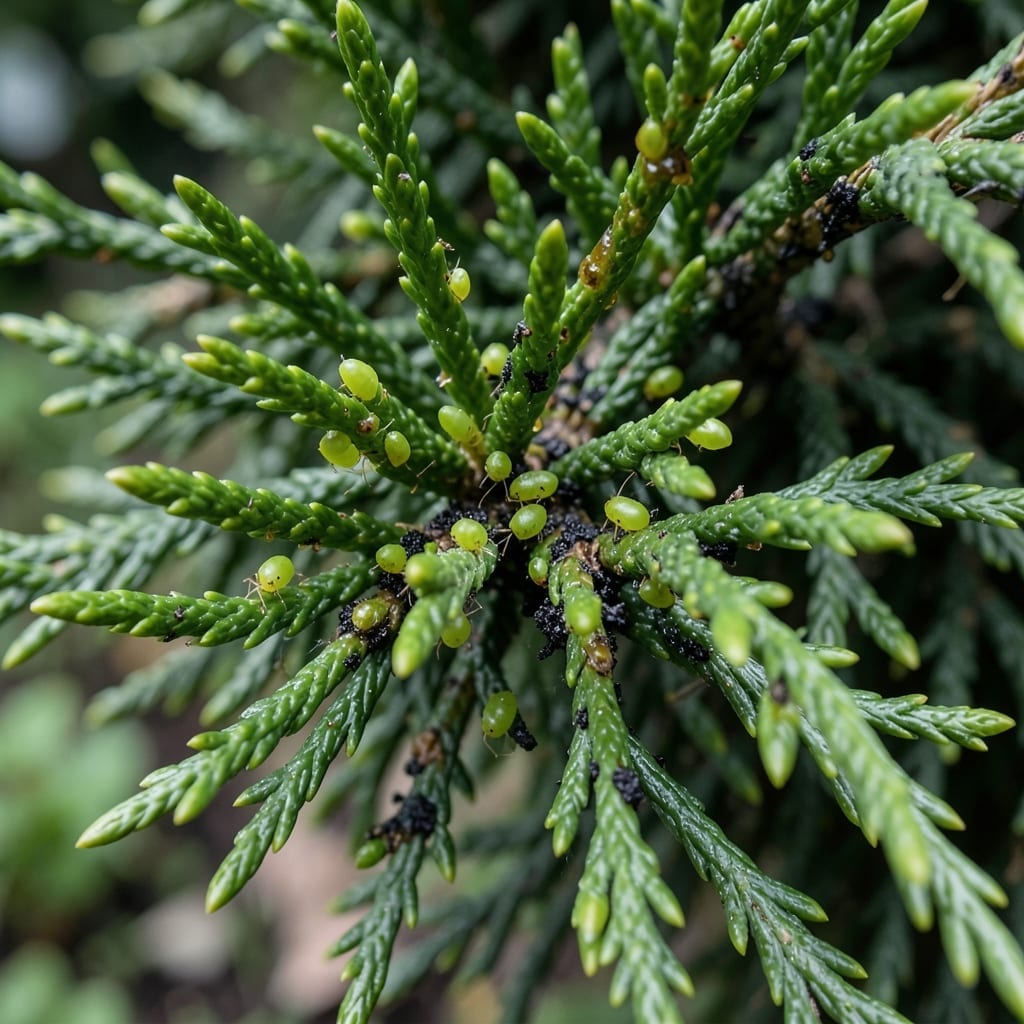
Those tiny green aphids clustering on your Leyland cypress aren’t just unsightly—they’re actively damaging your tree. These sap-sucking pests cause new growth to curl and distort while secreting sticky honeydew that coats leaves and branches.
The honeydew attracts sooty mold, a black fungal growth that further stresses the tree and blocks sunlight. Check the undersides of new shoots for aphid clusters, especially in spring when populations surge. A strong blast of water or insecticidal soap can disrupt their lifecycle.
Regular monitoring prevents these pests from spiraling out of control. Gardeners with young or stressed trees should be especially vigilant, as aphids target vulnerable new growth first. 🌿
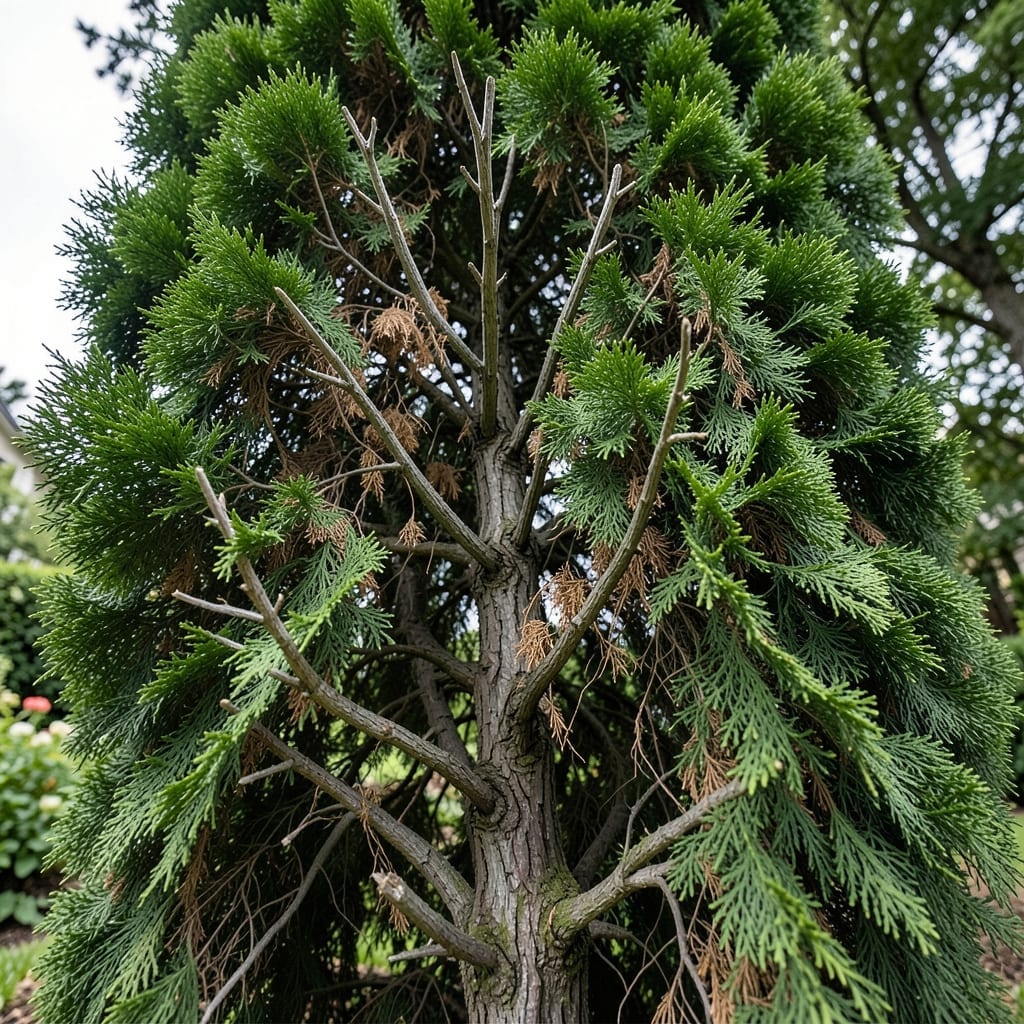
Those unsightly brown patches on your Leyland cypress might be self-inflicted. Cutting into old wood creates dead zones because these trees don’t regrow from bare branches like many other evergreens do.
Unlike some plants that sprout new growth from old wood, Leylands only produce foliage from areas with existing green needles. Always prune in early spring before new growth starts, and never remove more than 25% of the tree in one season. Make cuts just above a branch junction where new growth can emerge.
This mistake often happens when trying to reshape overgrown trees. Prevention is simple: always leave some green growth on every branch you prune. 🌿