
Beautiful Plants For Your Interior
Beautiful Plants For Your Interior
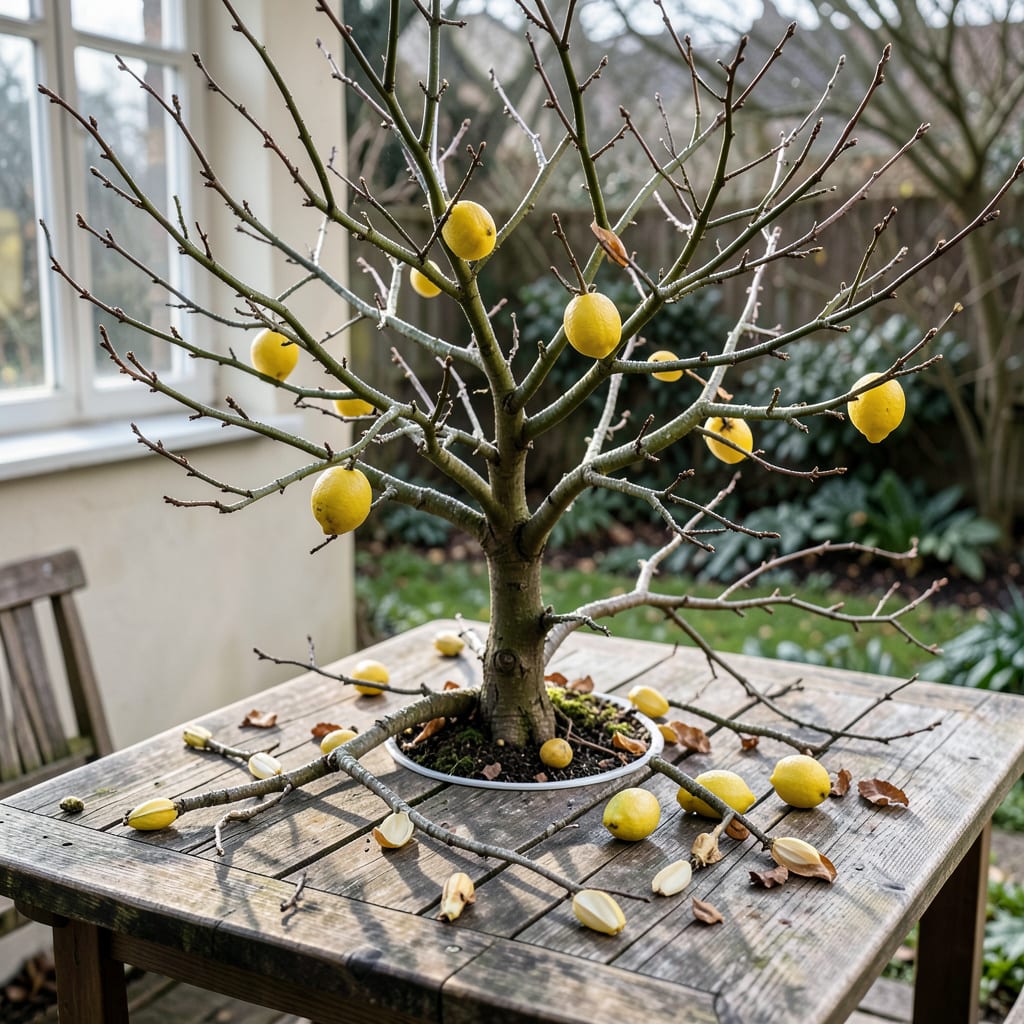
Your lemon tree looks dead, but don’t panic—winter leaf drop is common. I’ve revived mine from bare branches, and the key is figuring out whether it’s cold stress, overwatering, or something else entirely.
Most trees bounce back in 4-6 weeks with the right care: adjust watering, protect from frost, and check for pests. That first flush of new bright green growth means you’ve nailed it.
📚 In This Guide
Here’s my proven method to nurse your tree back to life with minimal stress.
Start by examining the branches—healthy wood will be firm and green under the bark when scratched lightly with your fingernail. If it’s brown and dry, that branch has died. I always prune back to the first point of live growth, using clean, sharp bypass pruners to make angled cuts just above an outward-facing bud.
Remove all dead, crossed, or diseased wood first. This prevents wasted energy and improves air circulation. Don’t prune more than one-third of the tree in a single session, even if it looks severe—over-pruning stresses an already vulnerable plant.
Check the trunk base for cracked or peeling bark, which signals frost damage. If you find it, avoid further pruning until new growth confirms recovery.
Gently dig around the base to inspect the root crown. Winter damage often starts here, where cold, wet soil can rot the roots. I look for firm, white roots—mushy or black ones need trimming with sterilized shears. After pruning, replant at the same depth, ensuring the soil is well-draining.
If your tree is in a container, move it to a sheltered spot with morning sun and afternoon shade to prevent further stress. For in-ground trees, create a 2-3 inch mulch ring with organic matter, keeping it 6 inches away from the trunk to avoid rot. This protects the roots from temperature swings.
Water deeply but infrequently—once every 7-10 days—until you see new leaf buds form. I use room-temperature water to avoid shocking the roots. The goal is to keep the soil evenly moist but never waterlogged, which is especially critical for citrus recovering from stress.
Apply a balanced, slow-release citrus fertilizer with micronutrients (like iron and zinc) at half the recommended strength. Lemon trees often lose leaves due to nutrient deficiencies exacerbated by winter cold. I scatter the granules around the drip line and water in thoroughly, then wait 4-6 weeks before reapplying.
Shield the tree from late frosts using frost cloth or a temporary greenhouse structure. I drape the cloth over a frame to prevent contact with foliage, which can cause burns. Remove it during the day to allow light and air circulation. Watch for swollen buds or tiny new leaves—these are your first signs of recovery.
If no growth appears after 6-8 weeks, scratch-test a few more branches. Sometimes recovery is slow, but if the wood remains brown and dry, the tree may not be viable. In that case, I’d recommend focusing energy on prevention next winter: wrap the trunk in burlap and use holiday lights for gentle warmth.
Once new leaves emerge, gradually reintroduce full sun to avoid scorching the tender growth. This is the moment that matters: your tree is on the mend.
Here’s what I’ve learned from years of nursing citrus back to health.
Pruning Precision: When assessing branches in Step 1, don’t just look at the outside—always do the scratch test. I learned the hard way that some branches that look dead on the surface might still have green wood underneath. This simple check prevents you from accidentally removing viable growth.
Root Care Strategy: In Step 2, when inspecting the root crown, remember that healthy roots should be firm and white. If you find mushy or black roots, trim them immediately with sterilized shears. I once saved a tree that seemed hopeless by aggressively removing all compromised roots and replanting in fresh, well-draining soil.
Watering Wisdom: The 7-10 day watering schedule in Step 3 is crucial. Overwatering is a common mistake—citrus roots need to breathe. I use my finger to check soil moisture 2 inches down; if it’s dry, it’s time to water. And always use room-temperature water—cold water can shock an already stressed tree.
Recovery Timeline: Patience is key in Step 4. Those 6-8 weeks can feel like an eternity, but I’ve seen trees that looked completely dead spring back to life. The swollen buds and tiny new leaves are your reward for consistent care. Don’t give up too soon—sometimes the green wood is hiding just beneath the surface.
Cold temperatures, frost, or sudden drops below 28°F (-2°C) can shock a lemon tree, causing leaf drop. Indoor trees may also shed due to drafts, low humidity, or inadequate light.
Yes! Healthy lemon trees often regrow leaves in spring if the roots and branches remain intact. Prune dead wood, ensure proper watering, and provide warmth to encourage new growth.
Move potted trees indoors or to a greenhouse. For in-ground trees, use frost cloths, mulch heavily, and consider heat lamps. Avoid overwatering and ensure good drainage.
This is a good sign! Green branches mean the tree is alive. Keep it in a warm, sunny spot, water moderately, and fertilize lightly in spring to stimulate leaf regrowth.
Avoid heavy pruning in winter. Wait until spring to assess damage and prune only dead or diseased branches. This prevents further stress and supports recovery.
