
Beautiful Plants For Your Interior
Beautiful Plants For Your Interior
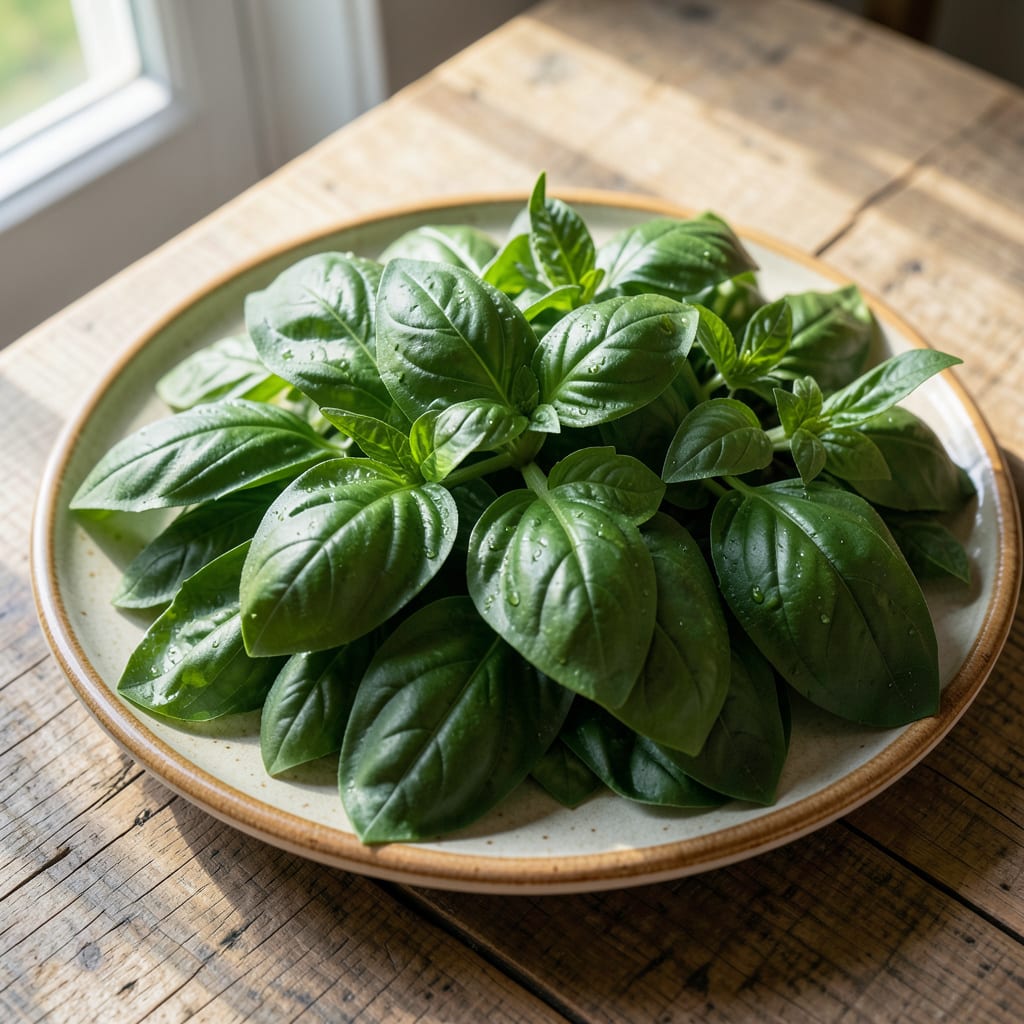
Nothing beats the scent of fresh basil filling your kitchen. I’ve grown large leaf Italian basil for years, and its bold, fragrant leaves always deliver that classic flavor you can’t find in store-bought bundles.
The secret? Full sun, consistent watering, and a little patience. Within 6-8 weeks, you’ll have plenty for pesto, salads, or garnishes—no grocery store trip required.
📚 In This Guide
This method delivers the bold, aromatic leaves you want with minimal fuss and maximum flavor.
Begin sowing 6-8 weeks before your last frost date to give plants a head start. Basil germinates best at soil temperatures of 70-80°F, so a seedling heat mat ensures consistent warmth. Use a sterile seed-starting mix in 2-3 inch deep containers with drainage holes.
Sow seeds ¼ inch deep, spacing them 1 inch apart. Mist the soil surface gently to avoid displacing the tiny seeds. Cover trays with a humidity dome to maintain moisture until germination, which typically occurs in 5-10 days under ideal conditions.
Once seedlings emerge, move them to 14-16 hours of bright light daily under a full-spectrum grow light or in a south-facing window. Position lights 2-4 inches above the plants and adjust height as they grow to prevent leggy, weak stems.
When seedlings develop their first true leaves, thin to one plant per cell by snipping weaker seedlings at soil level. This prevents overcrowding and ensures each plant has space to develop a strong root system. Never pull seedlings, as this disturbs the roots of remaining plants.
After 4-6 weeks, when seedlings have 3-4 sets of true leaves and nighttime temperatures consistently stay above 50°F, it’s time to transplant. Choose a location with full sun (at least 6-8 hours daily) and well-draining soil enriched with compost.
Space plants 12-18 inches apart to allow for their bushy growth habit. Water thoroughly after transplanting to settle the soil around roots. Large leaf varieties benefit from the extra space, producing bigger leaves and more robust stems.
Keep soil consistently moist but not waterlogged. Water at the base of plants when the top inch of soil feels dry, typically every 2-3 days in hot weather. Basil thrives with regular feeding—apply a balanced, water-soluble fertilizer every 2-3 weeks according to package instructions.
Pinch off the top set of leaves when plants reach 6 inches tall to encourage bushier growth. This also prevents early flowering, which can make leaves bitter. Regular harvesting of the large, tender leaves keeps the plant productive throughout the season.
Begin harvesting leaves once plants are 6-8 inches tall. Always cut just above a pair of leaves or branch point to encourage new growth. For the largest leaves, harvest the top sets regularly, which stimulates the plant to produce more of its characteristic broad foliage.
If flower buds appear, pinch them off immediately to maintain leaf production. Large leaf Italian basil reaches peak flavor just before flowering. With proper care, you can expect a continuous harvest for 3-4 months or until the first frost.
Here’s what I learned the hard way about getting the biggest, most flavorful leaves.
The Heat Factor: Basil seeds need that 70-80°F soil temperature to germinate properly. I invested in a seedling heat mat after my first batch refused to sprout in a cool room. The difference was night and day—consistent warmth means germination in that 5-10 day window every time.
Lighting Strategy: Don’t skimp on the 14-16 hours of bright light daily in Step 2. I tried a regular window at first and ended up with tall, spindly seedlings. Full-spectrum grow lights positioned 2-4 inches above the plants prevent that leggy growth and give you sturdy, compact plants ready for transplanting.
Timing Secret: The 4-6 weeks before transplanting isn’t arbitrary. When I rushed this step, the seedlings struggled to adapt. Wait until you see those 3-4 sets of true leaves and nighttime temps stay above 50°F—your plants will thank you with faster, stronger growth.
Watering Wisdom: That top inch of soil test in Step 4 is your best guide. I overwatered my first batch, thinking more moisture was better. Basil hates soggy roots. Stick your finger in the soil—if it feels dry at that depth, it’s time to water. In hot weather, this usually means every 2-3 days.
Start seeds indoors 6-8 weeks before the last frost, or plant directly in well-draining soil after frost danger passes. Ensure full sun (6-8 hours daily) and keep soil consistently moist but not soggy. Pinch off flowers to encourage leaf growth.
Harvest in the morning after the dew dries for the best flavor. Begin when plants are 6-8 inches tall, snipping leaves from the top to promote bushier growth. Regular harvesting extends the plant’s productivity.
Sweet basil or Genovese basil are the closest substitutes, offering similar flavor profiles. For a milder taste, try Thai basil or lemon basil, though their flavors differ slightly.
Yellowing leaves often signal overwatering, poor drainage, or nutrient deficiencies. Check soil moisture—let the top inch dry between waterings—and ensure the pot has drainage holes. A balanced fertilizer can help if the soil lacks nutrients.
