
Beautiful Plants For Your Interior
Beautiful Plants For Your Interior
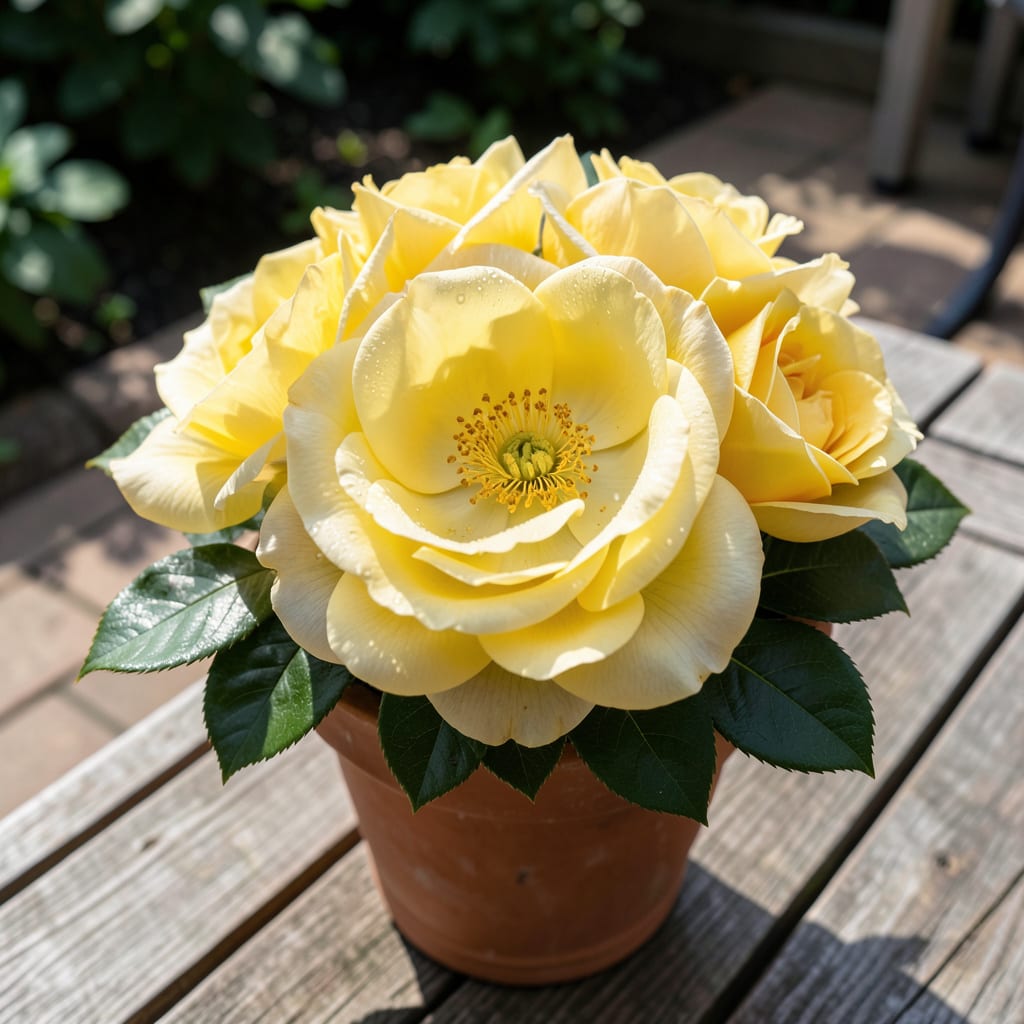
This rose stops people in their tracks. I planted my first ‘Julia Child’ five years ago, and its butter-yellow blooms still make me pause every June when they open.
The flowers are large and fragrant, repeating all season with that classic old-rose charm. It thrives in full sun with well-draining soil, and once established, handles heat better than most yellow varieties I’ve grown.
📚 In This Guide
This classic rose variety rewards patience with stunning blooms and reliable performance in most climates.
Choose a spot receiving 6-8 hours of direct sunlight daily. Julia Child roses thrive in well-draining soil with a pH between 6.0-6.5. Test your soil with a kit and amend with lime or sulfur if needed to reach this range.
Avoid low-lying areas where cold air settles, as this can damage the plant during unexpected frosts. I’ve found that a gentle south-facing slope provides perfect conditions, offering both sunlight and air circulation to prevent fungal issues.
Dig a hole twice as wide and just as deep as the root ball. Loosen the soil at the bottom of the hole to encourage root penetration. Mix in 2-3 inches of organic compost with the native soil you removed to create a nutrient-rich planting medium.
If planting multiple roses, space them 3-4 feet apart to allow for air circulation and future growth. This spacing prevents overcrowding, which can lead to disease and reduced blooming.
Remove the rose from its container and gently loosen any circling roots. Place the plant in the hole so the bud union (the swollen area where the canes meet the roots) sits 1-2 inches above soil level in warm climates or 1-2 inches below in cold areas.
Backfill with your soil mixture, watering occasionally to settle the soil and eliminate air pockets. Once filled, create a 3-4 inch high water ring around the base to help direct moisture to the roots during the establishment period.
Water deeply immediately after planting, ensuring the soil is thoroughly saturated. For the first 2-3 weeks, maintain consistent moisture by watering every 2-3 days unless rainfall provides at least 1 inch per week.
Apply a 2-3 inch layer of organic mulch around the base, keeping it 2-3 inches away from the stem to prevent rot. This helps retain moisture, suppress weeds, and regulate soil temperature as your rose establishes itself.
After the first blooms fade, perform light pruning to shape the plant and remove any dead or diseased wood. Use clean, sharp pruners to make cuts at a 45-degree angle just above an outward-facing bud.
Fertilize in early spring and again after each major bloom cycle using a balanced rose fertilizer. Follow package instructions for amounts, but I typically use about 1 cup per plant for established roses. This encourages vigorous growth and abundant blooms throughout the season.
Took me a few tries to get this right, so let me share what I learned.
Sunlight Requirement: The 6-8 hours of direct sunlight mentioned in Step 1 isn’t just a suggestion—it’s essential for abundant blooming. I learned this the hard way when my first rose struggled in partial shade. Morning sun with afternoon shade works, but full sun produces the most vibrant blooms.
Soil pH Precision: That 6.0-6.5 pH range in Step 1 is critical. Don’t guess—use a soil test kit. I wasted a season before realizing my soil was too alkaline. Amend with sulfur to lower pH or lime to raise it, but do it gradually and retest after a few weeks.
Planting Depth Detail: In Step 3, the bud union placement matters more than you think. In warm climates, keep it 1-2 inches above soil level to prevent heat stress. In cold areas, bury it 1-2 inches below for winter protection. Get this wrong, and your rose will struggle to establish.
Water Ring Technique: That 3-4 inch high water ring in Step 3 isn’t just decorative—it’s a game-changer for directing moisture to the roots during establishment. I skipped this once, and the water just ran off without properly soaking the root ball.
This hardy rose thrives in full sun (6+ hours) and well-drained soil. Water deeply 1-2 times weekly, and prune in early spring. Fertilize monthly during growing season for vibrant blooms.
Expect its first flush of bright yellow, licorice-scented blooms in late spring, with repeat flowers throughout summer and fall. Deadhead spent blooms to encourage continuous flowering.
Yes! This Floribunda rose is bred for high disease resistance, including to black spot and mildew. Still, ensure good air circulation and avoid overhead watering for best results.
Absolutely! Choose a large container (18+ inches deep) with drainage. Use quality potting mix, and water more frequently than in-ground plants. Dwarf varieties work best.
Check sunlight (needs 6+ hours), soil fertility (test pH, aim for 6.0-6.5), and pruning timing. Over-fertilizing with nitrogen can also reduce blooms—switch to a bloom-boosting fertilizer.
