
Beautiful Plants For Your Interior
Beautiful Plants For Your Interior
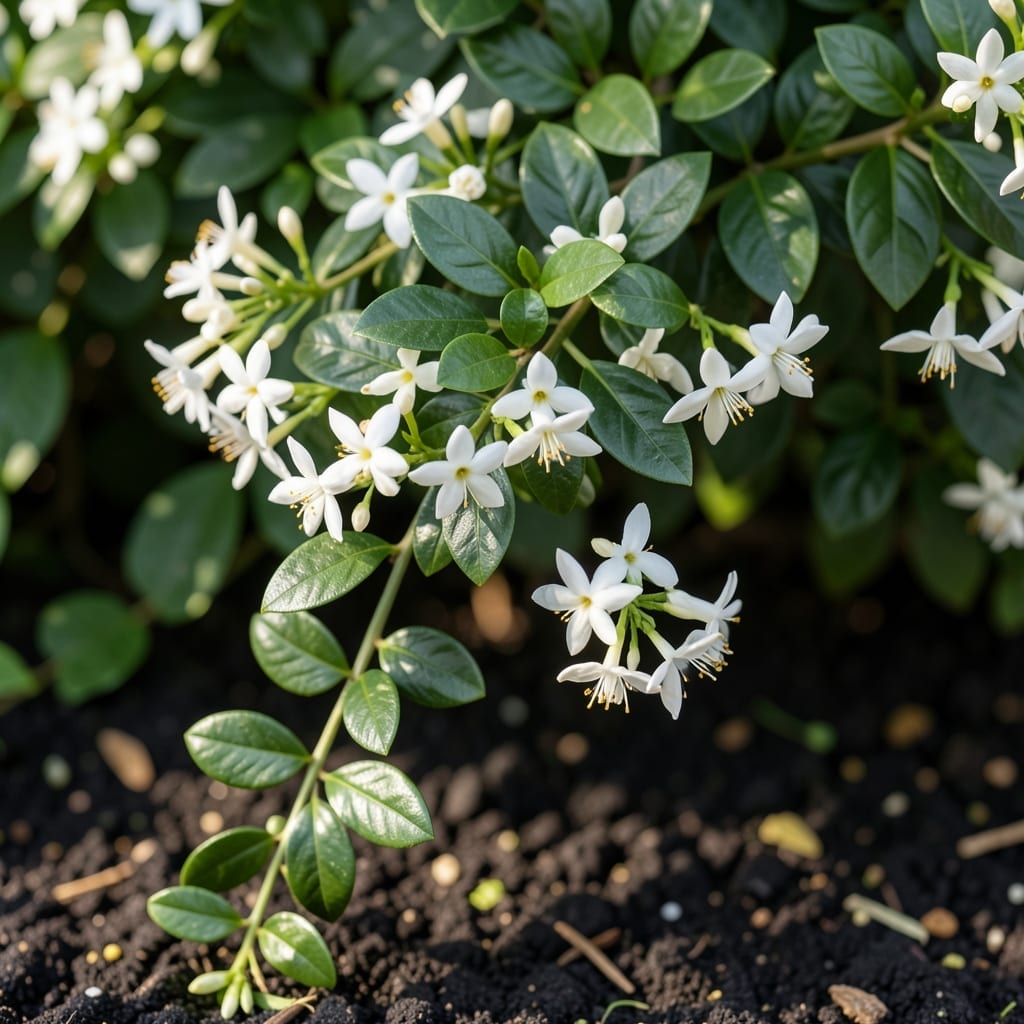
There’s nothing quite like the intoxicating fragrance of a blooming 🌸 Jasmine filling your garden or home. But here’s the catch – without the right light, you might never see those beautiful blossoms.
I’ve learned through trial and error that Jasmine plants are particular about their sunlight. Too little, and they’ll grow leggy with few flowers. Too much, and their delicate petals can scorch.
Let me share exactly what works for thriving Jasmine, whether you’re growing it on a sunny patio or a bright windowsill. You’ll discover how to create the perfect light conditions for abundant blooms.

Getting the light requirements right is crucial for healthy jasmine plants and abundant blooms. Most varieties thrive with 4-6 hours of direct sunlight daily, though some tolerate partial shade.
I’ve found that common jasmine and star jasmine have slightly different needs. While common jasmine loves full sun, star jasmine often prefers a bit of afternoon shade in hotter climates.
For outdoor jasmine, morning sun with afternoon shade works best in hotter zones. This prevents leaf scorch while ensuring enough light for flower production. ☀️
When growing indoor jasmine, place it near a south-facing window for maximum light. If that’s not possible, a west-facing window can work with some direct afternoon sun.
I always recommend using a light meter if you’re unsure. Jasmine needs about 10,000-20,000 lux for optimal growth, which is considered bright indirect to direct light.
Remember that light intensity affects blooming cycles. Plants getting insufficient light may produce fewer flowers or grow leggy. In contrast, too much direct sun can bleach leaves.
For container-grown jasmine, you have more flexibility. Move pots to follow the sun or provide shade during peak afternoon hours in summer.
In my experience, jasmine grown in partial shade often has darker green leaves but may bloom less abundantly. Full sun varieties typically produce the most fragrant flowers. 🌿
If you’re in a northern climate, maximize every bit of sunlight. Consider using reflective surfaces near your plants to increase light exposure.
Even with the best intentions, jasmine plants can struggle if they’re not getting enough light. I’ve seen this happen more times than I can count, and the signs are usually pretty obvious once you know what to look for.
One of the first things I notice is leggy growth—long, sparse stems with widely spaced leaves. This happens because the plant is stretching toward light, trying to reach more of what it needs to thrive.
⚠️ Warning: Light Deficiency Symptoms
Your jasmine may need more light if you see leggy stems, sparse foliage, or fewer blooms. Act quickly to prevent long-term damage.
Another telltale sign is sparse foliage. Instead of a lush, full appearance, the plant looks thin and bare, with leaves concentrated at the tips of the stems. This is your jasmine’s way of conserving energy.
The most heartbreaking sign is lack of flowers. Jasmine plants need adequate light to produce their fragrant blooms, and without it, you’ll be left with a green plant but no flowers. If your jasmine isn’t blooming, light is often the culprit.
I always check the leaf color too. Pale or yellowish leaves can indicate insufficient light, though this can also be a sign of other issues like nutrient deficiencies. Combine this with other symptoms for a more accurate diagnosis.
If you spot these signs, don’t panic. The solution is often as simple as relocating your plant to a sunnier spot. For indoor jasmine, try moving it to a south-facing window or supplementing with a grow light. 🌿