
Beautiful Plants For Your Interior
Beautiful Plants For Your Interior
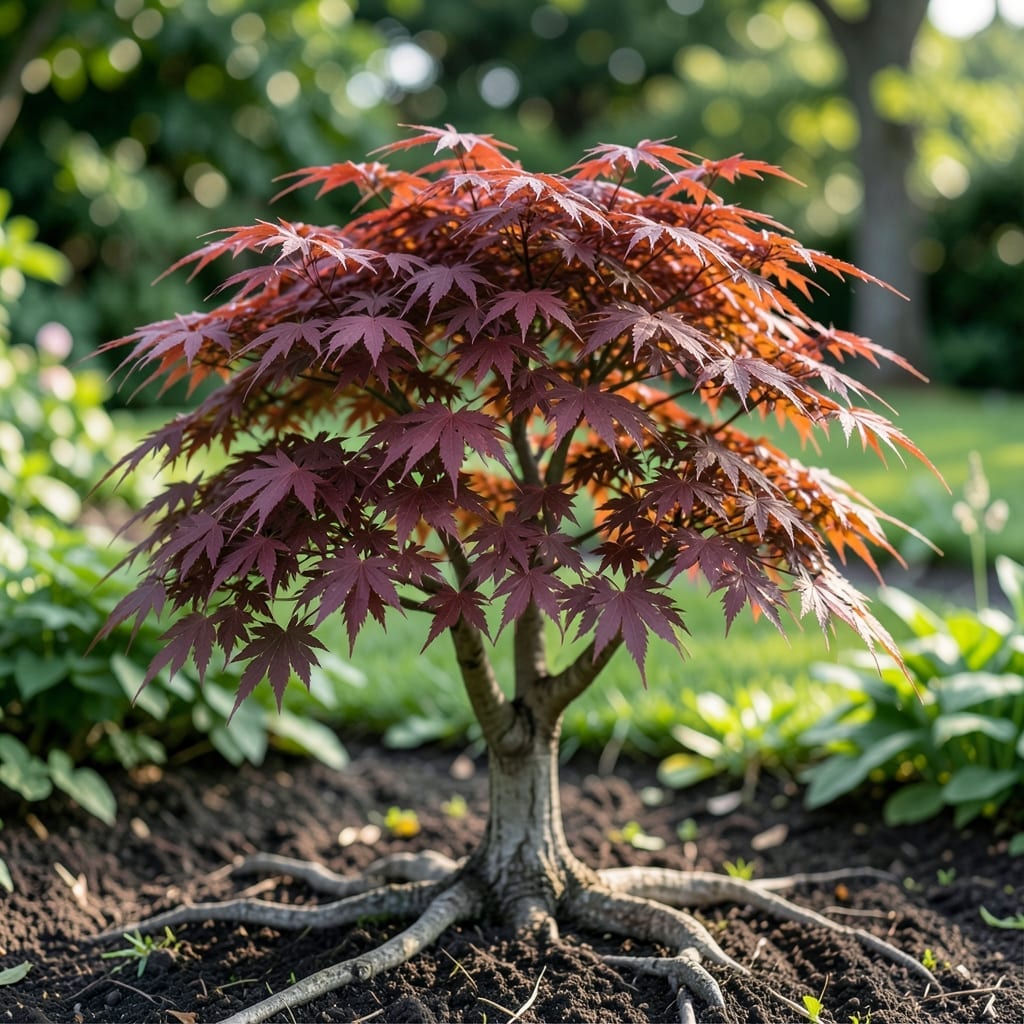
The Japanese Maple 🌳 holds a delicate beauty above ground, but its true story lies beneath the soil. What many don’t realize is that this tree’s root system is both its strength and its most vulnerable part.
Understanding how these roots grow and spread can make all the difference between a struggling sapling and a flourishing centerpiece in your garden. It’s not just about planting—it’s about setting the stage for long-term health.
Let me walk you through the key characteristics of this root system and the simple yet most effective care practices to keep it thriving for years to come.
When I first studied the Japanese maple root system, I was surprised by its fibrous nature. Unlike trees with deep taproots, these develop a dense, shallow network that spreads widely just beneath the soil surface.
This shallow root structure makes them particularly sensitive to soil conditions and moisture levels. The roots typically extend 2-3 times the width of the tree’s canopy, adapting beautifully to their environment.
| Root Characteristic | Details |
|---|---|
| Root Type | Fibrous, non-taproot |
| Depth | Shallow, 6-12 inches |
| Spread | 2-3x canopy width |
| Soil Preference | Well-draining, acidic |
| Seasonal Growth | Active in spring/fall |
The fibrous roots are incredibly efficient at absorbing water and nutrients, which explains why Japanese maples thrive in consistently moist but well-drained soils. This also means they’re quick to show stress when conditions aren’t ideal.
I’ve noticed that in clay-heavy soils, these roots can become stunted or circling, which restricts growth. That’s why I always recommend amending the soil with organic matter before planting to give those roots room to breathe.
Another fascinating adaptation is how the root system responds to seasonal changes. In spring and fall, you’ll see rapid root growth as the tree prepares for its active growing seasons. During summer’s heat, the roots slow down to conserve energy.
It’s crucial to remember that this shallow rooting habit makes Japanese maples particularly vulnerable to drought stress and physical damage. I’ve learned to mulch heavily around the base to protect those delicate surface roots.
When planting, I always dig a wide hole rather than a deep one. This encourages the lateral root spread that these trees naturally prefer, rather than forcing them to grow downward into potentially poor soil conditions.
The root system also forms a symbiotic relationship with mycorrhizal fungi in healthy soils. This partnership helps the tree absorb nutrients more efficiently, which is why I never use chemical fertilizers that might disrupt this balance.
Understanding these growth patterns has completely changed how I care for my Japanese maples. It’s not just about what you see above ground—it’s about creating the perfect environment for those all-important roots below 🌳
Caring for Japanese maple roots starts with the right planting technique. I always dig a hole 2-3 times wider than the root ball but no deeper than the container. This encourages those shallow roots to spread outward naturally.
Soil preparation is non-negotiable. I mix in compost or peat moss to improve drainage, especially in heavy clay soils. Remember, these roots hate soggy feet but need consistent moisture to thrive.
Mulching is my secret weapon for root protection. I apply 2-3 inches of organic mulch like wood chips, keeping it 3 inches away from the trunk to prevent rot. This maintains moisture and regulates soil temperature.
Watering requires balance. I give my maples a deep soak once or twice weekly, depending on weather. The key is consistency—drought stress shows quickly in those shallow roots, but overwatering is just as dangerous.
I’ve learned to be extra careful during transplanting. The fibrous roots are easily damaged, so I always handle the root ball gently and water thoroughly after planting to help them establish in their new home.
Finally, I avoid any soil compaction around the base. Whether it’s from foot traffic or heavy equipment, compacted soil suffocates those delicate surface roots. A little care goes a long way in keeping your Japanese maple’s foundation strong 🌳