
Beautiful Plants For Your Interior
Beautiful Plants For Your Interior
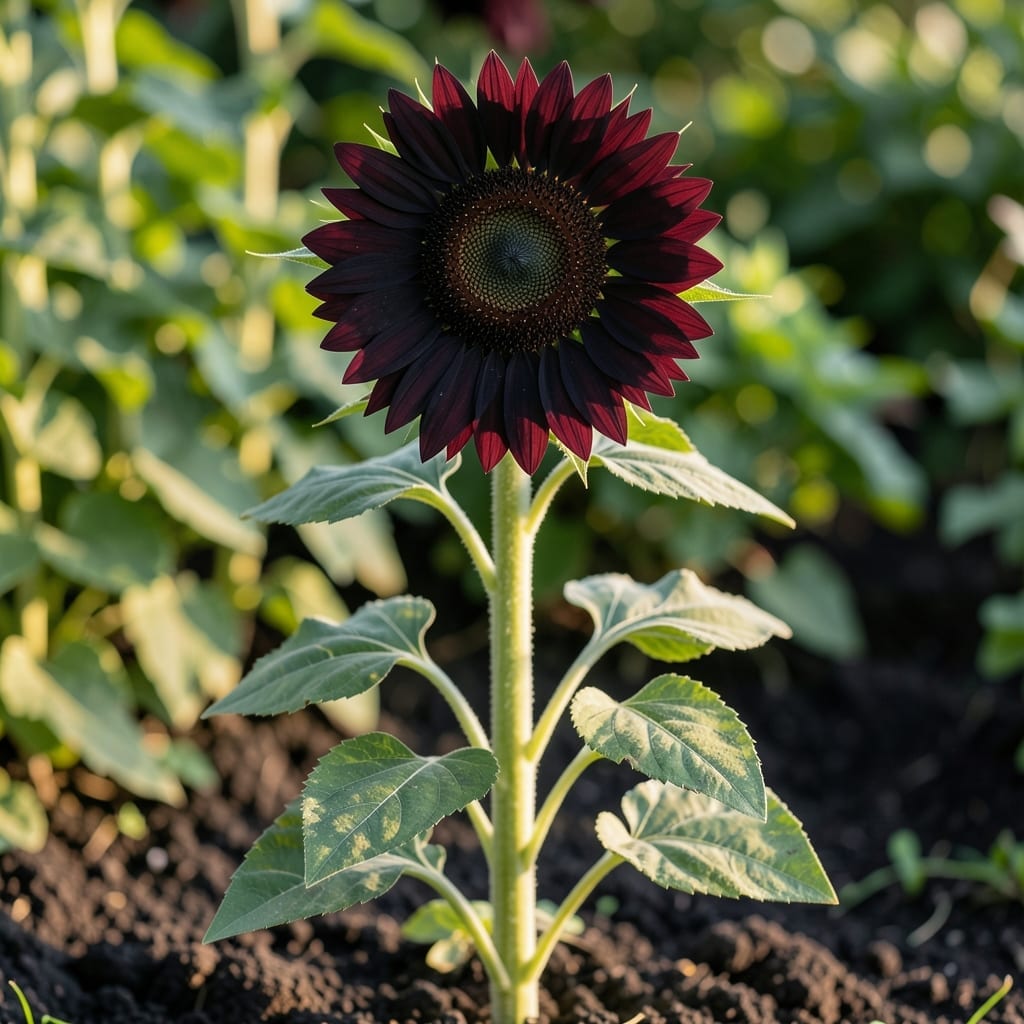
No true black sunflowers exist in nature. The darkest varieties are deep maroon or purple, like ‘Black Beauty‘ or ‘Moulin Rouge,’ which appear nearly black in certain light conditions.
I’ve studied sunflower genetics, and what’s fascinating is how pigmentation works in these flowers. 🌟 The rich deep maroon or purple hues come from anthocyanins, but nature simply doesn’t produce the pure black pigments needed. Growers can enhance the illusion of black by planting these varieties in full sun, where their dark tones deepen under bright light.
💡 In This Article
Sunflower petals get their color from pigments like anthocyanins, which produce reds, purples, and blues. True black would require an absence of all light reflection, which no natural sunflower pigment can achieve. The darkest varieties max out at deep maroon or purple hues.
Anthocyanins in sunflowers absorb light in the green-yellow spectrum but reflect red-blue wavelengths. Even the darkest strains like ‘Black Beauty’ or ‘Moulin Rouge’ reflect some light, appearing nearly black only in low light or shadow. This is why they never achieve true black, which would require absorbing all visible light wavelengths.
The concentration of anthocyanins in petals depends on genetics and environmental factors. Cooler temperatures (60-65°F at night) can intensify these pigments, making the flowers appear darker. However, even under ideal conditions, the petals still reflect some light, preventing true black coloration. 🌟
Sunflowers also contain carotenoids, which produce yellow and orange hues. These pigments mix with anthocyanins in the petals, further preventing pure black. The combination creates deep maroon or chocolate-brown shades instead, which is as close as nature gets to black in sunflowers.
Breeders have selectively developed varieties with maximum anthocyanin production, like ‘Black Oil’ or ‘Chocolate Cherry.’ Yet even these maintain subtle color variations. The petals’ velvety texture can enhance the perception of darkness by reducing light reflection, but true black remains biologically impossible for sunflowers. ✨
Anthocyanin pigments create deep maroon and purple hues, the closest nature gets to black. Cooler nighttime temperatures (60-65°F) intensify these pigments. Even then, some light reflection prevents true black.
‘Black Beauty’ and ‘Moulin Rouge’ appear deepest in low light. Their velvety petals absorb more light, enhancing the dark illusion. Plant them in full sun for richest color.
No, because sunflowers naturally contain carotenoids that prevent pure black. Even selective breeding maxes out at deep maroon. The biology simply doesn’t allow complete light absorption.
Plant against dark mulch or backgrounds. Morning sunlight enhances their depth. Avoid nitrogen-heavy fertilizers, which promote leaf growth over flower color.