
Beautiful Plants For Your Interior
Beautiful Plants For Your Interior
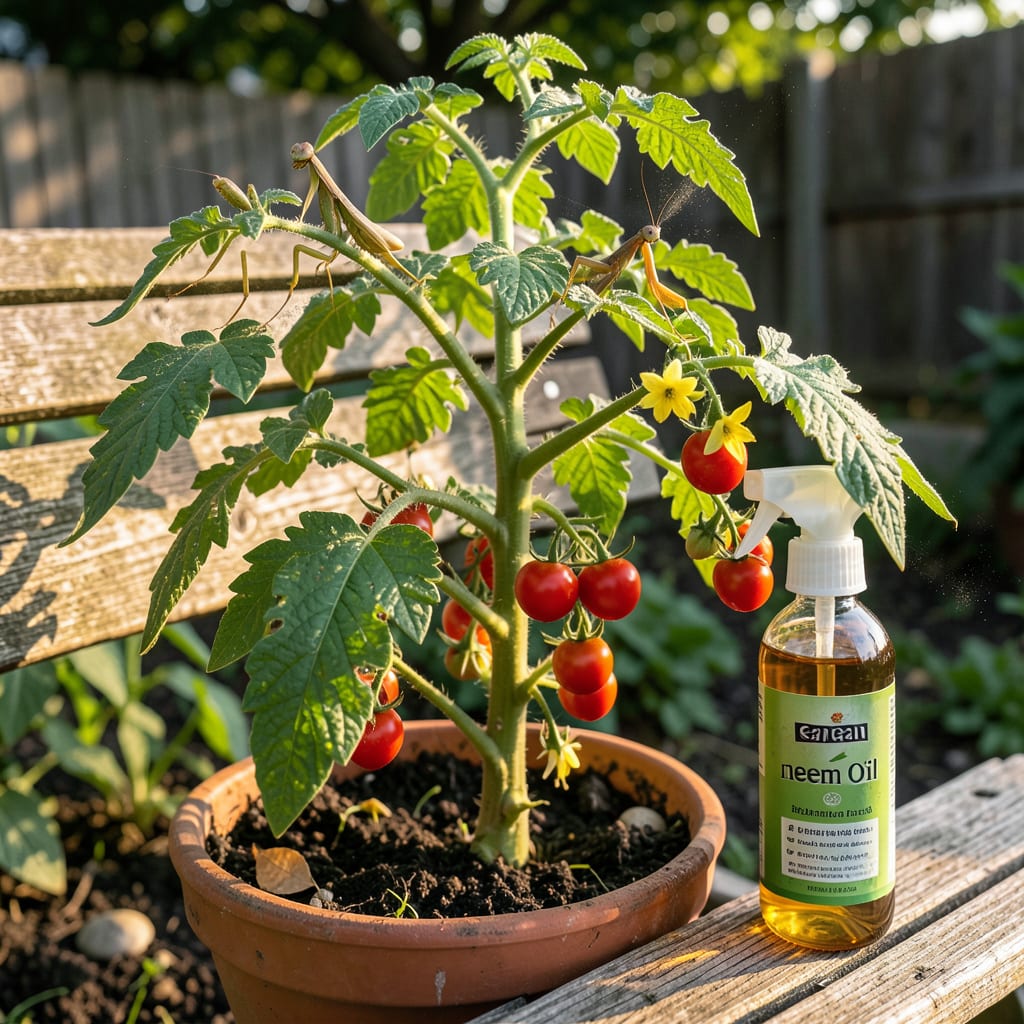
Neem oil is generally safe for praying mantises when used correctly, as it primarily affects soft-bodied pests. However, direct contact with concentrated sprays or excessive application may harm them. Always apply in the evening when mantises are less active.
The key lies in neem oil’s active compound, azadirachtin, which disrupts the life cycle of soft-bodied pests like aphids and whiteflies while leaving mantises largely unharmed. 🌿 I’ve found that mantises are far less sensitive because they don’t ingest treated foliage the way chewing insects do. That said, their delicate exoskeletons can be affected by high concentrations, so I always recommend spot-testing and using 1% or lower dilution rates for garden applications.
Timing plays a crucial role too—applying neem oil during dusk hours gives the solution time to dry before mantises become active at dawn. This simple adjustment dramatically reduces any potential contact risks while maintaining pest control effectiveness. ✨
💡 In This Article
The secret lies in neem oil’s active ingredient: azadirachtin, a natural compound that targets insect hormones. This disrupts the feeding and reproductive cycles of soft-bodied pests like aphids, whiteflies, and spider mites. These insects must ingest treated foliage for neem to work, which is why it’s so effective against chewing pests.
Praying mantises, however, are predators that primarily consume other insects rather than plant material. 🔥
Mantises have a protective advantage—their hard exoskeletons and predatory nature mean they don’t ingest neem oil the way plant-eating pests do. Studies show that beneficial insects like mantises, ladybugs, and lacewings are generally unaffected by properly diluted neem oil solutions (0.5-1% concentration).
The key difference is in how these insects interact with treated plants: pests eat the leaves, while mantises hunt other insects on the surface. ✨
What makes neem oil particularly safe is its systemic action—it’s absorbed by plant tissues but doesn’t persist in high concentrations on leaf surfaces. When applied correctly (evening sprays at 1 tablespoon per gallon ratio), the residual effect diminishes within 48-72 hours.
This gives you pest control while minimizing any potential contact with beneficial insects during their most active periods. 🌱
The real risk comes from direct overspray or using concentrated solutions. Neem oil can clog the spiracles (breathing pores) of any insect if applied too heavily. That’s why I always recommend using a fine mist sprayer and targeting only the undersides of leaves where pests congregate.
This precision application protects your mantises while still controlling garden pests effectively. ⚡
Consider this comparison: neem oil affects soft-bodied insects like how soap disrupts cell membranes, while mantises have a waxy exoskeleton that resists this action. The oil must be ingested to work, which is why it’s safe for pollinators and predators. I’ve seen gardens where neem applications actually increased mantis populations by reducing their prey competition!
💫
For maximum safety, observe your mantises’ behavior after application. Healthy mantises will continue their normal hunting patterns, while any signs of lethargy (rare with proper use) indicate you should reduce concentration or frequency. Remember, neem oil breaks down quickly in sunlight, so evening applications give it time to work before UV rays degrade its effectiveness.
🌅
Neem oil is unlikely to penetrate healthy mantis egg cases due to their protective foam coating. However, avoid direct spraying on egg sacs as the oil could potentially suffocate developing nymphs. Apply treatments at least 3 feet away from known egg case locations for maximum safety.
Mantises can safely return once the neem oil solution has completely dried, typically within 2-4 hours under normal conditions. Evening applications work best since mantises become active at dawn when surfaces are already dry. Always check for visible wetness before expecting mantises to resume normal activity.
The ideal mantis-friendly ratio is 1 teaspoon neem oil per quart of water with a drop of mild soap. This 0.5% concentration effectively controls pests while minimizing risks to beneficial insects. For severe infestations, you can increase to 1 tablespoon per gallon but never exceed this concentration.
Properly applied neem oil shouldn’t impact hunting behavior since mantises primarily detect prey through movement, not scent. However, heavy residue might temporarily affect their grip on slippery leaves. Always use a fine mist application and avoid oversaturating foliage where mantises perch.
For extra caution, consider kaolin clay or insecticidal soap as alternatives that pose even less risk to mantises. These options provide physical pest control without the systemic action of neem oil. You can also create mantis “safe zones” by leaving portions of your garden completely untreated.
