
Beautiful Plants For Your Interior
Beautiful Plants For Your Interior
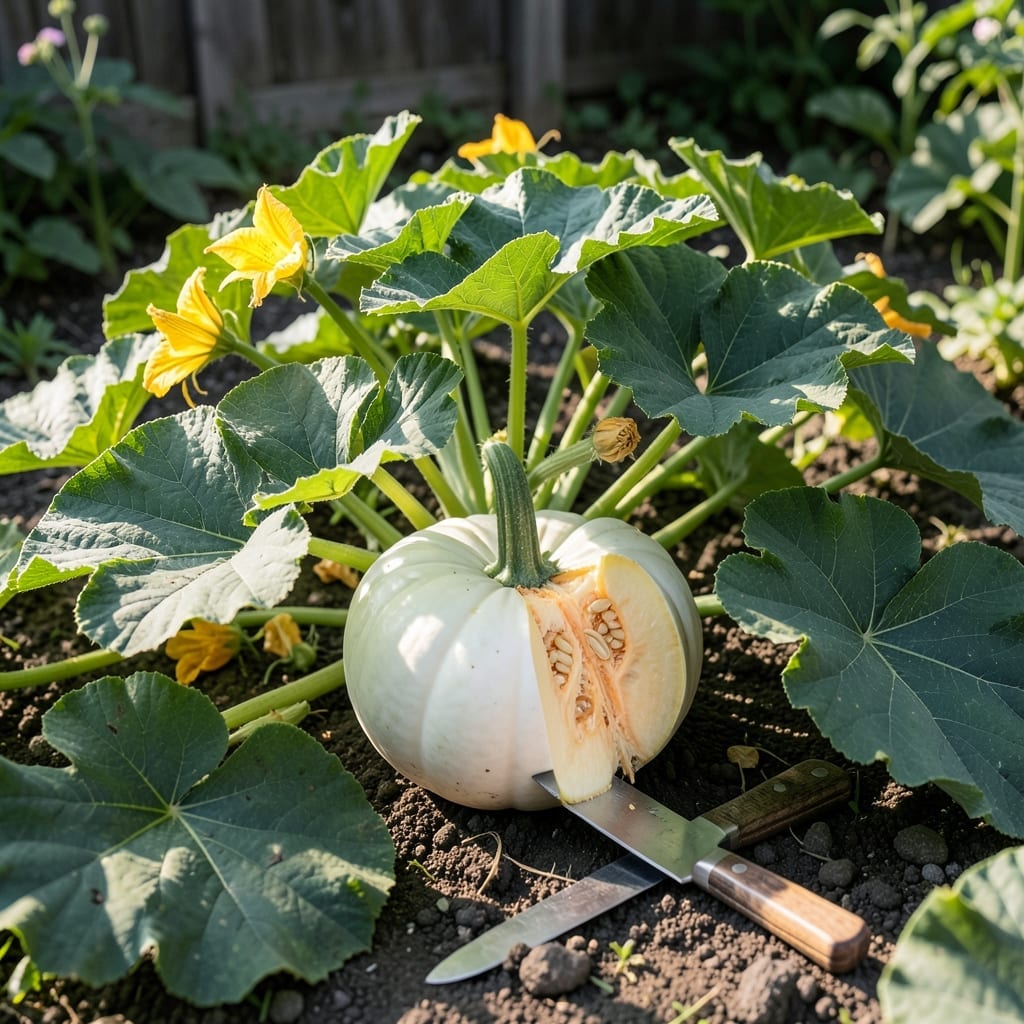
The inside of a white pumpkin typically features bright orange flesh with a smooth, dense texture. Its stringy pulp and flat seeds are similar to traditional orange varieties, though the outer rind is pale.
I’ve found that white pumpkins often surprise people with their vibrant inner color, which stays consistent whether you’re carving or cooking. The flesh holds up well in recipes, offering a slightly sweeter, milder taste than orange pumpkins when roasted. This makes them ideal for soups or purées where you want a delicate flavor. 🔥
What’s fascinating is that the pale exterior hides these rich internal qualities, making them a unique choice for both decoration and culinary use.
💡 In This Article
The vivid orange interior of white pumpkins results from high carotenoid levels, particularly beta-carotene. These pigments develop as the fruit matures, regardless of the pale outer rind. The flesh typically measures 1-2 inches thick with a moisture content of about 88-90%, giving it that dense yet smooth quality.
Unlike some orange varieties that can be fibrous, white pumpkin flesh maintains a fine, uniform grain. This consistency comes from its cellular structure, where smaller, tightly packed cells create that signature velvety texture. The stringy pulp, while edible, contains higher water content at 92-94% compared to the flesh.
The flat, cream-colored seeds you’ll find inside are identical to those in orange pumpkins in both size (0.5-1 inch long) and nutritional profile. They’re packed with protein (30-35% by weight) and healthy fats. The seed cavity itself is often slightly larger in white varieties, sometimes accounting for 20-25% of the pumpkin’s total volume. ✨
What creates this color contrast? It’s all in the genetics. White pumpkins lack the genes that produce orange pigmentation in the rind, but their internal carotenoid production remains unchanged. This means you get the same nutritional benefits from the flesh as you would from a traditional pumpkin.
Gardeners notice white pumpkins often have a slightly thicker rind (0.25-0.5 inches) compared to orange varieties. This doesn’t affect the interior quality but does provide better protection during growth. The flesh-to-rind ratio typically favors the edible portion at about 70:30. 🔥
When selecting for cooking, look for white pumpkins that feel heavy for their size – this indicates higher flesh density. The internal temperature at peak ripeness reaches about 100-105°F in the field, which helps develop those rich carotenoid levels we associate with pumpkin flavor and color.
The orange color comes from carotenoids inside, which develop as the fruit matures. The white rind simply lacks the genes for orange pigmentation on the outside.
White pumpkin flesh typically measures 1-2 inches thick with a dense, smooth texture. This makes it ideal for both cooking and carving purposes.
No, they’re nearly identical in size (0.5-1 inch), color, and nutritional value. You can roast them just like seeds from any other pumpkin variety.
While edible, the pulp has a higher water content (92-94%) and can be bitter. It’s best removed when preparing the flesh for cooking.
Wrap cut pieces in plastic and refrigerate for up to 5 days. For longer storage, freeze the flesh in airtight containers for up to 3 months.