
Beautiful Plants For Your Interior
Beautiful Plants For Your Interior
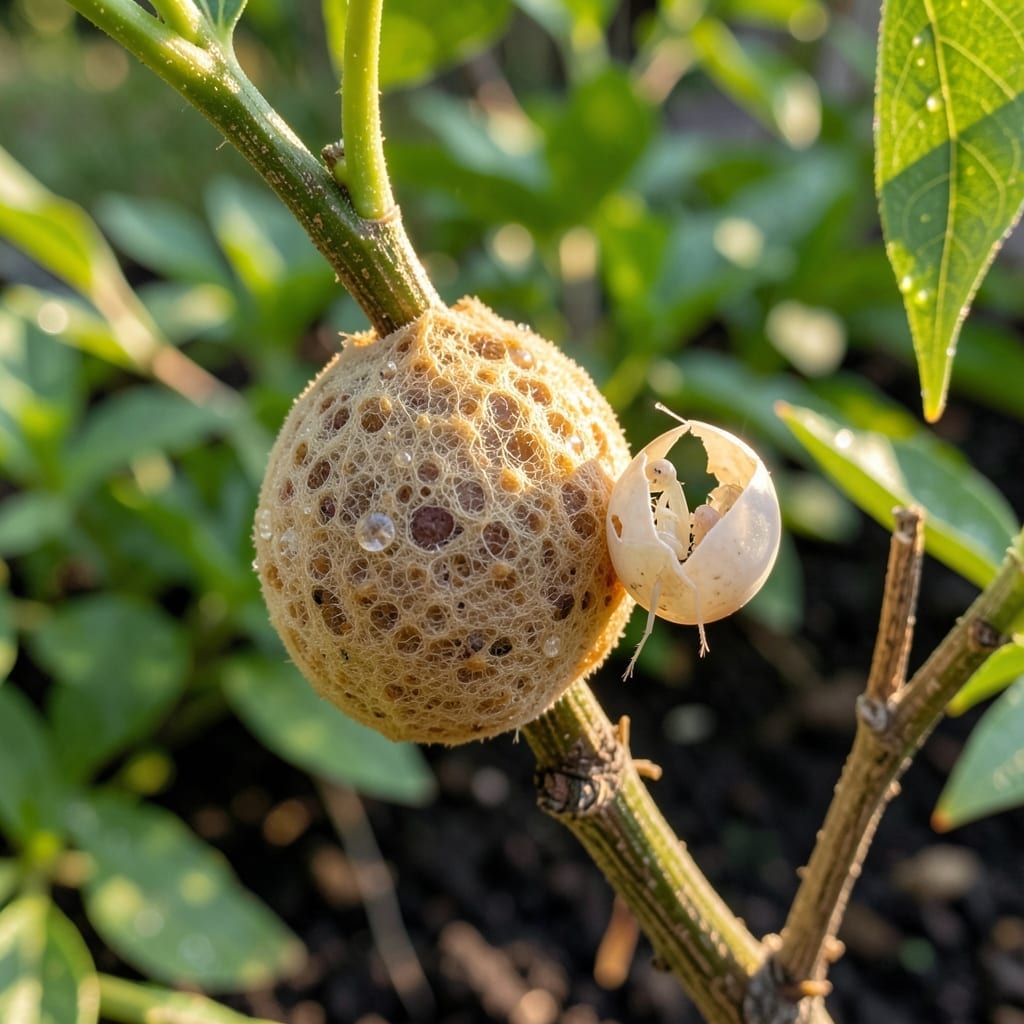
I found my first praying mantis egg case clinging to a rose stem last spring. 🌿 Hundreds of tiny lives packed into that 1-inch foam-like sac, waiting for warmth to trigger their emergence.
What looks like a simple brown pod is actually a complex nursery. Inside, nymphs develop through winter, protected from cold and predators by the case’s tough exterior. I was amazed to learn they all hatch within 24-48 hours of each other.
Watching the synchronized emergence is like nature’s fireworks. The nymphs hang from silken threads until their exoskeletons harden, then scatter to hunt. Their survival rate is low, but those that make it grow incredibly fast.
This cycle repeats every year in gardens across the country. Understanding it helps you appreciate these beneficial predators even more.
The development inside a praying mantis egg is driven by a combination of biological and environmental triggers. These factors ensure the survival of the species by synchronizing hatching with optimal conditions. Below are the key reasons this process unfolds as it does.
Praying mantises, like all insects, follow an innate genetic blueprint that dictates their developmental stages. The eggs contain pre-programmed instructions for embryogenesis, diapause (a dormant period), and hatching. This genetic timing ensures the nymphs emerge when they have the best chance of survival, typically in spring or early summer when food is abundant.
Temperature plays a critical role in the hatching process. The eggs require a specific range of warmth to progress through their stages. In colder months, development pauses (diapause) to avoid harsh conditions. Once temperatures rise—usually above 50°F (10°C)—metabolic activity resumes, triggering the embryos to grow and eventually hatch. This temperature sensitivity acts as a natural clock.
Adequate humidity is essential to prevent the eggs from desiccating. The foam-like ootheca (egg case) protects the embryos from drying out, but prolonged drought or excessively dry air can disrupt development. Conversely, too much moisture may lead to fungal growth, which can kill the eggs. The balance of humidity ensures the eggs remain viable until hatching conditions are met.
Praying mantis eggs are highly attuned to their surroundings. Photoperiod (daylight duration) and seasonal changes signal when it’s safe to emerge. For instance, shorter days in fall may induce diapause in late-laid eggs, delaying hatching until spring. This adaptation prevents nymphs from emerging in unfavorable weather, increasing their odds of reaching maturity.
If the eggs inside a praying mantis ootheca (egg case) aren’t developing as expected, here’s how to troubleshoot and prevent future problems:
Mantis eggs need consistent humidity (60-70%) to hatch. If the ootheca looks dry or shriveled, place it in a container with a damp (not soaked) paper towel. Use a spray bottle to mist lightly every 2-3 days. Prevention tip: 💡 Keep the enclosure in a shaded, well-ventilated area to avoid mold while maintaining moisture.
Ideal hatching temps range from 70-80°F (21-27°C). If your space is cooler, move the egg case near a gentle heat source like a lamp (not direct sunlight) or a seedling mat. Avoid sudden temperature swings. Prevention tip: 🌡️ Use a thermometer to monitor conditions daily.
Stagnant air can suffocate developing nymphs. Ensure the container has small ventilation holes (covered with fine mesh to keep pests out). If using a plastic bag, leave it slightly open. Prevention tip: ✨ Place the ootheca in a mesh cage or hang it from a branch in a terrarium for natural airflow.
Ants or mites may attack the egg case. If you spot tiny invaders, gently move the ootheca to a clean container with a smooth, vertical surface (ants can’t climb). Wipe the case with a damp cloth to remove pests. Prevention tip: 🎯 Store the egg case away from other insects or plants that attract pests.
Avoid handling the ootheca unless necessary. Excessive movement or jarring can harm developing nymphs. If you must relocate it, do so carefully with a soft brush or tweezers. Prevention tip: ⏰ Mark the hatching date on your calendar (typically 4-8 weeks, depending on species) and resist the urge to check too often.
A single egg case usually contains 100-400 nymphs, depending on the species. The foam-like structure provides protection and moisture for all of them during development.
Initially, they appear as tiny white or cream-colored dots. As they mature, you may see dark spots (eyes) through the translucent case just before hatching.
Hatching takes 4-8 weeks in warm conditions. Colder temps pause development, so spring-laid eggs often hatch in 2-3 weeks, while fall eggs wait until spring.
Yes, but avoid sudden temperature changes. Keep it at 70-80°F with 60-70% humidity, and never place it in direct sunlight.