
Beautiful Plants For Your Interior
Beautiful Plants For Your Interior
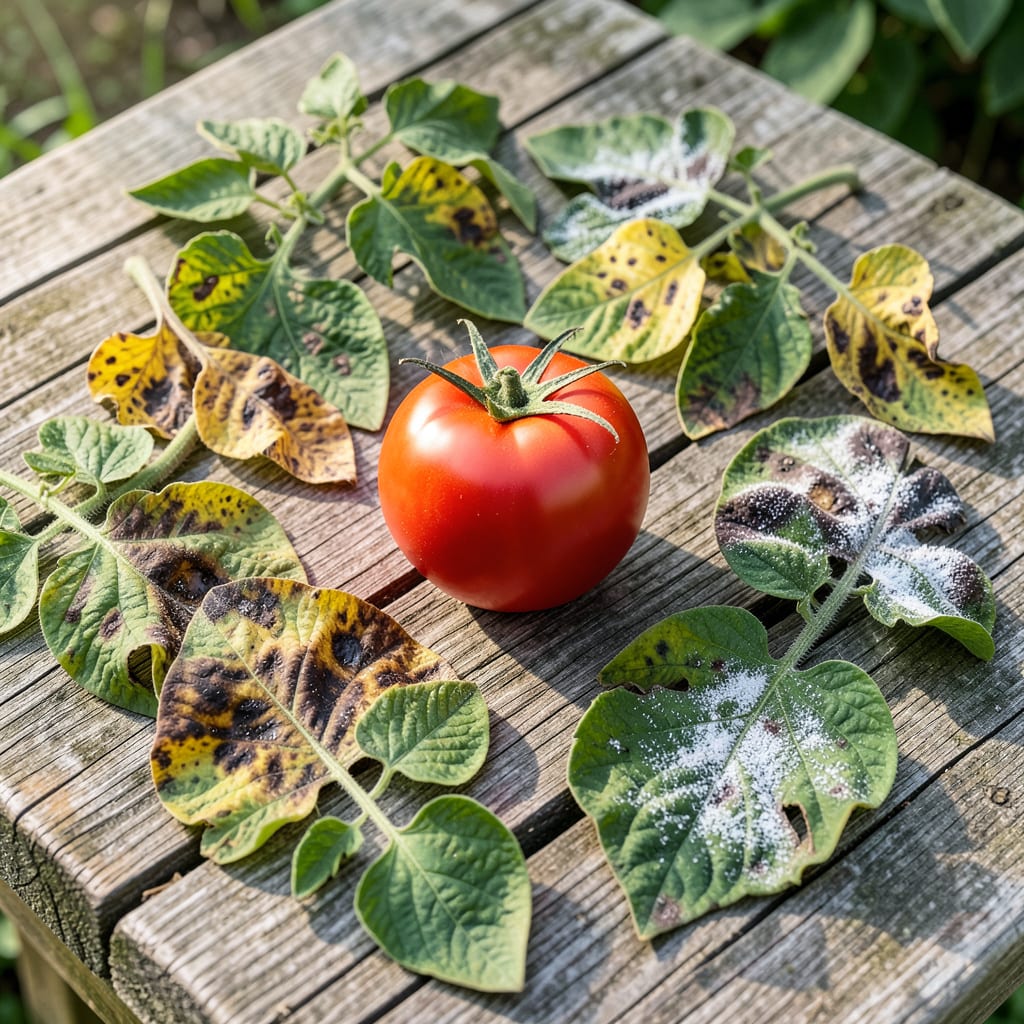
Spotted yellow leaves on your tomatoes last week. This guide helps you tell the difference between early blight, septoria, and the dozen other issues that can derail a season.
I spent years misdiagnosing problems until I learned to look for specific patterns. Brown spots with rings? Probably early blight. Tiny dots on upper leaves? Could be septoria. Each disease has its own signature if you know what to look for.
What you end up with are healthier plants that actually produce. Treatment starts with identification, and natural remedies work surprisingly well when caught early. The key is acting before it spreads to the whole plant.
Works for heirlooms, hybrids, and container plants alike. Here’s how to play detective with your tomato patch.
Tomato plant diseases often stem from a mix of environmental, biological, and cultural factors. Understanding these root causes helps you prevent issues before they escalate. Below are the primary triggers, broken down for clarity and actionability.
Many tomato diseases, like early blight (Alternaria solani) or bacterial spot (Xanthomonas vesicatoria), thrive in warm, humid conditions. Fungal spores spread via wind, water, or infected soil, while bacteria enter through wounds or stomata (plant pores). Overhead watering or crowded plantings create the perfect breeding ground.
Inconsistent watering—either overwatering or drought stress—weakens plants, making them susceptible to diseases like blossom end rot (caused by calcium deficiency) or root rot (Phytophthora spp.). Waterlogged soil suffocates roots, while dry spells hinder nutrient uptake.
Deficiencies in calcium, potassium, or nitrogen lead to stunted growth, yellowing leaves, or necrosis. For example, calcium deficiency causes blossom end rot, while nitrogen excess promotes lush foliage at the expense of fruit production, inviting pests and pathogens.
Insects like aphids, whiteflies, or hornworms don’t just damage plants directly—they also transmit viral diseases (e.g., tomato mosaic virus). Their feeding wounds create entry points for bacteria and fungi, compounding the problem.
Extreme temperatures, heatwaves or cold snaps, stress tomato plants, lowering their immunity. High humidity without airflow encourages fungal growth, while sudden temperature drops can trigger physiological disorders like catfacing (misshapen fruit).
By addressing these causes—through proper spacing, drip irrigation, soil testing, and pest control—you can significantly reduce disease risks in your tomato garden.
Once you’ve spotted trouble on your tomato plants, quick action makes all the difference. Below are practical fixes for common issues, paired with simple prevention tips to keep your garden thriving.
Trim infected leaves at the first sign of brown spots with concentric rings. Collect and destroy (don’t compost!) the affected foliage to stop the spread. Prevention tip: 💡 Rotate crops yearly and space plants for airflow.
Blast mites off leaves with a strong water spray, or apply insecticidal soap. Repeat every few days until they’re gone. Prevention tip: 🌡️ Keep plants well-watered—mites love dry, stressed plants.
Mix 1 tbsp baking soda, 1 tsp dish soap, and 1 gallon of water. Spray leaves weekly until mildew clears. Prevention tip: ✨ Avoid overhead watering and thin out dense foliage.
Pluck off these large green caterpillars by hand (drop them in soapy water). For severe infestations, use Bacillus thuringiensis (BT) spray. Prevention tip: 🎯 Encourage natural predators like birds and parasitic wasps.
Add crushed eggshells or calcium-rich fertilizer to the soil. Keep moisture levels consistent—fluctuations cause this issue. Prevention tip: 💧 Mulch to retain even soil moisture.
Consistency is key: monitor plants weekly, act fast, and prioritize prevention to enjoy a healthy harvest! 🍅
Look for yellowing leaves, brown spots, or white powdery coatings. Early blight shows as concentric rings on lower leaves, while powdery mildew appears as a white film on leaf surfaces.
Yes, soggy soil invites root rot and fungal growth. Water at the base in the morning to let foliage dry. Drip irrigation is ideal for keeping leaves dry and preventing disease spread.
Encourage beneficial insects like ladybugs and lacewings. Remove pests by hand or use neem oil spray. Regularly inspect the undersides of leaves for early detection.
