
Beautiful Plants For Your Interior
Beautiful Plants For Your Interior
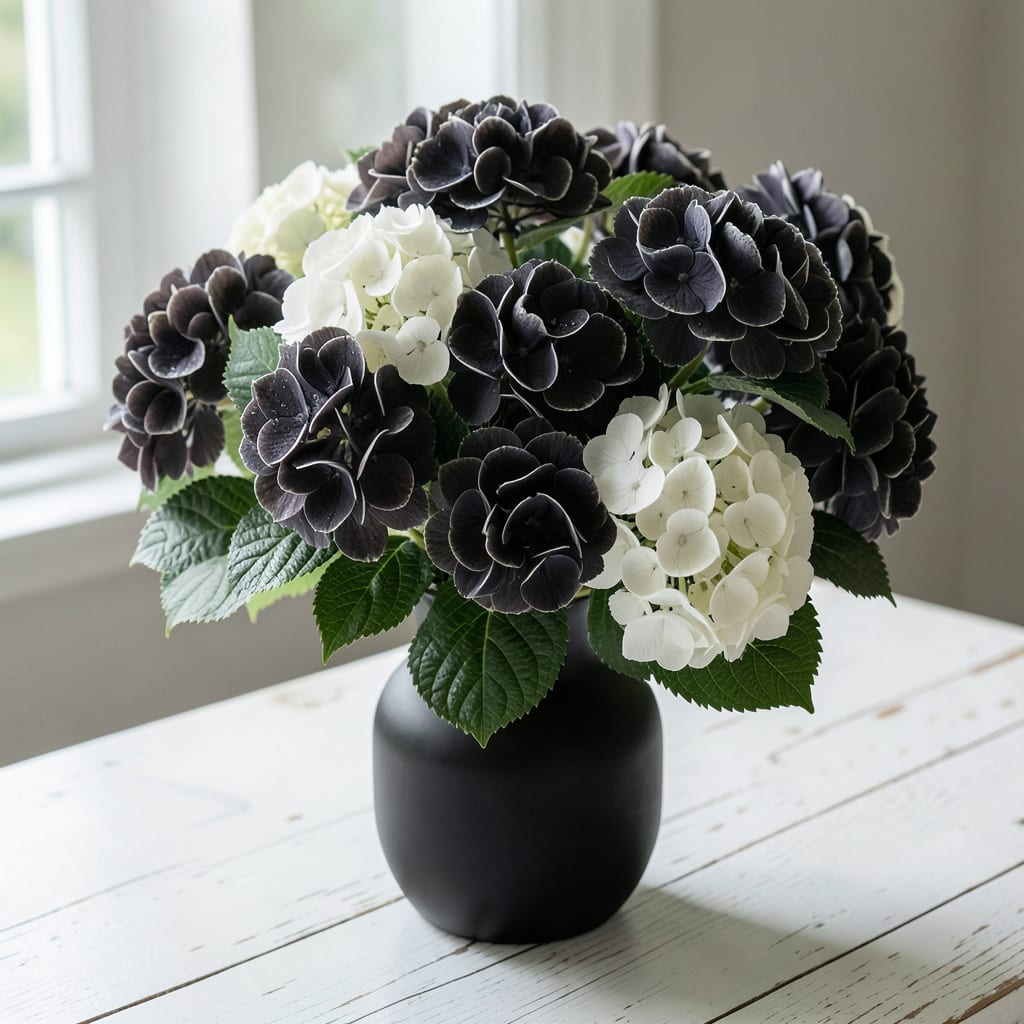
Black and white hydrangeas create garden drama like nothing else. I planted my first one three seasons ago and still stop to admire those bold blooms every time I walk by.
They thrive in partial shade with consistent moisture, and the color contrast deepens as the season progresses. With the right soil pH and pruning timing, you’ll get those striking bicolor flowers year after year.
📚 In This Guide
Here’s how I create those dramatic bicolor blooms in my garden every single year.
For true black and white flowers, select a bicolor cultivar like ‘Black Adder’ or ‘White Wings’. These varieties naturally produce the striking contrast you’re after. I always check the tag to confirm the mature size—some grow 3-5 feet tall while others stay compact at 2 feet.
Pick a spot with partial shade, especially in afternoon when the sun is harshest. Too much direct light bleaches the dark portions of the blooms, turning black to muddy brown. Morning sun with afternoon shade gives the best color saturation.
Hydrangeas thrive in moist, well-draining soil rich in organic matter. I work in 2-3 inches of compost into the planting area to improve both fertility and drainage. The pH matters too—these bicolor varieties look best in slightly acidic to neutral soil (6.0-7.0 pH).
Avoid heavy clay or sandy soils without amendment. If your soil drains poorly, consider planting in a raised bed or container. The roots need consistent moisture but will rot if waterlogged for more than a few hours.
Dig a hole twice as wide as the root ball but no deeper. Place the plant so the top of the root ball sits ½ inch above the surrounding soil—this prevents settling that can bury the stem. I always loosen the roots gently if they’re circling the pot, which encourages outward growth.
Backfill with native soil, water deeply to settle, then add a 2-inch layer of mulch around the base. Keep mulch 3 inches away from the stem to prevent rot. Water again thoroughly, ensuring the root zone is evenly moist.
Water consistently to keep soil evenly moist but not soggy—about 1-2 inches per week, more in extreme heat. I check by sticking my finger 1 inch into the soil; if it feels dry, it’s time to water. Drought stress reduces bloom size and intensity.
Fertilize lightly in early spring with a balanced 10-10-10 formula, then again after the first bloom cycle. Too much nitrogen produces leafy growth at the expense of flowers. Prune spent blooms immediately after they fade to encourage a second flush of bicolor flowers.
In colder climates (zones 5-6), apply a 4-6 inch layer of mulch around the base after the first hard frost. I use shredded bark or straw, which insulates the roots while allowing air circulation. Remove half the mulch in early spring as temperatures rise.
Watch for late spring frosts that can damage new growth. If temperatures drop below 32°F, cover plants with frost cloth overnight. The black portions of the blooms are particularly sensitive to cold damage, so protection ensures those dramatic colors remain intact.
These practical pointers will help you achieve vibrant, healthy blooms with minimal effort.
Variety Selection: I always start with the right cultivar—’Black Adder’ and ‘White Wings’ are my go-tos for that striking contrast. Check the mature size on the tag, as some reach 3-5 feet tall while others stay a manageable 2 feet. Smaller varieties work beautifully in containers if space is limited.
Sunlight Strategy: Partial shade is non-negotiable, especially in the afternoon. Too much direct sun bleaches the dark blooms into a muddy brown. Morning sun with afternoon shade gives the richest color saturation, and I’ve noticed the black portions stay deepest when protected from harsh midday rays.
Soil Preparation: Work in 2-3 inches of compost before planting—this improves both drainage and fertility. The ideal pH range is 6.0-7.0 for these bicolor varieties. If your soil is heavy clay or sand, amend it well or consider raised beds to prevent waterlogging, which can rot the roots in just a few hours.
Planting Precision: Dig the hole twice as wide as the root ball but no deeper. Place the plant so the top of the root ball sits ½ inch above the surrounding soil to prevent settling. I always loosen circling roots to encourage outward growth, then backfill with native soil and water deeply to settle. Don’t forget the 2-inch mulch layer, keeping it 3 inches away from the stem to avoid rot.
Plant in well-draining, moist soil with partial shade. These hydrangeas thrive in USDA zones 5-9. Water regularly and amend soil with compost for vibrant blooms. Mulch helps retain moisture.
Most varieties bloom from late spring to early fall, depending on the climate. ‘Phantom’ and ‘Limelight’ types often start in June and continue through September with proper care.
Yes! Soil pH affects bloom color in some varieties. Acidic soil (pH 5.0-5.5) produces bluer tones, while alkaline (pH 6.0-6.5) leans toward pink. Black and white blooms are less affected but may show subtle shifts.
Brown leaves often signal underwatering, excessive sun, or nutrient deficiency. Check soil moisture, provide afternoon shade, and fertilize with a balanced formula if needed.
Pair with hostas, ferns, or astilbes for a lush, layered look. These shade-tolerant plants complement hydrangeas’ bold blooms and similar care needs.
