
Beautiful Plants For Your Interior
Beautiful Plants For Your Interior
I’ve lost count of how many tomatoes I’ve ruined by watering wrong. The difference between perfect, juicy fruit and a split, mealy mess often comes down to how you deliver that morning drink. Three summers ago, I finally nailed the routine that produces crack-free, flavor-packed tomatoes every season. Here’s the thing—tomatoes want deep, consistent moisture, […]
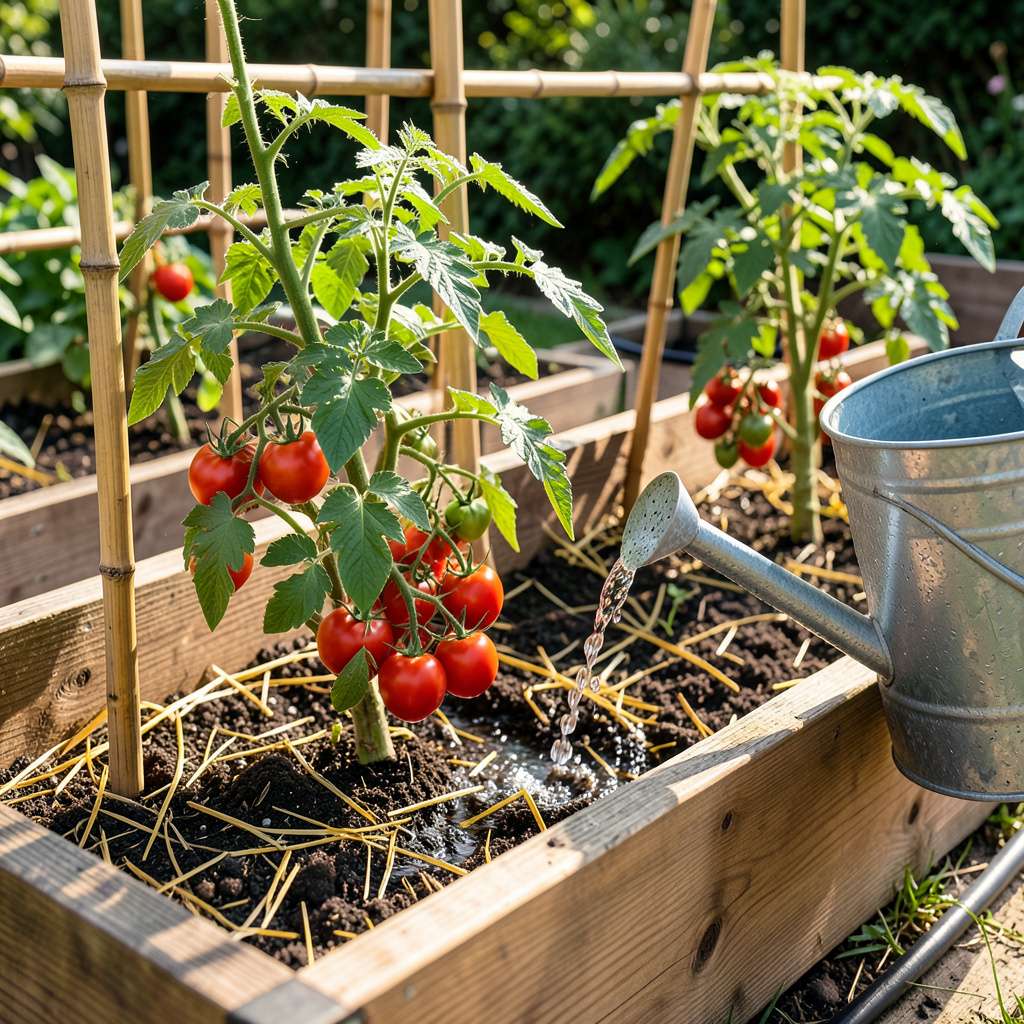
I’ve lost count of how many tomatoes I’ve ruined by watering wrong. The difference between perfect, juicy fruit and a split, mealy mess often comes down to how you deliver that morning drink. Three summers ago, I finally nailed the routine that produces crack-free, flavor-packed tomatoes every season.
Here’s the thing—tomatoes want deep, consistent moisture, not daily sprinkles. Most gardeners either drown the roots or let plants wilt between waterings. My method uses a simple finger test (yes, literally sticking it in the soil) and a 1-inch-per-week rule that adjusts for heat waves. The plants tell you what they need if you know where to look.
You’ll see the payoff in 4-6 weeks when fruits swell without splitting. Leaves stay dark green, stems remain sturdy, and those first ripe tomatoes practically burst with juice. No more sunken bottoms or watery flavor—just the kind of harvest that makes neighbors ask for your secret.
Works equally well for patio containers, raised beds, or in-ground gardens. The technique scales from a single plant to a full backyard crop. Let’s get that watering routine dialed in!
📚 In This Guide
Mastering this simple technique will transform your harvest—no more split skins or bland, watery fruit.
Tomatoes need 1-2 inches of water per week, but how you deliver it matters more than the amount. I water my plants deeply 2-3 times weekly rather than giving them small sips daily. This encourages roots to grow downward searching for moisture, which makes plants more drought-resistant later.
Use a watering wand or soaker hose to deliver water directly to the soil at the plant’s base. You’ll know you’ve watered enough when the soil feels moist 6-8 inches deep—stick your finger in to check. Avoid wetting the leaves, especially in the evening, as this invites fungal diseases like early blight.
The best time to water is early morning between 6-10 AM. This gives plants time to absorb moisture before the day’s heat and allows any accidental leaf wetness to dry quickly. Evening watering stays on foliage too long, creating perfect conditions for mildew and other fungal issues.
If you notice the soil surface looks cracked or pulls away from the pot edges, that’s your visual cue the plant is too dry. During heat waves above 90°F, I sometimes add a second morning watering, but I always check soil moisture first—overwatering is just as dangerous as underwatering.
Small transplants need less water than mature, fruit-laden plants. Once your tomatoes start setting fruit, increase water slightly to support development—but never let the soil stay soggy. I use the “finger test” daily: if the top 1-2 inches of soil feel dry, it’s time to water again.
Watch for these signs of improper watering: yellowing leaves (often overwatering), wilting in afternoon (usually underwatering), or blossom end rot (inconsistent moisture). The solution is always the same—deep, regular watering that keeps soil moisture steady, never fluctuating between bone-dry and soaked.
Apply a 2-3 inch layer of organic mulch (straw, grass clippings, or shredded leaves) around the base of each plant, keeping it 1 inch away from the stem to prevent rot. Mulch dramatically reduces evaporation, keeps roots cooler, and prevents soil splash that can spread diseases.
You’ll notice the difference immediately—mulched plants need watering about 25% less often than bare-soil plants. I refresh my mulch every 3-4 weeks as it breaks down. This simple step is the secret to those perfectly ripe, juicy tomatoes that never split on the vine.
As plants grow, their water needs change. I check my tomatoes daily during fruiting season, looking for subtle signs: leaves that appear slightly dull in the afternoon need water, while vibrant green leaves in the morning indicate good hydration. Container-grown tomatoes dry out faster than in-ground plants, sometimes needing daily water in peak summer.
Remember that consistent moisture is what prevents cracked fruit and develops maximum flavor. I’ve found that tomatoes watered this way have thicker skins that resist splitting, sweeter flesh, and that perfect juicy texture we all crave. The difference shows in every bite.
After years of trial and error (and more than a few split tomatoes), we’ve learned that success comes down to these key details.
Deep Watering Precision: The 6-8 inch soil moisture check in Step 1 isn’t just a suggestion—it’s the difference between surface roots and a deep, resilient root system. I use a wooden dowel marked at 6 inches to check depth consistently. When you pull it out, the moist soil line should reach that mark. This single practice transformed my plants’ drought resistance.
Morning Timing Secret: That 6-10 AM window in Step 2 exists for two critical reasons: first, plants absorb water most efficiently in cooler morning temperatures, and second, any accidental leaf wetness evaporates quickly. I set phone reminders for 7 AM watering sessions during busy weeks—consistency here prevents 90% of fungal issues we used to battle.
Mulch Mastery: The 2-3 inch mulch layer in Step 4 does more than conserve water—it creates a microclimate. I’ve measured soil temperatures 10°F cooler under proper mulch during 90°F heatwaves. Refresh your mulch every 3-4 weeks as mentioned, but here’s what nobody tells you: lightly scratch the surface before adding new mulch to prevent compaction that blocks water penetration.
Container Plant Warning: As noted in Step 5, container tomatoes demand special attention. I learned this after losing three potted plants to root rot: even with drainage holes, containers need watering every 24-36 hours in peak summer. The finger test becomes your best friend here—check twice daily when temperatures climb above 90°F.
Got questions about keeping your tomato plants perfectly hydrated? You’re not alone! Here are the most common concerns—and quick answers—to help your plants thrive.
In extreme heat (90°F+), water daily—early morning is best. Check soil moisture 2 inches deep; if dry, it’s time! Container tomatoes may need twice-daily watering. Mulch helps retain moisture.
Avoid overhead sprinklers! Wet foliage invites fungal diseases like blight. Always water at the base using a soaker hose or drip irrigation to keep leaves dry.
Wilting after watering often signals overwatering or poor drainage. Check for soggy soil or root rot. If soil is dry, the plant may be heat-stressed—provide shade. Underwatering causes crispy edges; overwatering yields yellow leaves.
Morning is ideal (6–10 AM)! It lets plants absorb moisture before heat peaks and reduces evaporation. Evening watering can promote fungal growth if leaves stay wet overnight.
Try self-watering planters, drip irrigation timers, or deep mulching (3–4 inches of straw/wood chips). For vacations, use olla pots (clay watering spikes) buried near roots. Tech-savvy? Smart irrigation systems work too!
Mastering how to water tomato plants is your secret weapon for plump, flavorful fruit and a thriving garden! 🌱 Remember: deep, consistent moisture at the base—never the leaves—and adjust for weather, soil, and growth stages. With these simple habits, you’ll say goodbye to cracked skins and hello to your juiciest harvest yet.
Ready to put it into action? Grab your watering can and start today—your tomatoes will thank you with every sweet, sun-ripened bite! 🍅✨
