
Beautiful Plants For Your Interior
Beautiful Plants For Your Interior
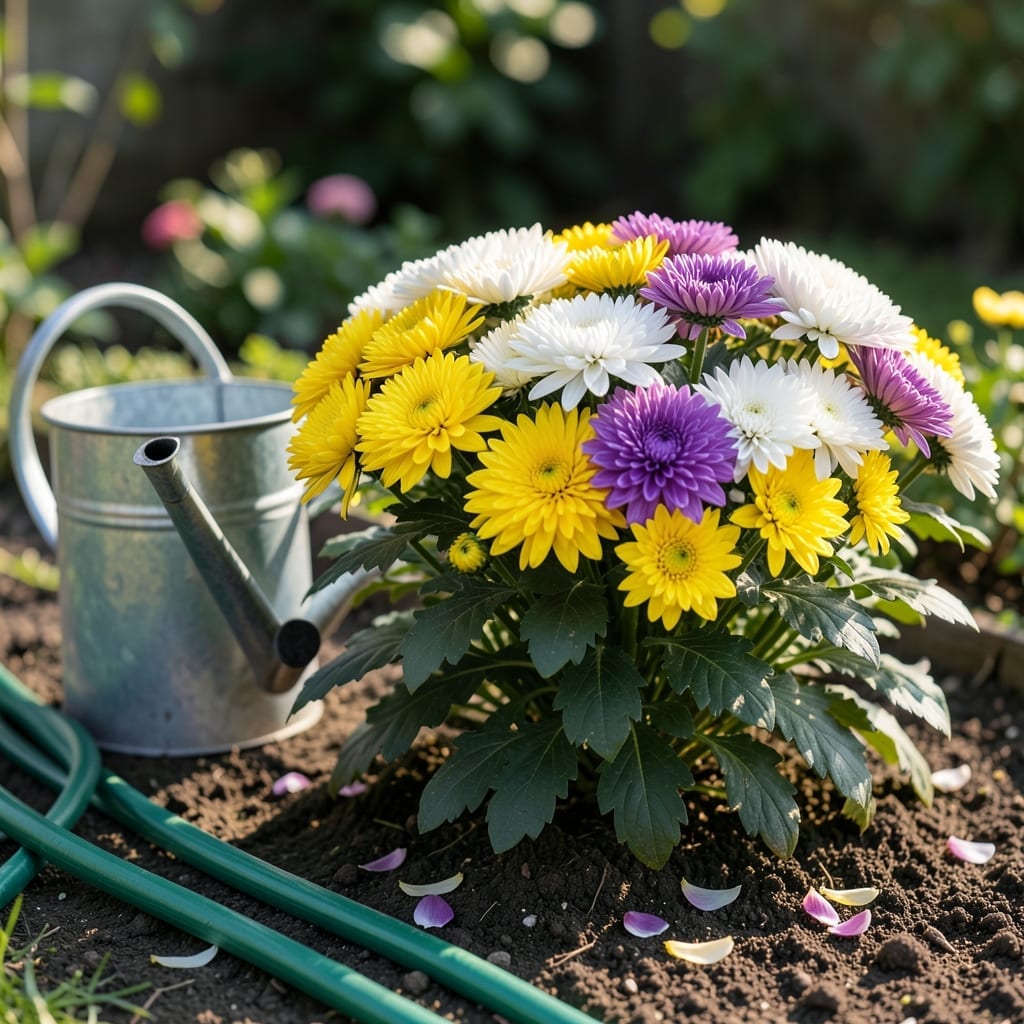
Watering Chrysanthemum 🌼 correctly can make or break your fall garden display. I’ve seen too many beautiful blooms wilt prematurely because of simple watering mistakes we all make.
These hardy flowers thrive with consistent moisture, but the balance is delicate. Too much or too little water shows up quickly in their leaves and petals.
Discover the easiest way to keep your mums vibrant from the first bud to the last frost. Let me show you how to get it right every time.


Getting your watering routine right is the key to vibrant mum blooms that last through fall. I always start by checking the soil moisture before reaching for the hose.
For in-ground mums, water deeply 1-2 inches per week, while potted mums need more frequent attention. The goal is consistent moisture without waterlogging the roots.
| Care Aspect | In-Ground Mums | Potted Mums |
|---|---|---|
| Frequency | Every 10-14 days | Every 5-7 days |
| Amount | 1-2 inches per week | 1 inch every 3-4 days |
| Best Time | Early morning | Before 10 AM |
| Method | Soaker hose or drip | Water at base, avoid leaves |
Always water at the base of the plant to avoid wetting the foliage, which can lead to fungal diseases. I use a soaker hose for my garden beds to deliver water directly to the roots.
For container mums, ensure your pots have drainage holes to prevent soggy soil. I’ve found that terracotta pots dry out faster, so they need more frequent watering than plastic containers.
Check the top inch of soil with your finger. If it feels dry, it’s time to water. This simple test helps prevent both overwatering and underwatering, which can stress your plants.
During hot spells, you might need to water more often, but always let the soil dry slightly between waterings. Mums hate soggy feet, so good drainage is non-negotiable for healthy growth.
If you notice yellowing leaves, it’s often a sign of overwatering. On the flip side, drooping blooms usually mean your mums are thirsty and need a drink.
I’ve had the best luck with morning watering because it gives the plants time to absorb moisture before the heat of the day. Plus, it reduces evaporation, so your mums get the most out of every drop.
With these techniques, your mums will reward you with bold, long-lasting blooms that brighten up your fall garden 🌼
Even experienced gardeners can make simple watering errors that harm their chrysanthemums. I’ve learned the hard way that some habits do more damage than good to these fall favorites.
One of the biggest mistakes is watering the foliage instead of the roots. Wet leaves invite fungal diseases like powdery mildew, which can spread quickly through your garden beds.
⚠️ Watch Out: Never water mums in the evening or with cold water. Evening moisture sits too long, promoting root rot, while cold water can shock the roots, stressing your plants.
Another common pitfall is inconsistent watering. Mums thrive on regular moisture, so alternating between drought and flood stresses the plants. I use a rain gauge to track natural precipitation and adjust my schedule accordingly.
Many gardeners also overlook the drainage needs of potted mums. Without proper drainage, water pools at the bottom, leading to soggy roots and poor growth. Always check that your containers have drainage holes before planting.
Using hard water from hoses can leave mineral deposits on leaves and soil over time. If your water is high in minerals, consider collecting rainwater or using a water softener for your garden.
Finally, avoid shallow watering that only wets the surface. Deep watering encourages strong root systems that help mums withstand dry spells. I aim for 1-2 inches of water per week for in-ground plants.
By steering clear of these mistakes, your mums will stay healthier and produce more vibrant blooms throughout the season 🌼