
Beautiful Plants For Your Interior
Beautiful Plants For Your Interior
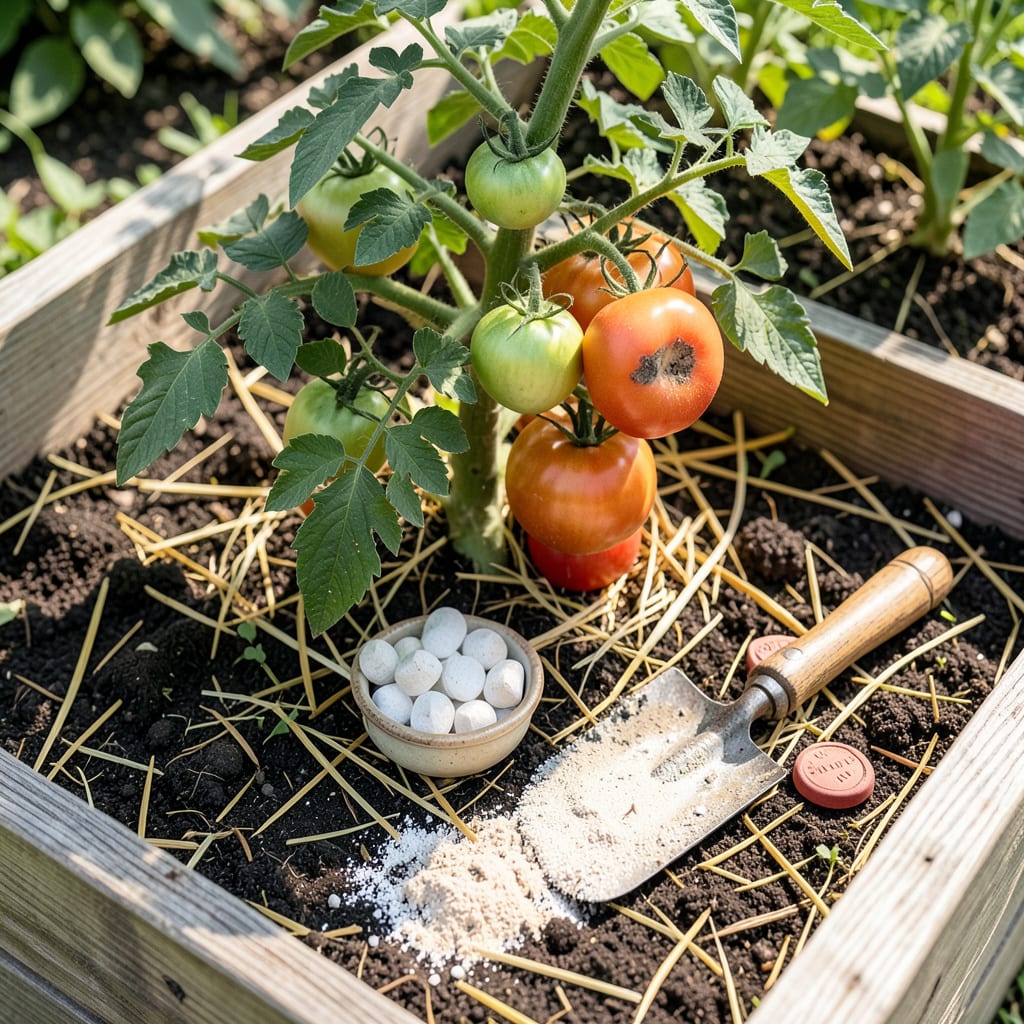
That black, sunken spot on your tomato’s bottom isn’t rot—it’s a calcium SOS. I’ve lost count of how many perfect-looking tomatoes I’ve had to toss because of blossom end rot, until I discovered the Tums trick that saves my harvest every season now.
Crushed antacid tablets deliver fast-acting calcium right where plants need it most. Unlike slow-release amendments, this works in days—not weeks—and costs pennies per plant. My tomato plants bounce back with firm, rot-free fruit within 2-3 applications, and the difference in fruit quality is undeniable. Here’s exactly how to do it without overdoing it.
📚 In This Guide
This simple calcium trick has saved my tomato harvests season after season—here’s exactly how to do it right.
Watch for the first signs of blossom end rot—water-soaked spots on the blossom end of tomatoes that eventually turn black and leathery. I check my plants every 2-3 days during fruit development, especially after heavy rain or inconsistent watering.
The key is catching it before the spots expand. Once the rot covers more than a third of the fruit, that tomato won’t recover. Focus on prevention with new fruit while removing severely affected ones to redirect the plant’s energy.
Crush 4-5 regular Tums tablets (500mg calcium carbonate each) into a fine powder using a mortar and pestle or rolling pin. I’ve found the generic store brands work just as well as name brands for this purpose.
Mix the powder into 1 gallon of warm water until fully dissolved. The water should look slightly cloudy—this means the calcium is properly suspended. Use the solution immediately for best results, as the calcium will settle over time.
Pour the solution directly onto the soil around the base of each plant, using about 1 cup per plant. Avoid wetting the leaves or stems—calcium is absorbed through the roots, not the foliage. I apply this in the early morning so the plants can absorb it before the heat of the day.
Repeat this application every 7-10 days throughout the growing season, especially when you see new fruit forming. Consistency matters more than quantity—small, regular doses prevent deficiencies better than occasional large applications.
Blossom end rot is often triggered by inconsistent moisture levels, so pair your Tums treatment with steady watering. I use a drip irrigation system on a timer to maintain even soil moisture, but hand watering works fine if you’re consistent.
Aim to keep the soil moist but never soggy—stick your finger 1-2 inches deep into the soil. If it feels dry at that depth, it’s time to water. Mulching with 2-3 inches of straw helps maintain consistent moisture levels between waterings.
Check new fruit development 3-4 days after your first application. You should see new tomatoes forming without the characteristic dark spots. If existing fruit shows no improvement after 2 weeks, those tomatoes were likely too far gone when you started treatment.
Continue the Tums applications through the entire growing season. I’ve found that plants treated preventatively from the first flower clusters rarely develop blossom end rot at all, even in challenging weather conditions.
After years of battling blossom end rot, I’ve learned these key lessons that make all the difference in treatment success.
Application Timing: The 7-10 day application window in Step 3 isn’t arbitrary—it matches tomato plants’ calcium absorption cycle. I’ve found that applying every 7 days during fruit set gives the best results, while 10-day intervals work fine during slower growth periods. Don’t wait longer than 10 days, as calcium deficiencies can develop quickly in fast-growing plants.
Solution Preparation: When crushing the 4-5 Tums tablets in Step 2, make sure they’re completely powdered. I use a rolling pin inside a sealed plastic bag for the finest texture. Larger particles won’t dissolve properly in the gallon of water, leaving calcium deposits that won’t reach your plants’ roots. The solution should look uniformly cloudy when ready.
Monitoring Technique: In Step 1, when checking plants every 2-3 days, focus on the newest fruit first. Blossom end rot always appears on developing tomatoes, never on mature ones. I use a small paintbrush to gently mark affected fruit with a dot of white paint—this helps me track which tomatoes appeared after treatment began, so I can accurately assess improvement.
Watering Synergy: The 1-2 inch soil depth check in Step 4 is crucial because that’s where most tomato roots absorb water. I’ve noticed that plants treated with Tums show signs of moisture stress faster than untreated plants—this is actually good! It means they’re actively growing and need consistent moisture to utilize the calcium you’re providing. Consider this your signal to water when the soil feels dry at that depth.
For prevention, crush 2-3 Tums tablets and mix into the soil every 2-3 weeks during fruiting season. If treating active blossom end rot, apply 1 crushed tablet per plant weekly until symptoms improve. Avoid overuse—too much calcium can block other nutrients!
Yes! Any calcium carbonate-based antacid (like generic store brands) works. Check the label—it should list calcium carbonate as the only active ingredient. Avoid flavored or sugar-free versions (they may contain harmful additives).
Tums won’t fix existing rotten spots (those fruits are lost), but new growth should show improvement in 1-2 weeks with consistent use. Pair with even watering—calcium absorbs best in moist soil! For severe cases, combine with a foliar calcium spray.
Tums (calcium carbonate) raises soil pH slightly over time. Test your soil first—ideal pH for tomatoes is 6.0-6.8. If your soil is already alkaline (pH >7), skip Tums and opt for calcium sulfate (gypsum) instead.
Check these common culprits:
