
Beautiful Plants For Your Interior
Beautiful Plants For Your Interior
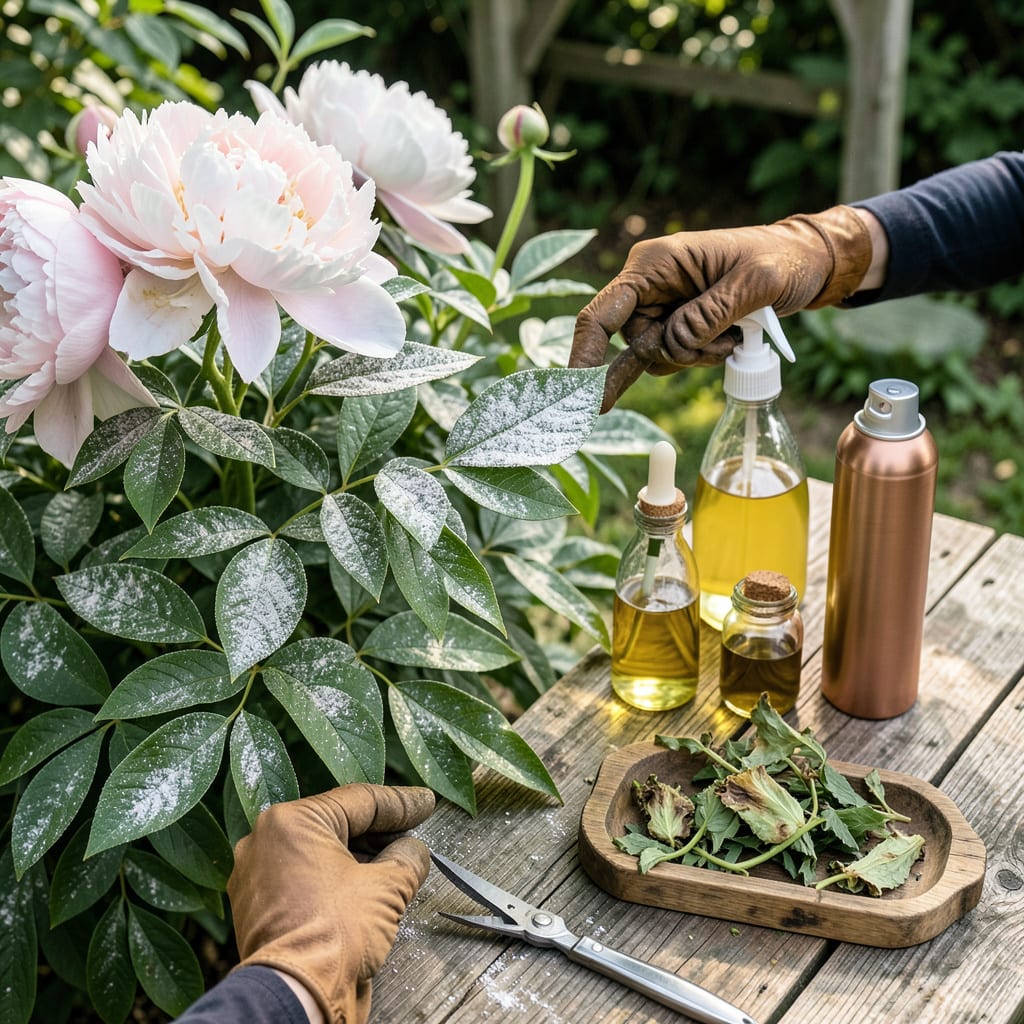
That white powder on your peony leaves isn’t just unsightly—it’s stealing your blooms’ strength. I’ve battled powdery mildew on my peonies for years, and the good news is it’s completely treatable with the right approach. The key is acting fast before it spreads to every stem.
You’ll see those familiar white spots fade within days using simple organic treatments, and your plants will bounce back stronger. My peonies now stay mildew-free all season with just a few preventative habits—no harsh chemicals needed. Let’s clear up those leaves and get your blooms back on track.
📚 In This Guide
This organic approach stops the fungus in its tracks while keeping your plants strong and bloom-ready.
First, confirm you’re dealing with powdery mildew by looking for white, powdery spots on leaves, stems, and buds. The patches will feel slightly fuzzy when you run your fingers over them. I always check the undersides of leaves too, as the fungus often starts there where air circulation is poor.
As soon as you spot it, isolate the affected peony if possible. This prevents spores from spreading to healthy plants via wind or water splash. Don’t panic if you can’t move the plant—just avoid working with it when the foliage is wet, as this is when spores spread most easily.
Using clean, sharp pruners, remove all leaves and stems showing signs of infection. Cut at least 2 inches below any visible mildew to ensure you’re removing all fungal material. I make my cuts at a 45-degree angle to help the plant heal faster and prevent water from pooling on the wound.
Dispose of the infected material in sealed trash bags—never compost it, as home compost piles rarely get hot enough to kill the spores. After pruning, wipe your pruners with rubbing alcohol to prevent spreading the fungus to other plants during your next gardening session.
Mix 1 tablespoon baking soda and 1 teaspoon horticultural oil in 1 gallon of water for an effective organic spray. The baking soda alters the pH on leaf surfaces, making it harder for the fungus to grow, while the oil smothers existing spores. I add a drop of dish soap to help the solution stick to leaves better.
Spray the entire plant thoroughly, including the undersides of leaves and stems, until the solution just begins to drip off. Apply in the early morning so leaves have time to dry before evening. Repeat this treatment every 7-10 days until you see no new mildew growth for at least two weeks.
Powdery mildew thrives in crowded, humid conditions, so thin out surrounding plants if they’re touching your peony. I aim for at least 18-24 inches of space around each peony bush to allow air to circulate freely. If your peonies are planted too close together, consider dividing them in early fall when they’re dormant.
Water at the base of plants using a soaker hose or drip irrigation rather than overhead sprinklers. Wet foliage, especially in the evening, creates perfect conditions for mildew to spread. I water my peonies in the morning so any accidental leaf splashes have time to dry in the sun.
After treating the mildew, give your peonies a boost with a balanced organic fertilizer to help them recover. I use a fish emulsion diluted to half strength, applied to the soil around the plant. Avoid high-nitrogen fertilizers, as they promote lush foliage that’s more susceptible to fungal diseases.
In early spring before growth starts, apply a 2-3 inch layer of mulch around the base of your peonies, keeping it 3 inches away from stems to prevent rot. This helps maintain consistent soil moisture and temperature, reducing stress that makes plants vulnerable to disease. Come fall, cut back all peony foliage to the ground and dispose of it to eliminate any overwintering spores.
After years of battling powdery mildew in my own garden, I’ve learned these practical strategies that make all the difference in keeping peonies healthy and bloom-ready.
Pruning Precision: When removing infected foliage in Step 2, don’t just focus on the visible mildew spots. Cut at least 2 inches below any signs of infection, as the fungus can spread internally through plant tissue. I always make my cuts at a 45-degree angle – this helps water run off rather than pooling on the wound, which could create ideal conditions for new fungal growth. After each cut, wipe your pruners with rubbing alcohol to prevent cross-contamination between plants.
Treatment Timing: The early morning application in Step 3 isn’t just convenient – it’s critical for success. When you spray your baking soda solution at this time, leaves have the entire day to dry in the sun. Evening applications leave foliage damp overnight, which actually encourages mildew growth. I’ve found that treating every 7 days (rather than waiting the full 10) gives better results, especially during humid weather when spores multiply rapidly.
Air Circulation Secret: The 18-24 inch spacing mentioned in Step 4 might seem excessive, but I’ve seen dramatic improvements when I maintain this distance. If your garden layout makes this challenging, try selectively removing competing plants or using small stakes to gently spread peony branches apart. Even creating small channels between plants can significantly reduce humidity levels where mildew thrives.
Preventive Care Boost: When applying mulch in Step 5, don’t skimp on the 3-inch clearance around stems. This isn’t just about preventing rot – it creates a physical barrier that discourages spores from splashing up from the soil onto new growth. I use a small hand trowel to create a shallow moat around each plant stem before adding mulch, which helps maintain this critical space even after watering.
While powdery mildew rarely kills mature peonies, it can weaken the plant over time by reducing photosynthesis. Severe infections may cause stunted growth, fewer blooms, or leaf drop. Young plants are more vulnerable, so treat early to keep them thriving!
Start treatment at the first sign of white spots (usually late spring/early summer). Apply fungicides or sprays in the early morning on dry days for best absorption. Preventative sprays in early spring can also help stop spores before they spread.
Yes! A mix of 1 tbsp baking soda + 1 tsp dish soap + 1 gallon water sprayed weekly can help. Neem oil (applied in the evening) is another great organic option. For severe cases, combine with pruning infected leaves to improve airflow.
Recurring mildew often stems from poor airflow, overhead watering, or shaded, humid conditions. Space plants 3–4 feet apart, water at the base, and prune densely packed stems. Resistant varieties like ‘Sarah Bernhardt’ or ‘Karl Rosenfield’ can also help!
Vinegar (1:10 dilution with water) can work as a mild fungicide, but use cautiously—it may burn leaves if too strong. Test on a small area first! For safer results, stick to baking soda or neem oil, which are gentler but equally effective.
