
Beautiful Plants For Your Interior
Beautiful Plants For Your Interior
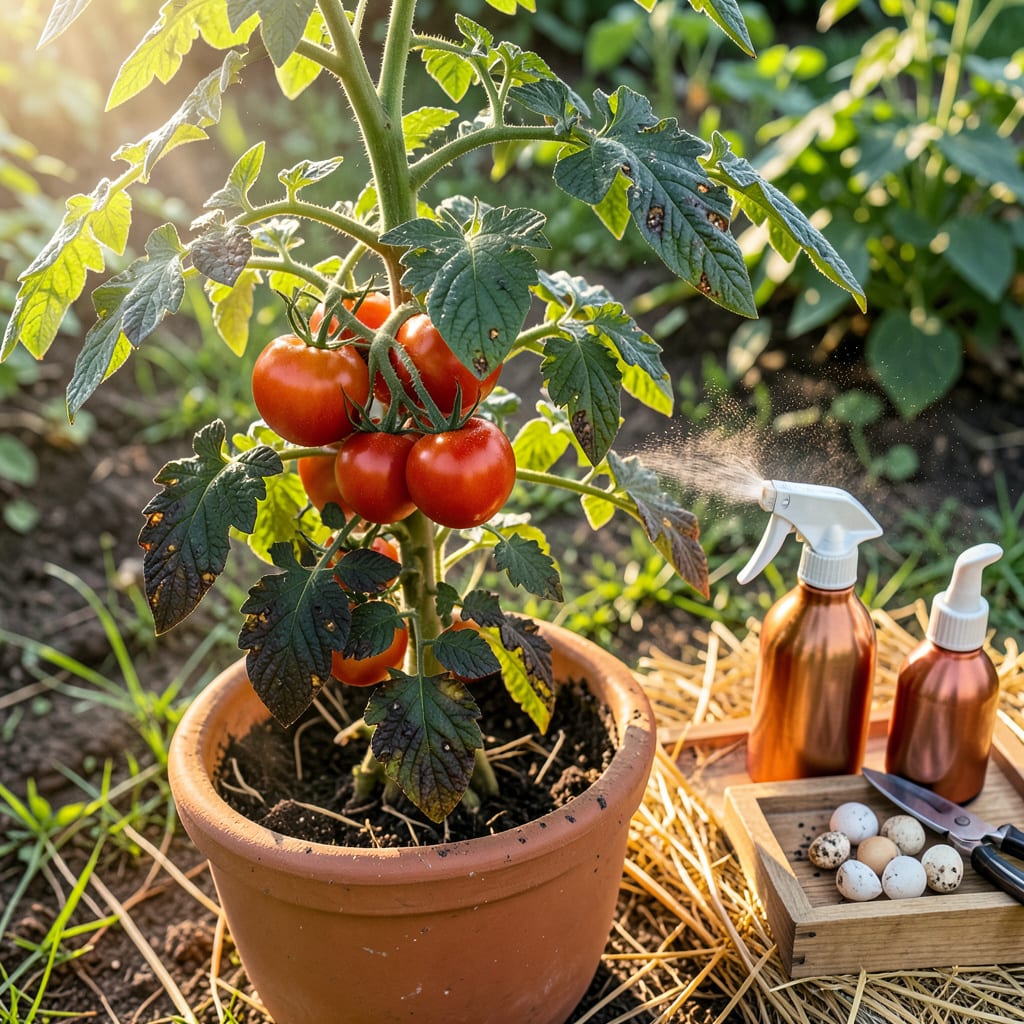
Black leaves on your tomato plants aren’t just unsightly—they’re a warning sign. I’ve seen healthy plants go from vibrant to struggling in days when this issue strikes. The good news? Most cases are fixable if you act fast. Whether it’s fungal spots, nutrient stress, or environmental factors, the right approach can stop the spread and save your harvest.
You’ll want to check three things immediately: leaf patterns, soil moisture, and recent weather. Early blight creates concentric rings, while overwatering turns leaves soft and dark. My plants bounced back within a week using simple treatments like pruning affected areas and adjusting care. Let’s pinpoint exactly what’s happening and how to reverse it before it spreads further.
📚 In This Guide
Don’t panic—black leaves are fixable when you act fast with these targeted solutions.
Black leaves on tomato plants always signal one of three problems: fungal disease (like early blight or late blight), bacterial infection, or environmental stress. I start by examining the pattern. Fungal spots appear as concentric rings or fuzzy edges, while bacterial spots look water-soaked with yellow halos. Environmental blackening (from frost or sunburn) affects entire leaves uniformly.
Check the undersides of leaves with a flashlight—fungal spores often appear as grayish fuzz. Note whether blackening started after heavy rain (likely fungal), pruning with dirty tools (bacterial), or a sudden temperature drop (environmental). This diagnosis determines your next steps.
Using clean scissors (wiped with rubbing alcohol), remove all blackened leaves immediately. Cut at least 1 inch below the blackened area to ensure you remove hidden spores. I bag these leaves in a sealed plastic bag—never compost them, as most home compost piles don’t get hot enough to kill pathogens.
After pruning, wash your hands and tools with soap and water. This prevents spreading pathogens to healthy plants. If more than 30% of the plant is affected, consider removing the entire plant to protect neighbors. Young plants often recover better than heavily infected mature ones.
For fungal issues, spray remaining foliage with a copper fungicide or baking soda solution (1 tablespoon baking soda + 1 teaspoon horticultural oil per gallon of water). Apply in the early morning so leaves dry quickly. Bacterial problems require copper-based bactericides—follow label rates exactly, as overapplication can burn leaves.
Environmental blackening needs no chemicals. Instead, provide afternoon shade if sunburn caused it, or cover plants if frost is forecast. I’ve saved many plants by simply moving potted tomatoes to a sheltered location during extreme weather. Monitor treated plants daily for 3-5 days—new black spots mean the treatment isn’t working.
Water at the base of plants using drip irrigation or a soaker hose—wet leaves invite fungal spores. I switch to morning watering so foliage dries before evening. Space plants 2-3 feet apart for airflow, and prune lower leaves to improve circulation. Mulch with straw to prevent soil splashing onto leaves during rain.
Feed plants with a balanced fertilizer (like 10-10-10) to strengthen their defenses, but avoid high-nitrogen mixes that promote lush, disease-susceptible growth. After heavy rain, I apply fresh mulch and check plants extra carefully for 7-10 days, as this is when infections typically appear. Healthy plants with proper care rarely develop black leaves.
Acting quickly makes all the difference when saving tomato plants with black leaves. Here’s what I’ve learned from years of troubleshooting these issues.
Diagnosis Precision: In Step 1, don’t just look at the top of leaves—flip them over and use a flashlight. I’ve found that fungal spores often hide on the undersides as grayish fuzz before becoming visible on top. The pattern tells you everything: concentric rings mean fungal, water-soaked spots with yellow halos scream bacterial, and uniform blackening points to environmental stress like frost or sunburn. This single step determines whether your treatment will work.
Pruning Technique: When removing affected leaves in Step 2, always cut at least 1 inch below the blackened area—this isn’t arbitrary. I learned the hard way that spores often spread invisibly beyond what you can see. Use rubbing alcohol to sterilize scissors between cuts, and immediately bag the leaves (don’t walk across your garden with them). If more than 30% of the plant is affected, be ruthless—remove the whole plant to protect your others.
Treatment Timing: The early morning application in Step 3 isn’t just convenient—it’s critical. Leaves need to dry quickly after treatment to prevent further issues. For fungal problems, I’ve had great success with the baking soda solution (1 tablespoon baking soda + 1 teaspoon horticultural oil per gallon of water), but you must reapply after rain. Monitor daily for those 3-5 days—new spots mean you need to switch treatments.
Prevention Focus: Step 4’s care adjustments are what separate gardeners who keep facing this problem from those who don’t. The 2-3 feet spacing isn’t just for growth—it’s your best defense against fungal spread. Morning watering at the base (never overhead) and that straw mulch create an environment where pathogens can’t thrive. After heavy rain, I check plants religiously for 7-10 days—that’s when infections love to take hold.
Unfortunately, no. Once tomato leaves turn black, the damage is irreversible. Focus on removing affected leaves and treating the underlying cause (fungus, bacteria, or environmental stress) to prevent further spread. Healthy new growth will replace damaged foliage over time.
Check for clues! Disease-related blackening often starts as spots (early blight) or wilting (bacterial wilt), while overwatering causes soft, mushy leaves with yellowing first. Stick your finger 2 inches into the soil—if it’s soggy, cut back on water.
Act fast! Step 1: Prune blackened leaves with sterilized shears. Step 2: Spray remaining foliage with copper fungicide (for fungus) or baking soda solution (1 tbsp/gallon of water). Step 3: Improve airflow and avoid overhead watering. Repeat treatment every 5–7 days.
Yes, if the fruit looks healthy! Black leaves don’t automatically mean contaminated tomatoes. However, if the issue is bacterial/viral (e.g., spotted wilt), discard affected fruit. Always wash tomatoes thoroughly before eating.
Neem oil can prevent fungal/bacterial spread but won’t “cure” existing black leaves. Mix 1 tsp neem oil + ½ tsp mild soap per quart of water, spray early morning, and reapply weekly.
