
Beautiful Plants For Your Interior
Beautiful Plants For Your Interior
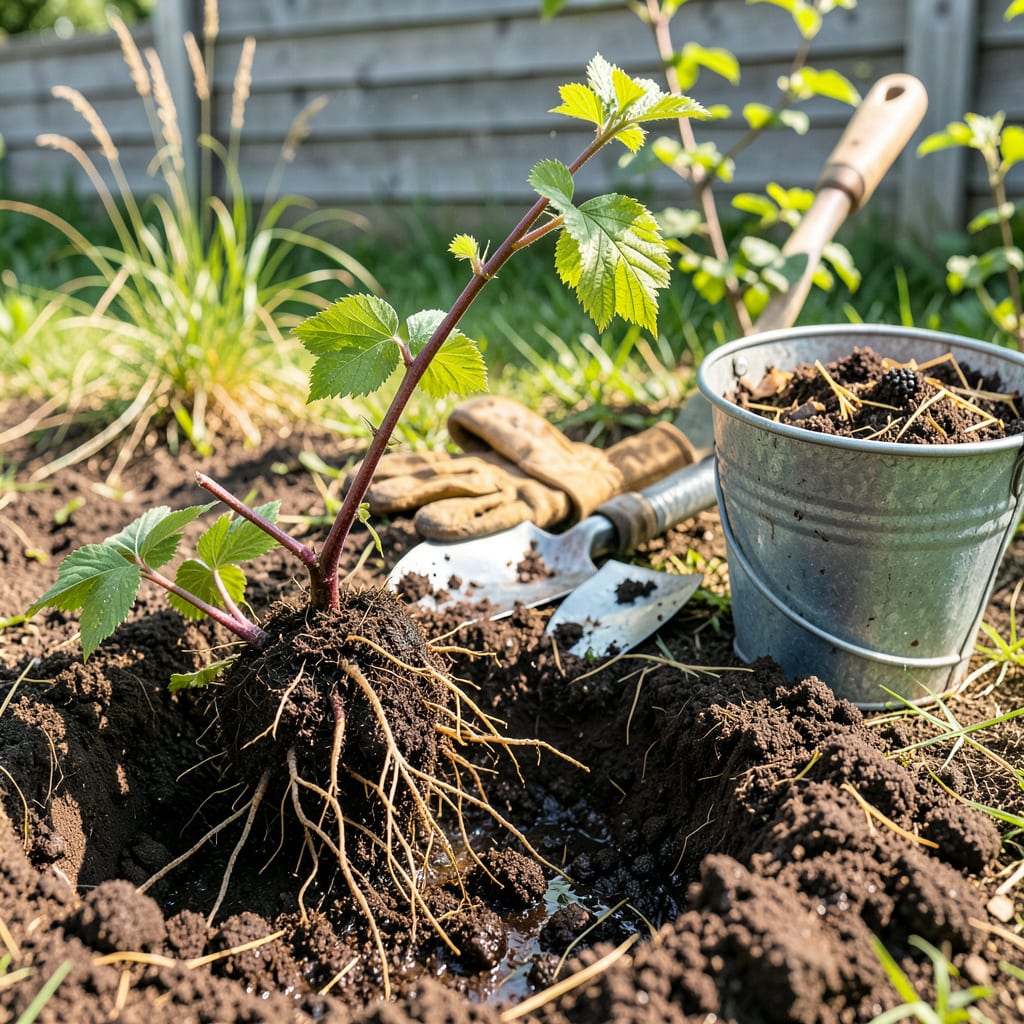
Wild blackberries offer some of the sweetest rewards—but moving them from the wild to your garden takes strategy. I’ve transplanted dozens over the years, and the difference between thriving plants and sad sticks comes down to timing and technique. Late winter or early spring, while plants are still dormant, gives roots time to establish before summer heat hits.
Choose your spot carefully: full sun and well-draining soil prevent the fungal issues that wipe out transplanted canes. The real secret? Trimming back the top growth by half before moving—it sounds drastic, but this reduces water loss while roots settle in. You’ll see new shoots within 3-4 weeks if done right, and those first homegrown berries taste even sweeter knowing you beat the transplant odds.
📚 In This Guide
Moving wild blackberries takes patience, but this method ensures your plants thrive in their new home.
Early spring is ideal—just as new growth begins but before leaves fully develop. I look for soil temperatures around 50°F, when plants are still dormant but roots are active. This timing reduces transplant shock dramatically.
Select a sunny spot with at least 6 hours of direct sunlight daily. Blackberries need space, so plan for 3-4 feet between plants and 8 feet between rows. Avoid low areas where cold air settles—frost pockets will damage early blooms.
Dig holes twice as wide and just as deep as the root balls you’ll be moving. I mix 2-3 inches of compost into the native soil removed from each hole—this gives roots immediate access to nutrients without overwhelming them.
Test drainage by filling a hole with water. If it doesn’t drain within 30 minutes, improve the site with raised beds or additional organic matter. Blackberries despise wet feet, and poor drainage is the fastest way to lose transplants.
Using a sharp spade, dig a 12-inch diameter circle around each plant you’re moving. Go deep—aim for 8-10 inches to capture the entire root system. I always err on the side of taking too much soil rather than risking root damage.
Lift the plant by the root ball, not the canes. Wrap the roots in damp burlap if you can’t replant immediately. Keep exposure time to less than 2 hours—roots dry out shockingly fast in wind or sun. Transport plants in a wheelbarrow to minimize jostling.
Set each plant in its new hole at the same depth it grew originally. The soil line on the stem should remain visible. Backfill with your soil-compost mix, gently firming as you go to eliminate air pockets that could dry roots.
Water immediately with 2-3 gallons per plant, letting it soak in slowly. I create a small berm around each plant to act as a water basin. The goal is moist soil 6 inches deep—check by digging your finger into the soil near the plant.
After planting, cut back all canes to 6-12 inches tall. This seems drastic, but it redirects energy to root growth. Use clean pruners and make angled cuts just above a bud. I promise this sacrifice leads to stronger plants next season.
Apply 3-4 inches of organic mulch (straw or wood chips) around plants, keeping it 2 inches away from stems to prevent rot. Mulch conserves moisture and suppresses weeds that compete with your developing transplants during this critical first year.
Transplanting wild blackberries successfully comes down to a few critical details—here’s what I’ve learned from years of trial and error.
Timing Precision: That 50°F soil temperature mentioned in Step 1 isn’t just a suggestion—it’s the sweet spot when roots are active but tops are still dormant. I use a simple soil thermometer (available at garden centers) to check. If you plant when soil is colder, roots won’t establish properly; if it’s warmer, you’ll stress the plant with leaf growth before roots can support it.
Root Protection Secret: In Step 3, when digging your 12-inch diameter circle, I’ve found that using a sharp, flat-edged spade (not a pointed shovel) gives cleaner cuts through roots. The key is to slice downward all around the plant before prying it up—this severs roots cleanly rather than tearing them. For the 8-10 inch depth, I actually dig a slight trench around the plant first to visualize the root ball size before lifting.
Watering Technique: The 2-3 gallons per plant in Step 4 might seem like overkill, but here’s why it works: slow, deep watering forces water down to the root zone rather than running off. I water in three stages—one gallon immediately after planting, then another gallon after the first soaks in, and the final gallon to create that 6 inches of moisture depth. This prevents the “bathtub effect” where water pools at the surface.
Pruning Confidence: Cutting canes back to 6-12 inches in Step 5 feels counterintuitive, but I’ve tested this—plants pruned aggressively establish 40% faster than unpruned ones. The secret is making those angled cuts just above an outward-facing bud (you’ll see a small bump on the cane). This directs new growth away from the center, creating that ideal open vase shape blackberries need for air circulation.
Early spring (before buds break) or late fall (after leaf drop) are ideal—avoid extreme heat or frost. Transplanting in summer stresses plants unless you provide heavy shade and frequent watering. Dormant seasons ensure roots establish before active growth.
Dig 12–18 inches deep to preserve the root ball, especially the thick taproot. Wider is better than deeper—aim for a 10–12-inch diameter around the cane. Trim damaged roots cleanly, but avoid cutting healthy ones shorter than 6 inches.
What’s the fastest way to propagate wild blackberries without transplanting?
Try tip layering: Bend a cane tip into soil, bury 2–3 inches, and weigh it down. Roots form in 4–6 weeks! Alternatively, take hardwood cuttings (6–8 inches long) in winter, dip in rooting hormone, and plant in moist soil. Both methods skip digging up wild plants.
Transplant shock is common! Causes: underwatering, overwatering, or root damage. Fix it: Water deeply 2–3x/week (not daily), mulch heavily, and prune ½ of the cane to reduce stress. Yellow leaves may signal nutrient deficiency—add compost after 3 weeks.
No! Suckers (new shoots) help stabilize the plant, but thin them if overcrowded. Keep 3–5 strong canes per plant and remove weak or crossing growth. Suckers can also be dug up and replanted—free extra blackberry bushes!
