
Beautiful Plants For Your Interior
Beautiful Plants For Your Interior
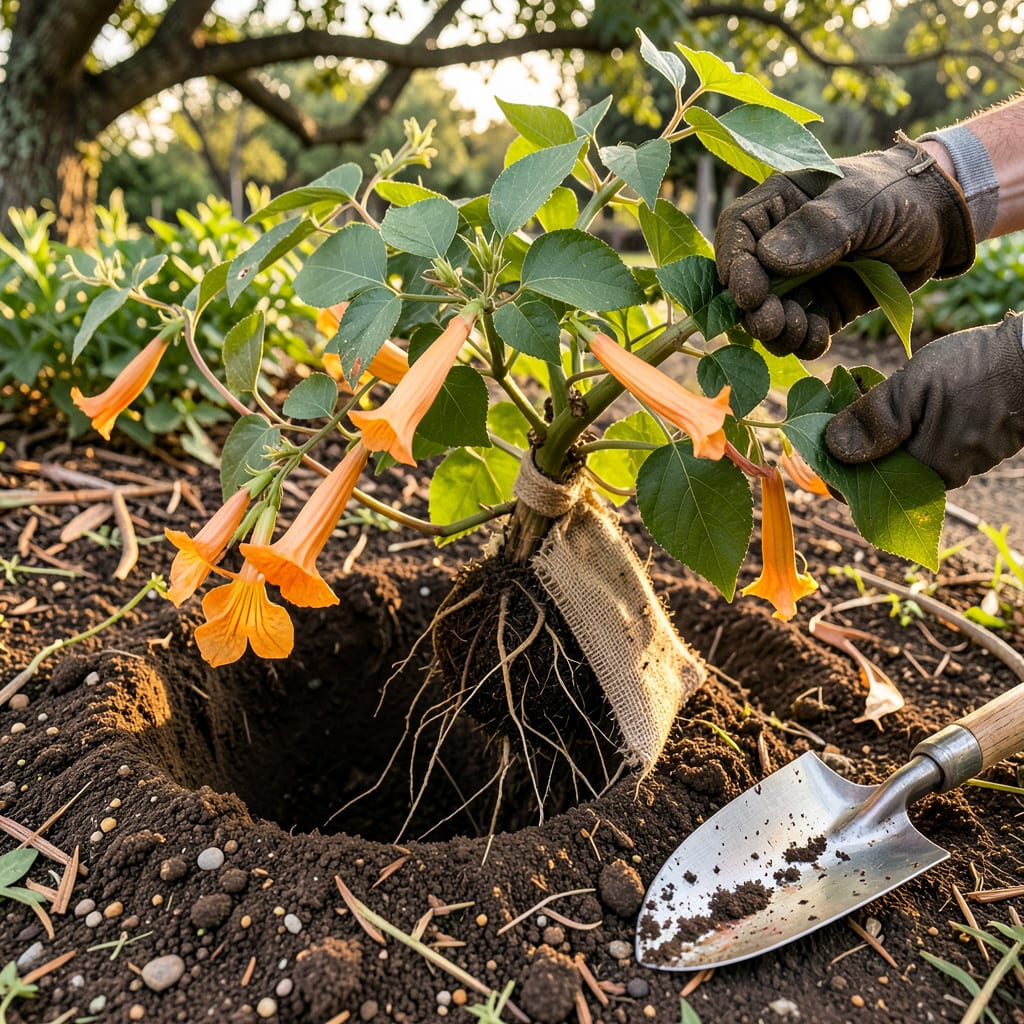
Moving a trumpet vine feels intimidating until you realize how forgiving these plants actually are. I’ve relocated several over the years—some in early spring, others in fall—and the key is timing it right and respecting those aggressive roots. This isn’t delicate surgery; it’s more like giving a determined plant a new zip code where it can really take off.
You’ll want to act when the vine is dormant but the ground isn’t frozen, typically late winter to early spring in most climates. The process itself takes less than an hour with basic tools, but the payoff is a vine that establishes faster and blooms more vigorously than one left to struggle in the wrong spot. Fair warning: it’ll reward your effort by growing fast—so pick your new location wisely.
📚 In This Guide
This method ensures your vine establishes quickly with minimal transplant shock—perfect for even first-time gardeners.
Early spring, just as new growth begins, is ideal for transplanting trumpet vine. The soil should be workable but not waterlogged. I always check by squeezing a handful—it should crumble slightly but hold shape. Avoid transplanting during summer heat or fall dormancy.
Select a sunny spot with at least 6-8 hours of direct sunlight daily. Trumpet vines thrive in poor soil but need space to spread. Position it where the aggressive roots won’t invade nearby structures or delicate plants. A south-facing fence or trellis works perfectly.
Dig a hole twice as wide as the root ball but no deeper. The loose soil around the edges helps roots expand outward quickly. I mix a shovelful of compost into the removed soil—just enough to enrich without making it too fertile (trumpet vines grow aggressively in rich soil).
Create a small mound of soil at the hole’s center where the root ball will rest. This prevents the vine from settling too deep after watering. Check that the hole’s depth matches the current planting level—you should see the same soil line on the stem after transplanting.
Water the vine thoroughly 24 hours before moving to reduce stress. When ready, dig a wide berth around the roots—trumpet vines develop extensive systems. Use a sharp spade to cut through any stubborn roots cleanly rather than tearing them.
Lift the plant by the root ball, not the stems. Place it in the new hole so the soil line matches the original depth. Backfill with your soil-compost mix, firming gently as you go to eliminate air pockets. Water immediately with 1-2 gallons to settle the soil around roots.
Prune back one-third of the top growth right after transplanting. This reduces water loss through leaves while roots re-establish. I use clean bypass pruners to make sharp cuts just above leaf nodes—this encourages bushier regrowth.
Keep the soil consistently moist (but not soggy) for the first 2-3 weeks. You’ll know it’s working when you see new leaf growth. Mulch with 2-3 inches of wood chips to retain moisture and suppress weeds, but keep mulch 3 inches away from the stem to prevent rot.
Watch for wilting in the first week—this is normal as roots adjust. If leaves remain wilted after 48 hours, the plant needs more water. Trumpet vines bounce back quickly once established, often showing new growth within 10-14 days.
As shoots emerge, guide them onto your support structure. I use soft plant ties to secure main stems, then let side shoots twine naturally. The first season focuses on root establishment, so don’t expect full blooms until the following year—this is completely normal for transplanted vines.
Transplanting trumpet vine successfully comes down to a few key details that make all the difference between a thriving vine and one that struggles to establish.
Timing is Everything: The 24-hour pre-watering mentioned in Step 3 isn’t just helpful—it’s critical. I’ve found that deeply saturated roots handle the move with far less shock. Check soil moisture by digging down 6 inches; it should feel uniformly damp like a wrung-out sponge. This preparation gives the vine the hydration reserve it needs during those first 48 hours when roots are adjusting to their new home.
Root Handling Technique: When digging up your vine in Step 3, resist the urge to shake off the soil from the root ball. That soil contains beneficial microbes that help with the transition. Instead, keep as much of the original soil intact as possible. If you encounter particularly thick roots, use clean, sharp pruners to make precise cuts rather than tearing—this prevents jagged wounds that could invite disease.
The First 48 Hours: Pay extra attention during this critical window mentioned in Step 5. I set up a temporary shade cloth if transplanting during unexpectedly warm spring days—even partial shade during peak afternoon hours reduces moisture loss. Keep a watering can nearby and check the soil every 12 hours; it should stay consistently moist but never waterlogged. The vine will tell you what it needs: perky leaves by morning mean you’re on track, while persistent wilting after 48 hours signals it’s time to water more deeply.
Long-Term Training Strategy: As new growth appears in those first 10-14 days, guide the main stems onto your support structure immediately. I use soft fabric strips rather than wire or plastic ties that can cut into developing stems. The key is to train the vine horizontally first—this encourages more flowering sites along the length rather than just at the tips. Remember that first-year growth focuses on roots, so don’t be alarmed if blooms are sparse; this actually means the plant is directing energy where it matters most.
Early spring or late fall (after dormancy) is ideal—avoid extreme heat or frost. In warmer climates (USDA zones 7-11), early fall works too. Transplant on a cloudy day to reduce stress, and water thoroughly afterward to help roots settle.
It’s risky! Summer heat stresses plants, but if necessary, choose a cool, overcast morning. Prune back ⅓ of the foliage to reduce water loss, and keep soil moist for 2-3 weeks post-transplant. Avoid midday sun exposure.
Plant it at the same depth as its original location—burying too deep can rot the stem. Dig a hole twice as wide as the root ball but no deeper. Gently loosen roots if pot-bound to encourage outward growth.
Wilting is normal for 1-2 weeks! Ensure consistent moisture (not soggy) and provide temporary shade. Trim damaged leaves to redirect energy. If wilting persists beyond 3 weeks, check for root damage or overwatering.
Yes! Choose a large container (15+ gallons) with drainage holes. Use well-draining soil and prune roots annually to control size.
