
Beautiful Plants For Your Interior
Beautiful Plants For Your Interior
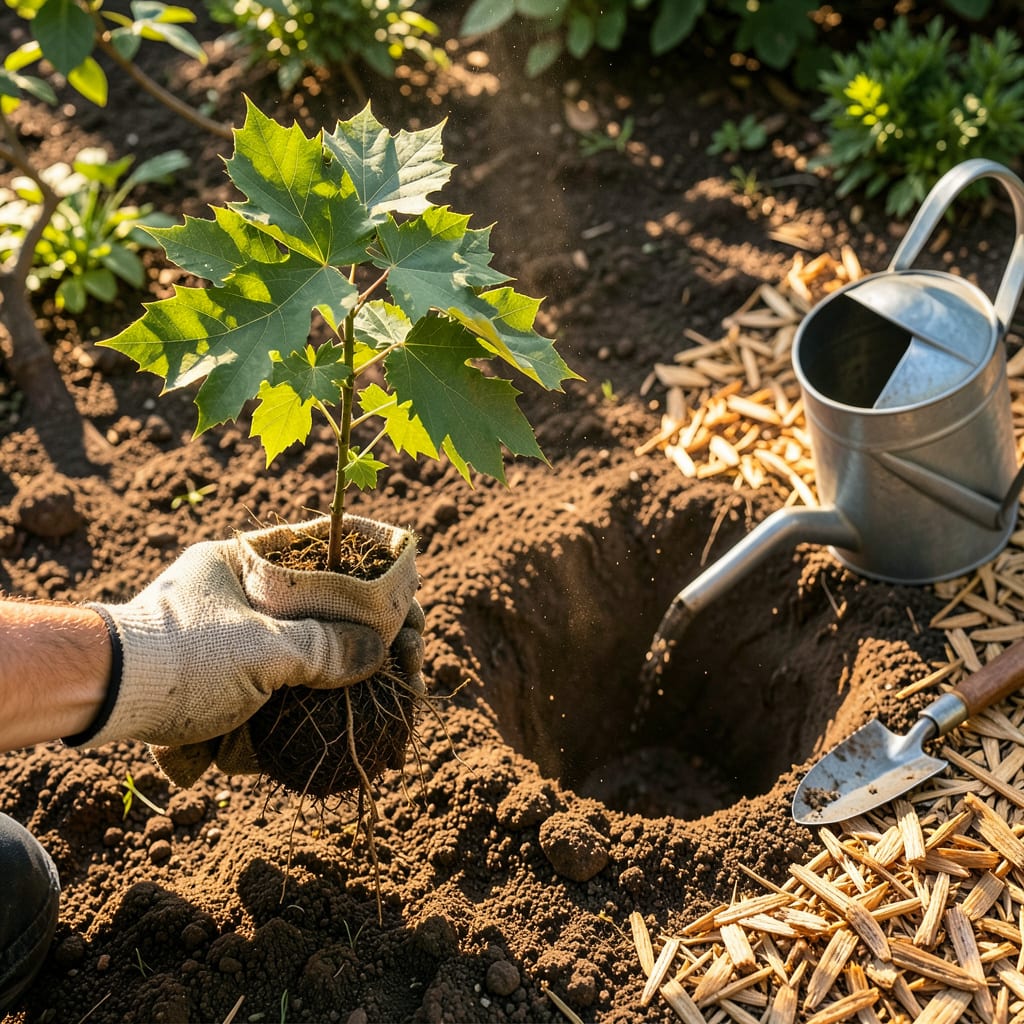
Moving a tree feels like performing surgery on your landscape—but when done right, it gives that plant a second life. I’ve relocated everything from young maples to stubborn evergreens, and the difference between success and failure comes down to timing and technique. The right season (early spring or fall) and careful root handling mean your tree won’t just survive—it’ll thrive in its new spot.
You’ll avoid the heartbreak of transplant shock with a few key steps: digging a proper hole (twice as wide as the root ball), keeping roots moist, and staking only if absolutely necessary. Within 6-8 weeks, you’ll see new growth proving the move was worth it. No guesswork—just a healthy tree that looks like it’s always been there.
📚 In This Guide
Moving a tree successfully comes down to timing, technique, and giving roots the care they need during transition.
Dig the new hole twice as wide as the root ball but no deeper than the tree’s current planting depth. I use a sharp spade to create clean edges, which prevents root circling later. The sides should slope gently to encourage outward root growth rather than downward compaction.
Test the hole’s dimensions by placing the root ball inside before lifting the tree. You want 2-3 inches of clearance on all sides for backfill soil. If the hole collects water after testing with a gallon of water, improve drainage by amending with coarse sand or relocating to higher ground.
Begin by watering the tree deeply 24-48 hours before moving to hydrate roots and reduce transplant shock. Using your spade, dig a trench around the tree at the drip line (where branches end), working inward to expose the root ball’s perimeter. For trees under 2 inches in diameter, aim for a 12-18 inch diameter root ball.
Once the trench reaches about 12 inches deep, undercut the root ball at a 45-degree angle to sever anchoring roots cleanly. Slide a tarp under the root ball, then lift by the tarp—not the trunk—to preserve root structure. Never let the roots dry out; cover with damp burlap if transporting.
Place the tree in the new hole at the exact same depth it grew previously—the root flare (where roots meet trunk) should sit 1-2 inches above soil level. Rotate the tree to position its best face forward, then begin backfilling with native soil. I tamp the soil gently every 4-6 inches to eliminate air pockets without compacting.
Create a 3-inch-high watering berm around the hole’s perimeter to direct moisture to roots. Water immediately with 5 gallons per inch of trunk diameter, allowing water to soak in before adding more. This initial deep watering settles soil around roots and removes air gaps that could dry them out.
Install three sturdy stakes outside the root ball at 120-degree angles, using wide tree straps (never wire) to secure the trunk. The stakes should allow 1-2 inches of movement for trunk strengthening while preventing uprooting in winds. Remove stakes after 12 months to avoid girdling.
Apply 2-4 inches of organic mulch (wood chips or shredded bark) over the root zone, keeping it 3 inches away from the trunk to prevent rot. Mulch conserves moisture and regulates soil temperature—critical for root regeneration. Monitor soil moisture weekly; new transplants need consistent moisture but never soggy conditions.
Check the tree daily for the first 2 weeks, then weekly for 3-6 months. Signs of stress include wilting leaves (underwatering) or yellowing foliage (overwatering). I use the finger test—soil should feel moist 1-2 inches down but not saturated. Adjust watering based on rainfall and temperature.
Delay fertilizing until you see new growth (typically the following spring). Prune only to remove damaged branches—never prune more than 10% of the canopy in the first year. Most trees establish fully in 1-3 years; patience during this period ensures long-term health and stability.
After moving dozens of trees over the years, I’ve learned that success hinges on understanding what’s happening beneath the soil. Here’s what the instructions don’t tell you about keeping your tree thriving through the transition.
Root Ball Preservation: In Step 2, when you’re digging that 12-inch-deep trench, work methodically from the drip line inward. I’ve found that using a sharp, flat-edged spade (not a pointed shovel) creates cleaner cuts through roots, reducing shock. The 12-18 inch diameter root ball specified for trees under 2 inches is critical—this maintains about 80% of the tree’s active root system. Anything smaller risks starvation during establishment.
Hydration Timing: That 24-48 hour pre-move watering window in Step 2 isn’t just about moisture—it’s about cellular preparation. Water deeply enough that moisture reaches 12 inches down (test with a soil probe). This triggers root cells to store maximum water and nutrients for the transition. I use a soaker hose on low for 2-3 hours per inch of trunk diameter to achieve proper saturation without runoff.
Backfill Technique: When tamping soil every 4-6 inches in Step 3, use the handle of your spade—not your foot. Foot pressure can compact soil to 80% density, while hand tamping achieves ideal 60% density for root penetration. Create a slight mound (about 1 inch high) at the berm’s inner edge to prevent water from pooling against the trunk. This small detail prevents crown rot that I’ve seen kill otherwise healthy transplants.
Post-Transplant Monitoring: During those critical first 2 weeks of daily checks mentioned in Step 5, establish a baseline moisture reading with a soil moisture meter ($20 at garden centers). I aim for 30-40% moisture at 6-inch depth—this is the sweet spot between drought stress and root rot. Morning checks are most accurate, as evening readings can be falsely high from daytime evaporation.
The ideal time is early spring (before buds break) or fall (after leaves drop), when the tree is dormant. Avoid extreme heat or cold—this reduces stress and helps roots establish before active growth. Evergreens prefer early spring, while deciduous trees thrive in fall.
As a rule of thumb, the root ball should be 9–12 inches wide per inch of trunk diameter. For example, a 2-inch trunk needs a 18–24-inch-wide root ball. Depth should match the root flare (where roots meet soil). Bigger is better—it preserves more roots!
You can transplant mature trees (up to 10+ years old), but it’s riskier and requires professional equipment. Younger trees (3–5 years old) adapt faster and recover better. If moving a large tree, consult an arborist to avoid shock or failure.
Wilting is normal for 1–2 weeks (transplant shock). Keep soil consistently moist (not soggy) and mulch the base. If leaves stay crispy or drop after 3 weeks, check for underwatering, overwatering, or root damage. Prune dead branches to help recovery.
If moving isn’t feasible, consider:
