
Beautiful Plants For Your Interior
Beautiful Plants For Your Interior
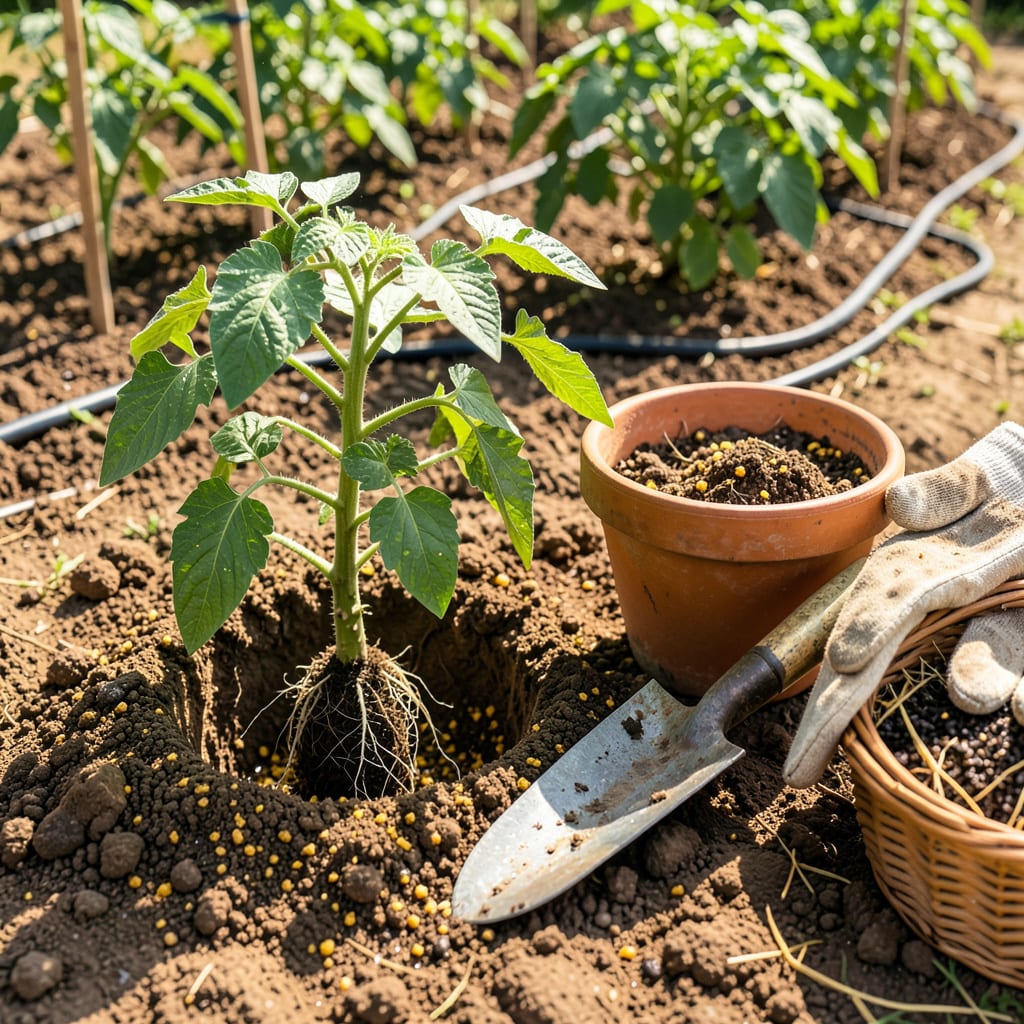
That first transplant can make or break your tomato season. I’ve learned the hard way that timing and technique matter more than luck—move plants too early or too roughly, and you’ll spend weeks playing catch-up. The right approach turns leggy seedlings into powerhouse producers with roots that run deep and stems that stand strong against wind.
You’ll want to act when seedlings hit 6-8 inches tall with their first true leaves, and when nighttime temps stay above 50°F. The process itself takes less than 20 minutes per plant but pays dividends all season. Bury those stems deep, water them in well, and watch how they bounce back faster than store-bought transplants ever could.
📚 In This Guide
Here’s the method I’ve perfected over years of growing—minimal shock, maximum growth.
Choose a location with full sun (at least 6-8 hours daily) and well-draining soil. For in-ground planting, dig a hole 12 inches deep and wide—tomato roots spread aggressively. Mix a handful of compost into the bottom of the hole to provide immediate nutrients.
If transplanting into containers, select pots at least 18 inches in diameter with drainage holes. Fill with a high-quality potting mix amended with 20% perlite for aeration. Avoid compacting the soil; leave it loose for root expansion.
One week before moving plants outside, begin hardening off by placing seedlings in a shaded, sheltered spot for 1-2 hours the first day. Gradually increase exposure to sun and wind by 1-2 hours daily. This prevents transplant shock, which stunts growth for weeks.
Watch for wilting or leaf curling—signs the seedlings need more gradual acclimation. By day seven, they should tolerate a full day outdoors. Transplant on an overcast afternoon to reduce stress further.
Water seedlings thoroughly 1 hour before transplanting to keep the root ball intact. Turn the pot sideways and tap the rim to loosen the plant. Slide it out by cradling the stem between your fingers—never pull by the leaves, which tear easily.
Check the roots: healthy ones are white and fibrous. If they’re circling the pot, gently tease them apart to encourage outward growth. Trim any dark or mushy roots with clean scissors to prevent disease.
Set the seedling in the hole so the soil covers two-thirds of the stem—tomatoes root along buried stems, creating a stronger plant. Backfill with soil, pressing lightly to eliminate air pockets. Water immediately with 1-2 gallons per plant until moisture reaches the root zone.
Add a 2-3 inch layer of mulch (straw or shredded leaves) to retain moisture and suppress weeds. Avoid piling mulch against the stem, which invites rot. Stake or cage plants now to prevent disturbing roots later.
Check soil moisture daily—it should stay evenly damp but not soggy for the first 5-7 days. Shield plants from strong winds or heavy rain with a temporary cloche or row cover. Remove covers during the day to allow pollination.
Watch for yellowing lower leaves, a normal response to transplant stress. If new growth appears within a week, the plant has established successfully. Reduce watering frequency after the first week to encourage deep root development.
After years of trial and error, I’ve learned these subtle adjustments make all the difference between struggling seedlings and thriving plants.
Sunlight Strategy: The 6-8 hours of daily sun mentioned in Step 1 isn’t just a suggestion—it’s critical for fruit production. I’ve found that morning sun is gentler for newly transplanted seedlings, so position plants where they’ll get eastern exposure first. Afternoon sun can be intense during that first week when plants are vulnerable. If your garden gets strong western sun, consider temporary shade cloth for the first 5-7 days while roots establish.
Hardening Off Precision: The gradual 1-2 hour daily increase in Step 2 prevents shock, but here’s what nobody tells you—wind does more damage than sun during this phase. I lost several plants early on by placing them in sheltered sun but exposed to gusty conditions. Even light breezes can desiccate tender leaves. Use a windbreak or position seedlings near a fence during hardening off, especially in the first three days.
Root Handling Technique: When inspecting roots in Step 3, resist the urge to wash off all the soil. I used to rinse roots clean to “see better,” but this removes beneficial microbes and damages fine root hairs. Instead, gently brush away just enough soil to check for circling or rot. Healthy roots should feel firm when lightly squeezed—mushy texture indicates overwatering before transplant.
Watering Wisdom: The 1-2 gallons per plant in Step 4 isn’t excessive—it’s insurance. I water in two stages: first to settle the soil around roots, then wait 10 minutes before adding the remainder. This prevents water from pooling at the base. For container plants, water until it runs freely from drainage holes, then repeat after 5 minutes. The perlite in your mix (that 20% from Step 1) will help distribute moisture evenly without waterlogging.
Transplant after the last frost when soil temps hit 60°F+ (use a thermometer!). Seedlings should have 2-3 true leaves and be 6-10 inches tall. For indoor starts, harden off plants 7-10 days before moving them outside to avoid shock. Pro tip: Cloudy days or late afternoons reduce transplant stress!
Choose 5-gallon+ containers with drainage holes for dwarf/patio varieties, or 10+ gallons for indeterminate types. Use high-quality potting mix (not garden soil) and add a cage/trellis at planting. Containers dry faster—water daily in heat and fertilize every 2 weeks with a balanced 10-10-10 formula.
Wilting is normal for 2-3 days (transplant shock), but if it persists:
Yes! Trim the lowest 1-2 branches to prevent soil-borne disease and encourage upward growth. For leggy seedlings, bury the stem deeper (up to the first leaves)—roots will form along the buried stem! Avoid heavy pruning; remove only damaged or yellowing leaves to reduce stress.
It’s risky but doable if roots aren’t disturbed. Ideal for upsizing containers (e.g., 4-inch pot → 1-gallon pot). Water thoroughly 1-2 hours before moving, and never transplant flowering plants—it can drop blooms/fruit. Limit to 2 transplants max per plant for best results.
