
Beautiful Plants For Your Interior
Beautiful Plants For Your Interior
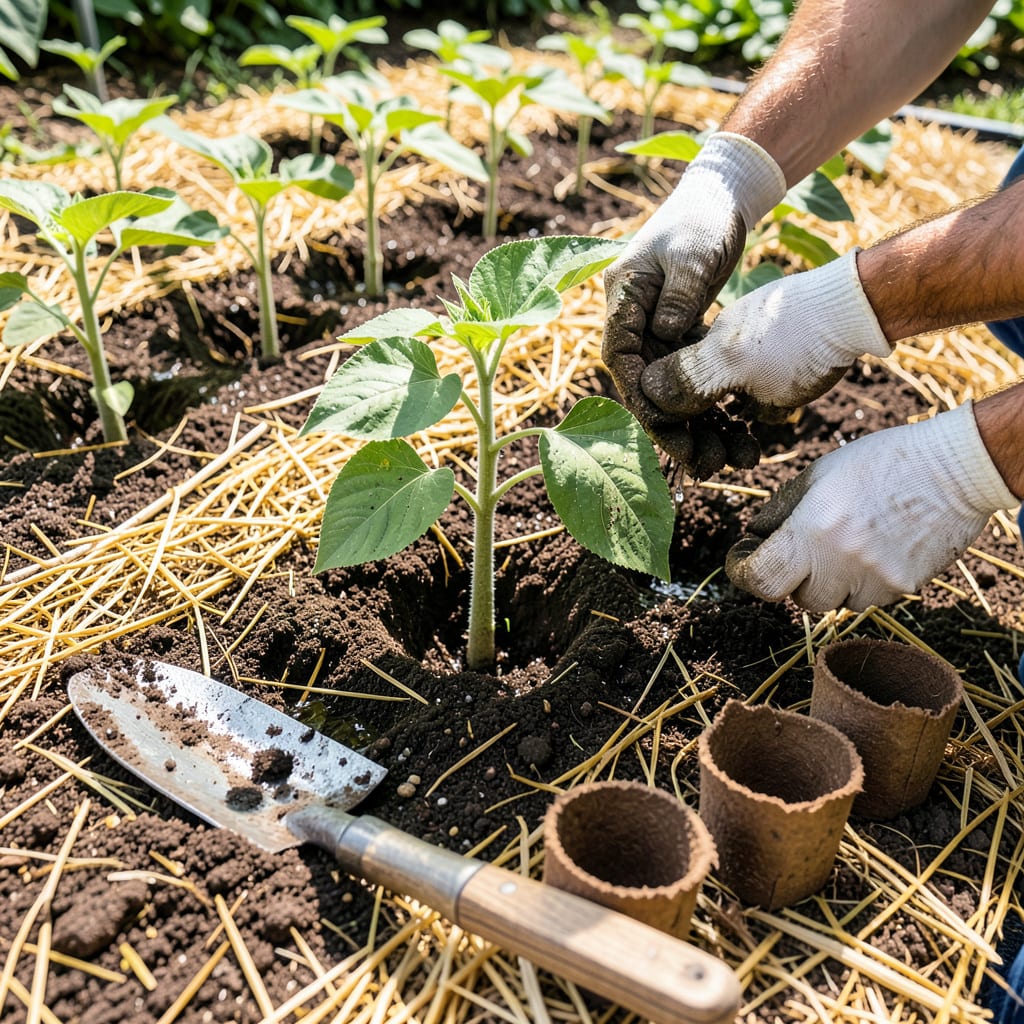
There’s a moment when sunflower seedlings are ready to move—when their first true leaves appear and the stems look sturdy enough to handle the transition. I’ve learned through trial and error that timing this right means the difference between plants that thrive and those that struggle to recover. The key is waiting until they’re 2-3 inches tall but before roots get bound in their starter pots.
What most guides don’t tell you is that sunflowers hate root disturbance. The trick is keeping the soil intact around those delicate roots while giving them room to spread in their new home. I’ll walk you through the exact method that’s given me 90% survival rates season after season, even with the tallest varieties. No fancy tools required—just a trowel, some compost, and about 20 minutes of careful work.
📚 In This Guide
Here’s my tried-and-true method for moving your delicate sunflower starts without shocking them.
Choose a location with full sun (at least 6-8 hours daily) and well-draining soil. I dig holes that are twice as wide as the current root ball but no deeper—the stem should sit at the same level as before. Space holes 12-18 inches apart for dwarf varieties or 2-3 feet apart for giant sunflowers.
Mix a handful of compost into the bottom of each hole to give roots an immediate nutrient boost. Water the holes thoroughly before transplanting so the soil is evenly moist but not muddy. This prevents roots from drying out during the move.
Water your seedlings 1-2 hours before transplanting to help the root ball hold together. Turn the container sideways and tap the bottom gently to loosen the root mass. If resistant, squeeze the sides of a plastic pot to release the soil.
Support the stem between your fingers while cradling the root ball with your other hand. Never pull by the stem—sunflower seedlings snap easily. If roots are circling, gently tease them apart with your fingers to encourage outward growth.
Place the seedling in the prepared hole so the soil line matches its original level. Burying the stem too deep causes rot, while planting too high exposes roots. Fill around the root ball with native soil, pressing lightly to eliminate air pockets.
Create a shallow watering basin around each plant by mounding soil in a 3-inch circle around the stem. This directs water straight to the roots where it’s needed most during the critical first week.
Give each transplant 1-2 cups of water right after planting, letting it soak in slowly. The soil should feel moist 1-2 inches down when you check with your finger. Avoid wetting the leaves to prevent fungal issues.
If transplanting during hot weather, provide temporary shade with a cardboard box or shade cloth for 2-3 days. Watch for wilting in the late afternoon—this is normal initially, but leaves should perk up by morning.
Check soil moisture daily for the first week—sunflower roots need consistent moisture to establish. After 7-10 days, you’ll see new leaf growth, which signals successful transplanting. Reduce watering frequency but increase volume as plants grow.
Install stakes for tall varieties when plants reach 12 inches high. Use soft ties to secure stems, allowing room for expansion. You’ll notice stems thickening rapidly once roots establish—this is when sunflowers really take off.
After years of trial and error with sunflowers, I’ve learned that success comes down to a few critical details. Here’s what makes the difference between thriving plants and disappointing losses.
Timing is Everything: The 1-2 hours of pre-watering in Step 2 isn’t just helpful—it’s essential. I’ve found that seedlings removed without this preparation lose up to 30% more roots during transplanting. Set a timer when you water, and don’t rush this step. The moisture helps the root ball hold its shape when you’re handling it, which prevents the shock that stunts growth for weeks.
The Depth Detail: In Step 3, when I say to match the original soil line, I mean it precisely. Here’s what nobody tells you—burying just 1/2 inch too deep can cause stem rot in sunflowers. Their stems aren’t designed to be underground. Use a ruler if you’re unsure, or lay a stick across the hole to check the level before filling. This single detail prevents more transplant failures than any other factor.
Watering Wisdom: The 1-2 cups of water immediately after transplanting (Step 4) should go in slowly—count to five between pours. I use a measuring cup to ensure I’m not overdoing it. The goal is moist soil 1-2 inches down, not soggy. Overwatering at this stage is worse than underwatering because it suffocates the roots when they’re most vulnerable. Check moisture by inserting your finger into the soil—if it comes out with soil sticking but no dripping water, you’ve got it right.
Sun Protection Strategy: That 2-3 days of shade mentioned in Step 4 is non-negotiable during hot weather. I’ve lost count of how many seedlings I’ve saved by using old window screens as shade cloth—they allow air flow while filtering harsh sunlight. Position your shade to block only the afternoon sun (after 2 PM) when transplanting in spring or fall. Morning sun actually helps them recover faster by stimulating photosynthesis without the stress of midday heat.
Transplant seedlings after the last frost when soil temps reach at least 50°F (10°C). Typically, this is 2-3 weeks after your region’s last frost date. Check local weather forecasts and avoid cold snaps! Morning plantings reduce transplant shock.
Choose pots at least 12–18 inches deep with drainage holes. Use well-draining potting mix and place pots in full sun (6+ hours daily). Dwarf varieties like ‘Teddy Bear’ thrive in containers—just water more frequently than in-ground plants.
Wilting is often transplant shock—common but fixable! Causes include root disturbance, under/overwatering, or sudden temperature changes. Water deeply after transplanting, provide temporary shade for 2-3 days, and avoid fertilizing for a week. Most seedlings bounce back in 3–5 days.
Spacing depends on variety:
Yes! Harden off seedlings 7–10 days before transplanting by gradually exposing them to outdoor conditions. Start with 1–2 hours of shade, increasing sun/wind exposure daily. Skip this step, and tender leaves may scorch or wilt. Pro tip: Avoid windy days during hardening!
