
Beautiful Plants For Your Interior
Beautiful Plants For Your Interior
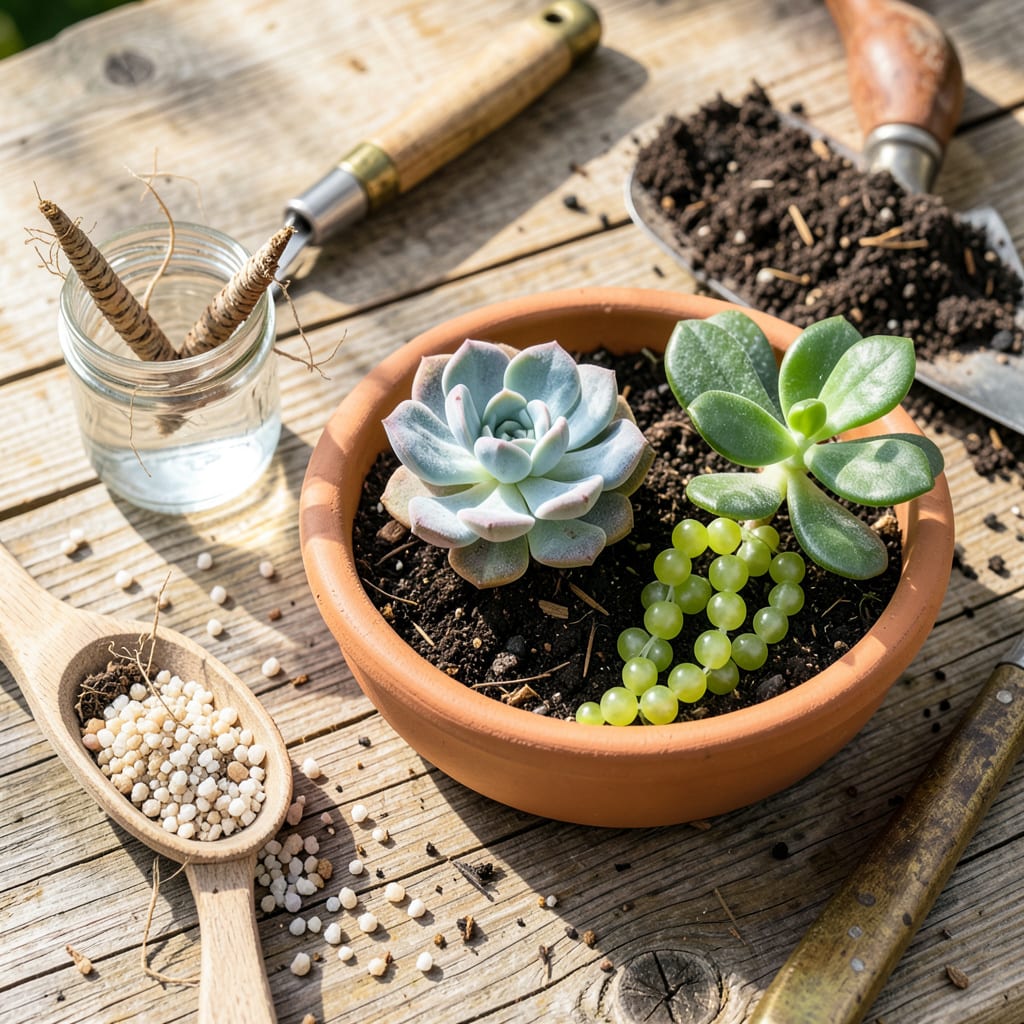
That first time I turned a single succulent leaf into a thriving new plant, I felt like I’d unlocked a gardening superpower. Transplanting succulents from cuttings is one of those satisfying projects where you get visible results fast—no green thumb required. The process is simple: take a healthy cutting, let it callus, then give it the right soil and light conditions.
What you’ll end up with is a collection of baby plants that look exactly like their parent—except you grew them yourself. The best part? Most succulents root in 2-4 weeks with minimal care. I’ve propagated everything from echeverias to jade plants using this method, and once you see those first tiny roots, you’ll be hooked on making more.
📚 In This Guide
This method ensures your cuttings develop strong roots with minimal stress—perfect for beginners and experienced growers alike.
Choose mature, healthy stems at least 3-4 inches long from the parent plant. Look for firm, plump sections with no signs of wrinkling or discoloration—these indicate optimal water storage for propagation success. I always select cuttings with visible nodes (those small bumps where leaves attach), as these are where new roots will emerge.
Use clean, sharp scissors to make a precise cut just below a node. Sterilize your tool with rubbing alcohol beforehand to prevent disease transmission. Let the cutting callous over for 2-3 days in a warm, dry location with indirect light. You’ll know it’s ready when the cut end develops a dry, slightly hardened surface.
Fill a shallow tray or small pot with a fast-draining propagation mix—I recommend equal parts perlite and coarse sand. Moisten the mix lightly until it feels like a wrung-out sponge, then smooth the surface. Avoid compacting it, as succulent roots need loose, aerated conditions to establish properly.
Lay the calloused cutting horizontally on the mix surface—don’t bury it. The nodes should make direct contact with the medium. Place the tray in bright, indirect light (an east-facing windowsill works perfectly) and maintain temperatures between 65-75°F. You’ll see tiny pink root nubs forming at the nodes within 2-3 weeks.
Mist the propagation mix every 5-7 days or when the surface feels completely dry. Use a spray bottle to deliver fine droplets that won’t dislodge the developing roots. I check for root development by gently lifting the cutting—when you see 1/2 inch of white root growth, it’s ready for transplanting.
Watch for signs of stress: yellowing indicates too much moisture, while shriveling means the cutting needs more humidity. If mold appears, increase airflow immediately by moving to a breezier location. This stage requires patience—rushing leads to weak root systems that fail after transplanting.
Prepare individual pots with a cactus/succulent-specific potting mix (I blend mine with extra perlite for drainage). Create a small hole and carefully position the rooted cutting so the base sits just above the soil line. Firm the mix gently around it—succulents resent compacted soil that prevents oxygen flow to roots.
Don’t water immediately after transplanting. Wait 3-5 days to allow any damaged roots to heal. When you do water, soak thoroughly until it runs from the drainage holes, then let the soil dry completely before watering again. Place in morning sun initially, gradually increasing to full sun over 2 weeks to prevent sunburn on tender new growth.
These practical insights will help you avoid common pitfalls and achieve better rooting success with your succulent cuttings.
Callousing Technique: The 2-3 day callousing period in Step 1 is non-negotiable for preventing rot. I’ve found that placing cuttings on a paper towel (rather than directly on surfaces) allows better airflow during this critical phase. If your cutting develops a blackened end instead of a dry, hardened surface, it’s a sign of excess moisture—start over with a fresh cutting.
Node Contact Strategy: In Step 2, ensure every node makes direct contact with your propagation mix. I use a toothpick to gently press nodes into the perlite-sand mixture without burying the cutting. This simple technique doubles my rooting success rate. The nodes must maintain contact throughout the 2-3 week period—check daily and adjust if they’ve shifted.
Moisture Management: During the 5-7 day misting cycle in Step 3, use room-temperature water to avoid shocking the developing roots. I’ve ruined batches by using cold water straight from the tap. The surface should dry completely between mistings—when in doubt, wait an extra day. Overwatering at this stage creates the perfect environment for fungal growth that can kill your cuttings.
Transplant Timing: The 3-5 day waiting period after transplanting in Step 4 isn’t arbitrary. This allows microscopic root hairs damaged during transplanting to heal before facing moisture. I mark my calendar and resist the urge to water early. When you do water, use the “soak and dry” method—water should run freely from drainage holes, then let the soil dry completely before repeating.
Most succulents take 2–6 weeks to grow roots, depending on the species and environment. Keep cuttings in bright, indirect light and wait until roots are 1–2 inches long before transplanting. Patience is key—rushing can damage delicate new roots!
Yes! Called the “soil propagation” method, you can skip water rooting by planting cuttings directly in well-draining soil. Just let the cut end callus (dry out) for 1–3 days first to prevent rot. Water sparingly until roots establish.
Overwatering or poor drainage is usually the culprit. Ensure your soil mix has 50% perlite/pumice, and water only when soil is bone-dry. If rot appears, trim the affected part, let it callus, and restart the process in fresh, dry soil.
Aim for spring or early summer—succulents grow fastest in warm weather! Avoid winter (dormant phase) or extreme heat (stresses cuttings). If indoors, year-round propagation works with grow lights and consistent temps.
Nope! Succulents root easily without it, but hormone gel/powder can speed up the process for stubborn varieties (like Echeveria). If using, dip the callused end lightly—too much can burn tender cuttings.
