
Beautiful Plants For Your Interior
Beautiful Plants For Your Interior
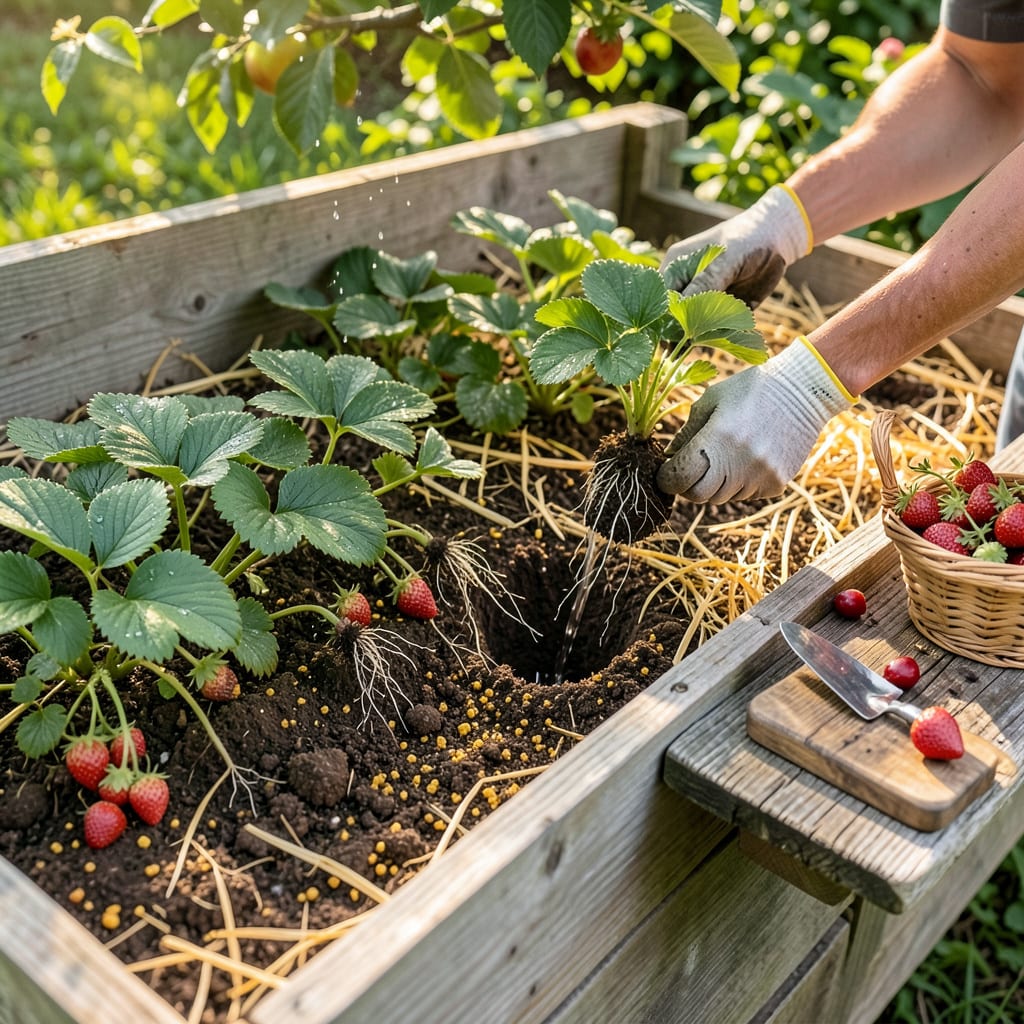
Moving strawberry plants feels risky—like you might break something delicate. But after relocating dozens of my own, I can tell you it’s simpler than it seems. The key is timing: early spring or fall, when plants are dormant but roots are ready to spread. Get this right, and you’ll double your harvest next season.
What most people miss? The crown—that little bump where leaves meet roots—must stay above soil. Bury it, and rot sets in. Do it properly, and your plants will establish in 2-3 weeks, sending out new runners by summer. No fancy tools needed—just a trowel, some compost, and 20 minutes of your time.
📚 In This Guide
Transplanting strawberries doesn’t have to be intimidating—here’s the method I’ve perfected for minimal shock and maximum fruit production.
Timing is everything with strawberries. I transplant in early spring as soon as the soil is workable but before new growth begins, or in late summer/early fall (6 weeks before first frost). The soil temperature should be above 50°F—you can test this by inserting a soil thermometer 2 inches deep at 9 AM.
Avoid transplanting during flowering or fruiting, as this stresses the plant. If you must move plants during production, sacrifice the current crop by pinching off all flowers and fruit. This redirects energy to root establishment, which you’ll see as new leaf growth within 7-10 days.
Select a location with full sun (6+ hours daily) and well-draining soil. I work the soil to 12 inches deep, incorporating 2-3 inches of compost to improve both drainage and moisture retention. Strawberries thrive in slightly acidic soil (pH 5.5-6.5), so test and amend if needed with sulfur or lime.
Space plants 12-18 inches apart in rows 2-3 feet apart for June-bearing varieties, or 10-12 inches apart for day-neutrals. This spacing prevents foliar diseases by allowing air circulation—you’ll notice fewer gray mold issues when plants aren’t crowded. Create small mounds (about 6 inches high) where each plant will sit to ensure the crown stays above soil level.
Water the mother plants thoroughly 24 hours before transplanting to reduce root damage. When digging, I use a trowel to take a 4-6 inch wide root ball, going deep enough to capture the entire root system without breaking the crown. The crown (where leaves meet roots) should remain 1/2 inch above soil level after transplanting—burying it causes rot, while exposing it dries the plant.
Place each plant in its new hole, spreading roots outward like a fan. Backfill with soil, pressing gently to eliminate air pockets. Water immediately with 1 pint per plant, using a watering can with a rose attachment to avoid disturbing the soil. You’ll see the leaves perk up within hours if done correctly.
Keep the soil consistently moist (but not soggy) for the first 2 weeks—this is critical for root establishment. I use a 2-inch layer of straw mulch to retain moisture and suppress weeds, but keep it 1 inch away from the crown to prevent rot. Monitor for wilting in the afternoon sun; if leaves droop, provide temporary shade with 30% shade cloth until plants acclimate.
Withhold fertilizer for 3 weeks post-transplant to avoid burning new roots. Instead, apply a 1-inch layer of compost around plants (not touching stems) after the first week. You’ll know transplantation was successful when you see new leaf growth and white root tips extending into the surrounding soil within 10-14 days.
After 4 weeks, begin a regular feeding schedule with a balanced 10-10-10 fertilizer every 3-4 weeks during the growing season. I switch to a low-nitrogen formula in late summer to harden plants for winter. Remove all runners during the first season to direct energy to root and crown development—you’ll get fewer berries initially but dramatically increased production in subsequent years.
Renovate beds annually by mowing foliage to 1 inch after harvest, then thinning plants to 6 inches apart. This rejuvenation prevents overcrowding and maintains productivity. With proper care, your transplanted strawberries will produce heavily for 3-5 years before needing replacement.
Transplanting strawberries successfully comes down to understanding the plant’s needs at each critical stage. Here’s what I’ve learned through years of trial and error to ensure your plants thrive rather than struggle.
The Timing Factor: The 24-hour pre-transplant watering mentioned in Step 3 isn’t just helpful—it’s essential. I’ve found that deeply watering the mother plants exactly one day before moving them creates the perfect balance of soil cohesion and root pliability. This timing allows the roots to fully hydrate while the soil remains workable but not waterlogged. When you dig the 4-6 inch wide root ball, you’ll notice it holds together beautifully without falling apart or being too compacted.
Crown Positioning Secret: That 1/2 inch crown placement specified in Step 3 is the difference between thriving plants and slow decline. I use this trick: after planting, I lay a pencil horizontally across the soil—if the crown touches it, I’ve got the perfect height. Too deep and you’ll see yellowing leaves within days; too high and the plant will dry out no matter how much you water. This simple visual check eliminates guesswork.
Post-Transplant Monitoring: During those critical first 2 weeks mentioned in Step 4, I check plants at three specific times daily: morning, midday, and late afternoon. The afternoon check is most telling—if leaves show even slight drooping, I immediately provide shade with that 30% shade cloth. Strawberries often wilt dramatically in afternoon sun during establishment, but this temporary protection prevents permanent damage. You’ll see remarkable recovery overnight when you intervene at the first sign of stress.
Soil Preparation Insight: When incorporating the 2-3 inches of compost in Step 2, I take it further by creating what I call a “compost sandwich.” I add 1 inch of compost at the bottom of each planting hole, place the plant, then top with another inch mixed with native soil. This ensures roots immediately contact nutrients while still adapting to their new environment. The result is visibly faster establishment—you’ll typically see those white root tips emerging within 7 days rather than the full 14.
The ideal time is early spring (as soon as soil is workable) or early fall (4-6 weeks before first frost). Avoid transplanting during extreme heat or when plants are actively fruiting. Cool, cloudy days reduce stress on the plants.
It’s not recommended. Transplanting stresses plants, which can cause fruit drop or poor-quality berries. Wait until after harvest for June-bearing varieties or during dormancy for everbearing/day-neutral types. If unavoidable, trim off flowers/fruit to redirect energy to roots.
Plant the crown (where leaves meet roots) level with the soil surface—burying it invites rot, while exposing it dries roots. Spread roots outward in the hole and firm soil gently. Water deeply after planting to eliminate air pockets.
Wilting often means underwatering or transplant shock. Yellow leaves may signal overwatering, nutrient deficiency, or poor drainage. Check soil moisture (should be damp but not soggy), provide shade for 3-5 days post-transplant, and avoid fertilizing until plants recover (1-2 weeks).
Yes! Harden off container plants for 7-10 days by gradually exposing them to outdoor conditions. Gently loosen roots if root-bound, then follow standard transplant steps. Container-grown strawberries often adapt faster than bare-root plants.
