
Beautiful Plants For Your Interior
Beautiful Plants For Your Interior
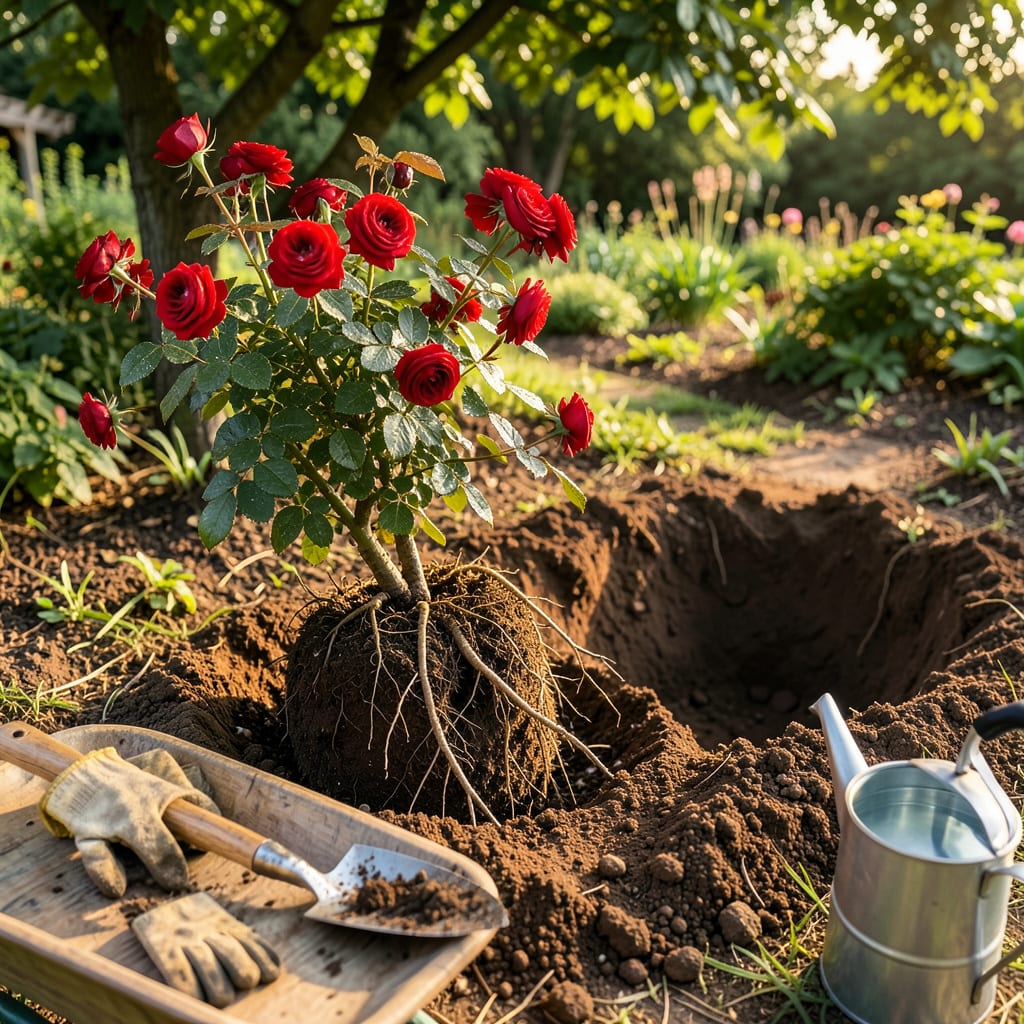
I’ve moved roses in spring, summer, and fall—and let me tell you, timing changes everything. The sweet spot is early spring or late fall, when the plant is dormant but the soil is still workable. Transplant then, and your roses will reward you with bigger blooms next season instead of sulking for months.
This isn’t about digging a hole and hoping for the best. It’s about keeping roots intact, prepping the new spot with compost, and giving the plant a stress-free transition. I’ve killed my share of roses by rushing this—now I soak the roots first and prune strategically, and my success rate is near 100%. Here’s how to do it right.
📚 In This Guide
Moving established roses doesn’t have to be stressful—I’ve perfected this method over years of trial and error.
Early spring or fall is ideal for transplanting roses, when plants are dormant but soil is workable. I always check the forecast first—you want 5-7 days of mild weather after moving to help roots recover. Water your rose deeply 2-3 days before transplanting to hydrate the entire root system.
Mark the rose’s current orientation by tying a ribbon on the north-facing cane. This helps you position it the same way in its new home, which reduces transplant shock. Gather sharp pruners, a spade, burlap, and a wheelbarrow before you start—once you begin digging, you don’t want to stop.
Prepare the new location before disturbing the rose. Dig a hole twice as wide as the root ball and just as deep. I make the sides sloped rather than straight to encourage root growth outward. Mix the removed soil with one-third compost to create a nutrient-rich backfill.
Test the hole’s depth by placing your spade across it—the root ball should sit 1-2 inches above ground level when placed in the hole. This accounts for settling. If your soil is heavy clay, add a handful of perlite to the backfill mix to improve drainage around the roots.
Start digging 12-18 inches away from the base of the plant to preserve feeder roots. Use your spade to create a circular trench, gradually working inward and downward. For large roses, I wrap the root ball in burlap as I go to hold the soil together—this prevents damage when moving.
Once you’ve undercut the root ball, lift the plant using the burlap or by grasping the base of the canes. Never lift by the top growth. If the root ball feels too heavy, it’s better to leave some soil behind than to risk tearing roots. Move the plant immediately to its new hole.
Place the rose in the new hole at the same depth it grew before—look for the soil line on the main stem. Fill the hole halfway with your soil-compost mix, then water thoroughly to eliminate air pockets. Let the water drain completely before filling the rest of the hole.
Create a 4-inch high soil berm around the base to form a water basin. Prune back the canes by one-third to compensate for root loss during transplant. This might seem drastic, but it directs energy to root establishment. Water deeply again after pruning.
Check the soil moisture daily for the first week—it should stay evenly moist but never soggy. I use my finger to test 2 inches deep; if it feels dry at that depth, it’s time to water. Avoid fertilizing for 4-6 weeks to let roots recover from the move.
Watch for wilting in the afternoons during the first two weeks—this is normal. If wilting persists into evening, the plant needs more water. Remove any flowers that form in the first month to prevent energy drain. You’ll know the transplant succeeded when you see new leaf growth after about 3-4 weeks.
After moving dozens of roses over the years, I’ve learned what makes the difference between a thriving transplant and one that struggles.
Timing is Everything: The 5-7 days of mild weather mentioned in Step 1 isn’t just a suggestion—it’s critical. I once transplanted during a surprise heatwave, and the shock nearly killed my roses. Always check the 10-day forecast before moving day, and if temperatures will spike above 85°F, wait for a cooler window. The roots need that gentle transition period to establish themselves.
Root Ball Protection: When digging 12-18 inches away from the base in Step 3, don’t rush this step. I’ve found that taking an extra 10 minutes to carefully expose the root ball prevents years of recovery time. For especially large roses, soak the burlap in water before wrapping—this keeps roots hydrated during the move. If you notice roots breaking despite your care, trim them cleanly with sharp pruners rather than leaving jagged edges.
Watering Wisdom: The instruction to water 2-3 days before transplanting in Step 1 serves two purposes: it hydrates the plant AND makes the soil easier to work with. I use a soaker hose on low for several hours to ensure deep penetration. After transplanting, that 2-inch depth check in Step 5 is your best guide—surface moisture can be deceiving. In hot climates, I water twice daily for the first week: early morning and late afternoon.
Pruning Strategy: Cutting back canes by one-third in Step 4 might feel aggressive, but here’s what changed my approach: I noticed that lightly pruned roses took twice as long to establish. Make your cuts just above an outward-facing bud at a 45-degree angle. This isn’t just about reducing stress—it’s about shaping future growth. Remove any crossing canes completely, as they’ll create wounds that invite disease during this vulnerable period.
The ideal time is early spring (just before new growth starts) or fall (6+ weeks before the first frost). Avoid transplanting in extreme heat or during blooming—stress can stunt growth. Mild, overcast days reduce shock.
Only if absolutely necessary! Summer heat stresses roses. If you must, water deeply 2-3 days beforehand, transplant on a cloudy morning, and prune back foliage by ⅓ to reduce moisture loss. Mulch heavily and shade for a week.
Shock symptoms (wilting, yellowing leaves) usually resolve in 2-3 weeks with proper care. If stems are brown/mushy or fail the “scratch test” (no green under bark), it’s likely dead. Check roots—healthy ones are firm and white.
Yes! Trim long canes back by ⅓ to ½ to reduce water loss and balance root-to-foliage ratio. Remove dead/diseased wood and thin out crowded branches. Pro tip: Disinfect pruners with rubbing alcohol to prevent disease spread.
