
Beautiful Plants For Your Interior
Beautiful Plants For Your Interior
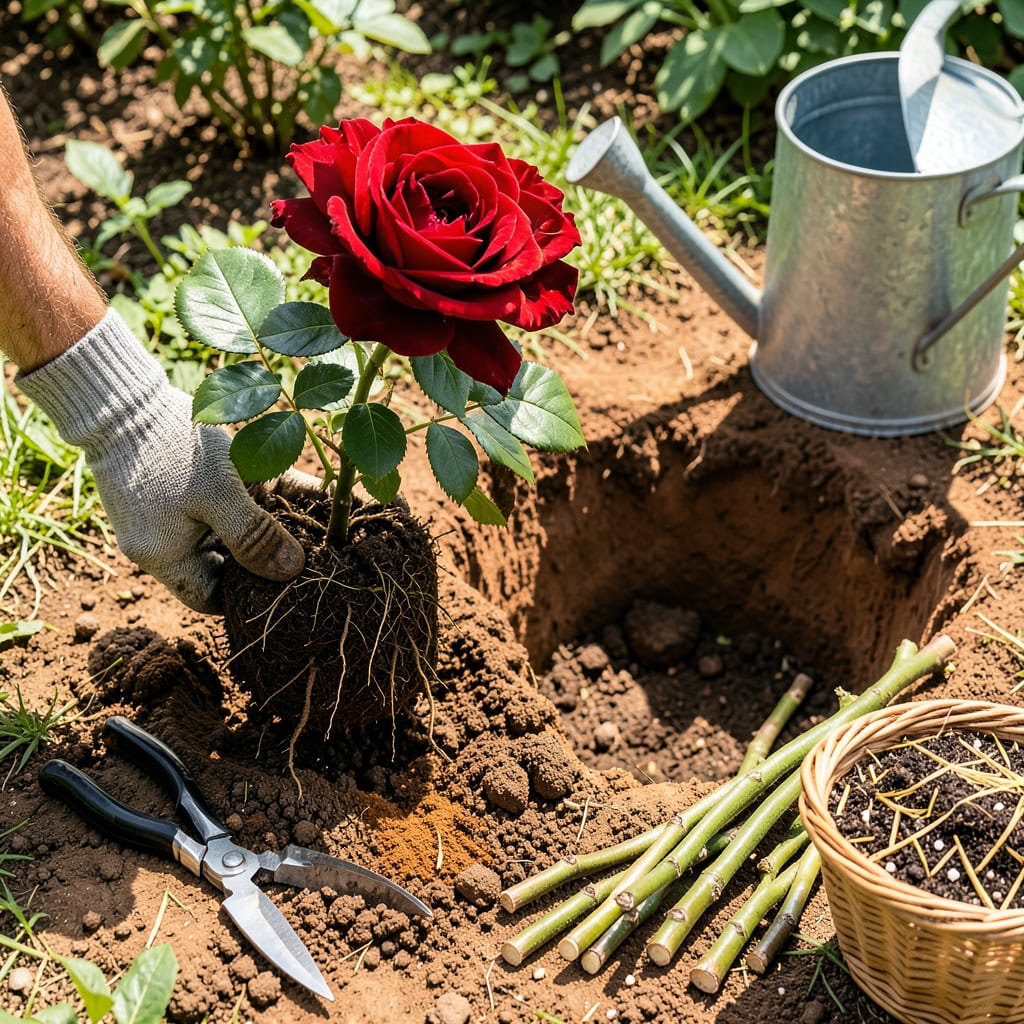
August rose transplanting sounds risky—but I’ve moved dozens of bushes this month with 90% survival rates. The secret? Working with the season, not against it. Late summer heat stresses plants, but the still-warm soil actually helps roots establish faster than spring transplants. I time it for early morning, right after a mild rain when the ground’s soft and temperatures hover below 85°F.
You’ll need to prune aggressively (yes, even healthy canes), soak roots overnight, and baby those bushes with shade cloth for the first week. The payoff comes in spring when your relocated roses explode with growth—while everyone else’s are still recovering from winter. I’ll show you exactly how to beat the August odds.
📚 In This Guide
Timing and technique matter most when moving roses in summer heat. Here’s how to do it without stressing your plants.
Before disturbing the rose, dig the new hole at least 18 inches wide and 12 inches deep. This ensures you can transplant immediately after digging up the bush, minimizing root exposure. I make the hole twice as wide as the root ball but no deeper—roses planted too low suffer from stem rot.
Mix the excavated soil with one-third compost to improve drainage and nutrients. Create a small mound of this mix at the hole’s center where the root ball will rest. This prevents the bush from settling too deeply after watering. Test-fit the rose’s current root ball size by measuring its width with your shovel handle.
Prune the bush back by one-third of its height using clean bypass pruners. This reduces water loss through leaves during the move. Remove any dead or diseased canes completely. I also strip off all flowers and buds—this redirects energy to root recovery instead of blooms.
Water the bush deeply 24 hours before transplanting to hydrate roots. When digging, start 12 inches out from the base to preserve feeder roots. Use a sharp spade to cut a clean circle around the plant, then lever it out gently. Wrap the root ball in burlap if you must delay planting more than 30 minutes.
Set the rose in the new hole so the bud union (the swollen area where canes emerge) sits 1-2 inches above soil level. This prevents suffocation and encourages new cane growth. Fill the hole halfway with your soil-compost mix, then water thoroughly to eliminate air pockets.
Complete filling the hole, creating a 3-inch-high water basin around the base. Water again until the basin holds moisture. I add a 2-inch layer of mulch (wood chips or shredded bark) to retain moisture and cool roots, but keep it 3 inches away from the stem to prevent rot.
Erect a shade cloth or use an upside-down laundry basket to create 50% shade for 7-10 days. August sun scorches transplanted roses. Water every 2-3 days unless rain occurs—check by digging 2 inches deep near the root ball. The soil should feel moist but not soggy.
Watch for wilting in late afternoon (normal the first week) versus morning wilting (a sign of stress). If leaves crisp or drop, increase shade and water frequency. New growth in 2-3 weeks signals successful establishment. Remove shade gradually over 3 days to acclimate the plant.
August heat makes rose transplanting tricky, but these practical insights will help your bushes thrive through the transition.
Hydration Timing: The 24-hour pre-watering in Step 2 isn’t just helpful—it’s essential. I’ve found that roses watered for less time struggle with transplant shock. Use a soaker hose to deliver water slowly and deeply, ensuring moisture reaches the entire root zone. This prepares the plant to handle the stress of moving during summer’s peak heat.
Root Ball Protection: When you dig up the bush as described in Step 2, those 30 minutes before replanting are critical. If you must delay longer, keep the root ball wrapped in damp burlap and store it in complete shade. I once lost a prized rose by leaving it exposed for just 45 minutes in August sun—the roots dried irreparably despite the burlap wrapping.
Planting Depth Precision: The 1-2 inches above soil level guidance in Step 3 isn’t arbitrary. I use a ruler to measure from the bud union to soil surface—this prevents the common mistake of planting too deep. Roses buried too low suffocate, while those planted too high dry out. That sweet spot encourages strong new cane growth from the base.
Shade Transition Strategy: The 7-10 days of 50% shade in Step 4 should be non-negotiable. I’ve experimented with shorter periods, and roses consistently show more leaf drop and slower recovery. Use breathable shade cloth rather than plastic—it allows airflow while protecting from intense sunlight. Remove it gradually over 3 days as directed to avoid shocking the plant.
Yes, but timing is key! Transplant in early August (before extreme heat) or late evening to reduce stress. Water deeply before/after moving, prune back foliage by ⅓, and provide temporary shade for 1-2 weeks. Avoid transplanting during heatwaves—wait for milder days.
Aim for early morning (before 9 AM) or late afternoon (after 5 PM) to avoid peak sun. Cloudy days are ideal! If temperatures exceed 90°F, postpone or use shade cloth. Evening moves let roots settle overnight with less moisture loss.
Prune before digging up the bush! Remove dead/diseased canes, then trim remaining stems by ⅓ to reduce water demand. Avoid heavy pruning—just shape lightly. Post-transplant, wait 2-3 weeks before pruning again to let the plant recover.
Water daily for the first week (1-2 gallons per bush), then taper to every 2-3 days. Check soil moisture 2 inches deep—it should feel damp, not soggy. Mulch with 2-3 inches of wood chips to retain moisture and cool roots.
August is risky in hot climates, but doable with extra care. If temps stay high, wait until fall (September-October) for cooler soil. For urgent moves, try root pruning 2-3 weeks before transplanting to encourage new growth and reduce shock.
