
Beautiful Plants For Your Interior
Beautiful Plants For Your Interior
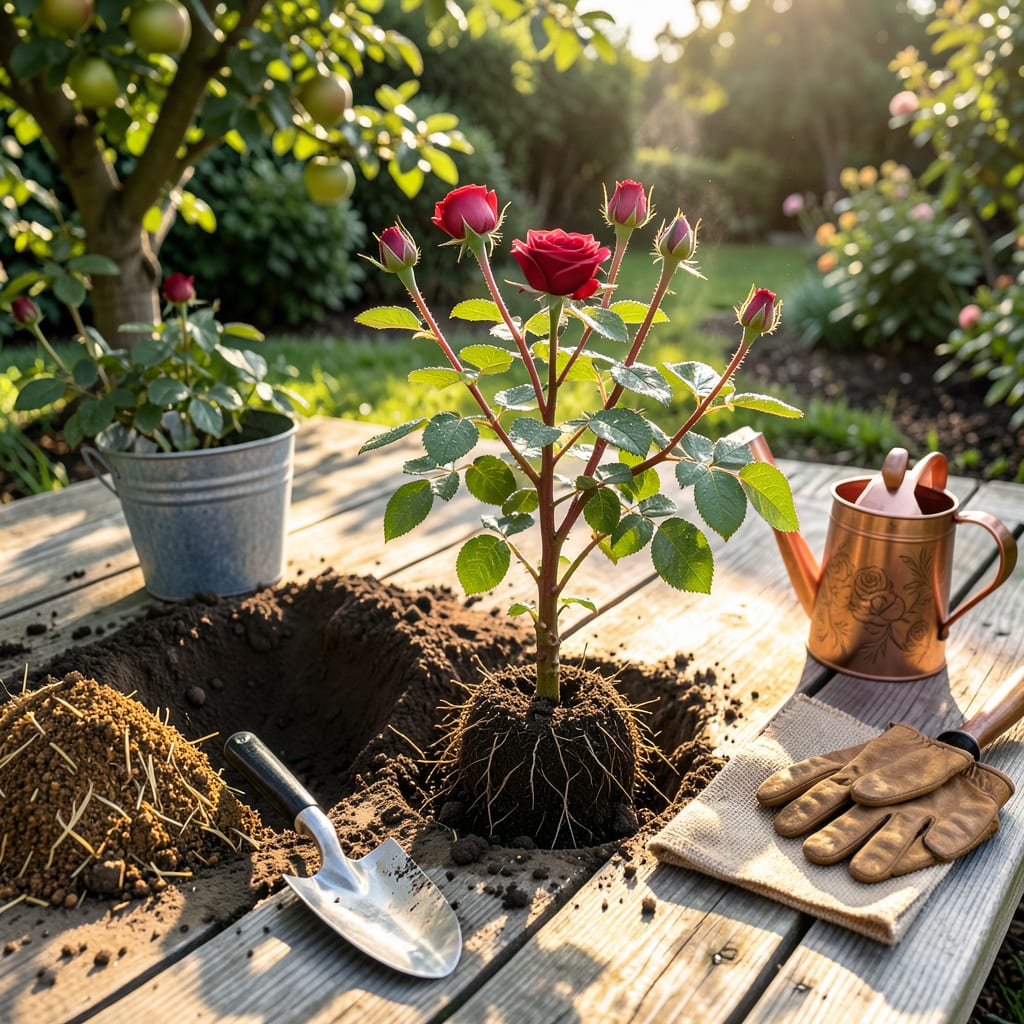
Moving a rose bush feels like performing surgery on your garden—terrifying until you realize how straightforward it actually is. I’ve relocated dozens of roses over the years, and the ones that thrive always follow the same rules: timing, preparation, and a little post-transplant TLC. The key is working with the plant’s natural rhythm, not against it.
Do it right, and you’ll see new growth in 2-3 weeks and full blooms by next season. The process itself takes less than an hour, but the payoff lasts for years. No more sad, struggling roses—just healthier plants in better spots, ready to put on a show.
📚 In This Guide
Moving an established rose bush takes patience, but this method ensures your plant thrives in its new location.
Choose a location with 6+ hours of direct sunlight and well-draining soil. Dig a hole twice as wide and just as deep as the rose’s current root ball. I like to mix 1 part compost with 2 parts native soil to create a nutrient-rich environment.
Water the new hole thoroughly and let it drain completely before transplanting. This prevents the roots from drying out when placed in their new home. You’ll want the soil to feel moist but not soggy—like a wrung-out sponge.
Prune the rose bush back by about one-third of its height. This reduces stress on the plant and makes handling easier. Remove any dead or diseased canes completely, cutting at a 45-degree angle just above an outward-facing bud.
Water the rose deeply 24 hours before moving to ensure the roots are well-hydrated. This makes the root ball easier to dig and reduces transplant shock. You’ll notice the soil clings better to the roots when properly hydrated.
Start digging 8-12 inches away from the base of the plant, working your way around to create a clean root ball. For established roses, aim for a root ball 12-18 inches in diameter. Use a sharp spade to cut through any stubborn roots.
Lift the plant carefully by the root ball—not the canes—to avoid damaging the stems. Wrap the root ball in burlap if you need to transport it any distance. The goal is to keep as much of the original soil intact as possible.
Place the rose in the new hole at the same depth it was growing before. The graft union (that swollen bump near the base) should sit 1-2 inches above the soil line. Backfill with your soil-compost mix, gently firming as you go to eliminate air pockets.
Create a 3-4 inch high watering basin around the plant and fill it completely. Water slowly until the basin drains, then fill it again. This deep watering encourages roots to establish in their new location. You’ll see the soil settle—add more mix if needed.
Apply 2-3 inches of organic mulch around the base, keeping it 3 inches away from the stems to prevent rot. I prefer shredded bark or wood chips, which help retain moisture while allowing air circulation.
Check the plant daily for the first week. Water when the top inch of soil feels dry, and watch for wilting leaves—a sign the roots need more time to establish. New growth in 2-3 weeks means your rose is successfully transplanted.
Transplanting roses successfully comes down to timing and technique—here’s what I’ve learned after moving dozens of bushes.
Hydration is Everything: That 24-hour deep watering in Step 2 isn’t just helpful—it’s critical. I’ve found that roses watered for less time often suffer more transplant shock. The soil should feel saturated 8-12 inches deep when you dig. If your soil is very sandy, consider watering twice: once the evening before and again the morning of moving.
Root Ball Protection: When digging 8-12 inches away from the base as directed in Step 3, work slowly and use a clean, sharp spade. I wrap the root ball in damp burlap immediately after lifting—even for short moves. This prevents the fine feeder roots from drying out during the 12-18 inch diameter root ball transfer. For large bushes, I’ve used a tarp to drag the plant rather than lifting it.
Depth Matters: In Step 4, getting the graft union 1-2 inches above the soil line is non-negotiable. I use a ruler to measure this precisely. Planting too deep suffocates the graft, while too shallow exposes it to freeze damage. After positioning, I check by laying a straight board across the hole to confirm the depth before backfilling with that perfect 1 part compost to 2 parts native soil mix.
Watering Wisdom: The 3-4 inch high watering basin in Step 4 should stay filled for at least 30 minutes during the first watering. I’ve had best results using a slow-drip hose rather than a strong stream. Watch for the water to absorb completely before refilling—this ensures deep penetration rather than runoff. The soil should feel moist 6 inches down when you’re finished.
The ideal time is early spring (just as new growth starts) or fall (6+ weeks before the first frost). Avoid extreme heat or freezing temps—this gives roots time to establish before stress. In hot climates, opt for fall transplanting for better survival rates.
It’s risky! Blooming roses focus energy on flowers, not root recovery. If you must move it, prune off all blooms and half the foliage first to reduce stress. Water deeply afterward and avoid fertilizing until new growth appears.
How long does it take for a transplanted rose bush to recover?
Expect a 2–4 week adjustment period. Signs of recovery include new leaf growth or sturdy stems. Larger bushes (or those moved in summer) may take longer. Keep soil moist (not soggy) and shield from harsh sun/wind during this time. Try propagation instead! Take 6–8″ cuttings from healthy canes, dip in rooting hormone, and plant in pots. Or, layer a low branch: nick the stem, bury it in soil, and wait for roots to form. Both methods create new plants without digging up the original. Don’t panic! Wilting is normal for 1–2 weeks. Check for crispy leaves (underwatering) or yellowing (overwatering). Trim dead growth, water at the base (not leaves), and avoid fertilizing. If stems stay green, it’s likely recovering—patience is key!
3
What’s the easiest alternative if my rose bush is too large to move?
4
My transplanted rose looks wilted—did I kill it?
