
Beautiful Plants For Your Interior
Beautiful Plants For Your Interior
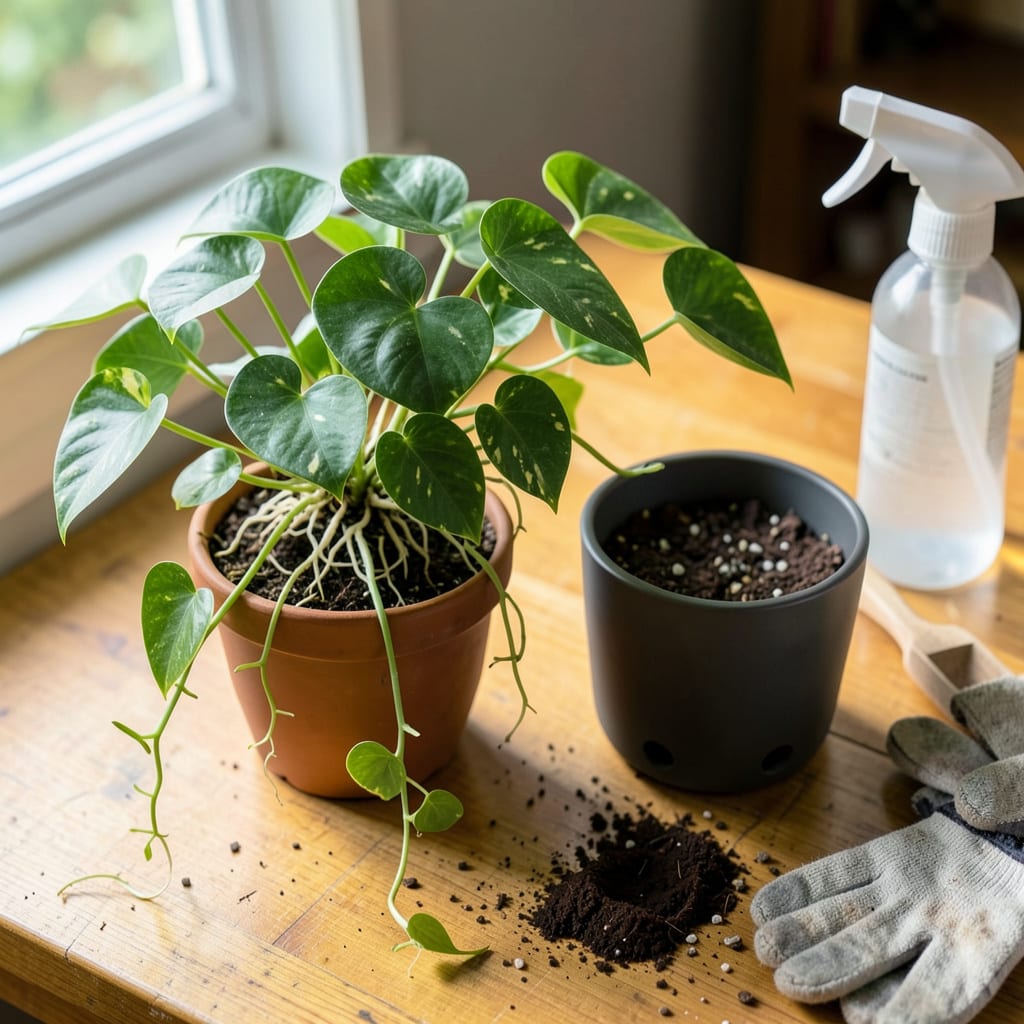
That moment when roots start circling the drainage holes? Your pothos is practically begging for a bigger home. I’ve transplanted dozens of these resilient vines, and the right timing—spring or early summer—makes all the difference. A root-bound pothos won’t just survive a transplant; it’ll explode with new growth within weeks.
This isn’t about fancy tools or perfect conditions. Grab a pot 2 inches wider, fresh well-draining soil, and 10 minutes of your time. The real secret? Gently teasing apart those tangled roots before settling the plant into its new space. Do it right, and you’ll have trailing vines that grow faster than ever—no green thumb required.
📚 In This Guide
This method ensures your pothos thrives after repotting—no shock, no stress, just vigorous new growth.
Select a container 2-3 inches larger in diameter than the current pot. Pothos prefer being slightly root-bound, so avoid oversizing—excess soil retains moisture and invites root rot. I always choose pots with multiple drainage holes; if yours lacks them, drill 3-4 holes in the base before proceeding.
Water your pothos thoroughly 24 hours before transplanting. This hydrates the root ball and reduces transplant shock. You’ll know it’s properly hydrated when water runs freely from the drainage holes and the soil feels uniformly moist to your fingertip.
Gently squeeze the sides of the current pot to loosen the root ball, then turn it upside down while supporting the base of the plant. If resistant, run a clean knife around the inner edge to release the roots. Never pull by the stems—pothos vines break easily under tension.
Inspect the roots for circular growth patterns (a sign of being root-bound) or any dark, mushy sections. Use sterilized scissors to trim away dead or rotting roots, then gently tease apart the outer roots to encourage outward growth in the new container.
Place a 1-inch layer of fresh, well-draining potting mix in the bottom of the new container. Position the pothos so its base sits at the same depth as before—burying the stem too deeply causes stem rot. Hold the plant upright while backfilling around the root ball with additional mix.
Press the soil lightly with your fingers to eliminate air pockets, but don’t compact it. The ideal texture should feel like a damp sponge—firm enough to support the plant but loose enough for water to drain freely. Leave a 1-inch gap between the soil surface and pot rim for watering.
Water immediately after transplanting until you see drainage from the bottom holes. This settles the soil around the roots and eliminates remaining air gaps. Place the plant in bright, indirect light (east or north-facing windows work well) and maintain 65-75°F ambient temperature.
Avoid fertilizing for 4-6 weeks—new roots are sensitive to salts in fertilizer. You’ll notice new leaf growth within 2-3 weeks if the transplant was successful. Wilting during this period is normal; maintain consistent moisture without soggy soil, and the plant will recover.
These practical insights will help you avoid common pitfalls and ensure your pothos thrives after repotting.
Container Selection Wisdom: The 2-3 inch size increase mentioned in Step 1 is crucial—too much extra space leads to waterlogged soil. I learned this after losing a beautiful golden pothos to root rot in an oversized pot. Terracotta works well for moisture control, but plastic retains humidity better if your home is dry. Always prioritize drainage holes over aesthetics.
Root Handling Technique: When inspecting roots in Step 2, look for white, firm roots—these indicate health. Dark brown or black roots should be trimmed immediately with sterilized scissors. I gently rinse roots under lukewarm water to better see their condition. The circular growth patterns you’re checking for often resemble a bird’s nest—this is your plant literally growing in circles from being root-bound.
Soil Texture Secret: In Step 3, that “damp sponge” texture isn’t just poetic—it’s the perfect balance between support and drainage. I test by squeezing a handful: it should hold shape briefly then crumble. For pothos, I recommend adding 20% perlite or orchid bark to standard potting mix for ideal aeration. The 1-inch gap at the top prevents water from pooling around the stem during watering.
Acclimation Insight: The 65-75°F range in Step 4 isn’t arbitrary—it matches pothos’ native tropical environment. I use a simple thermometer near my plants to monitor this. During the 2-3 week recovery period, I’ve found that misting leaves (not the soil) every other day reduces wilting while avoiding overwatering. The new growth you’ll see after 2-3 weeks will be smaller leaves at first—this is normal as the plant establishes roots.
Got questions about transplanting your pothos? You’re not alone! Here are the most common concerns—answered in a snap.
Spring or early summer is ideal! This is when pothos grows fastest, so it’ll recover quickly. Avoid winter—cold stress slows root growth. If your plant is root-bound (roots circling the pot), transplant ASAP regardless of season.
Yes! Pothos thrives in water long-term. Just switch to a clean jar, trim any rotten roots, and refresh the water weekly. Note: Water-grown pothos may develop weaker stems over time—soil gives sturdier growth.
Transplant shock is normal—give it 1–2 weeks to adjust. Keep it in bright, indirect light, mist leaves, and avoid overwatering. If wilting persists, check for root rot (mushy, brown roots) or underwatering (dry, crispy roots).
Wait 4–6 weeks! New roots are delicate, and fertilizer can burn them. Once settled, use a balanced liquid fertilizer (diluted to half-strength) every 4–6 weeks in spring/summer.
Absolutely! Gently separate the root ball into sections, ensuring each has 2–3 healthy stems and roots. Pot them individually in fresh soil. Pro tip: Trim leggy vines to encourage bushier growth in the new plants.
