
Beautiful Plants For Your Interior
Beautiful Plants For Your Interior
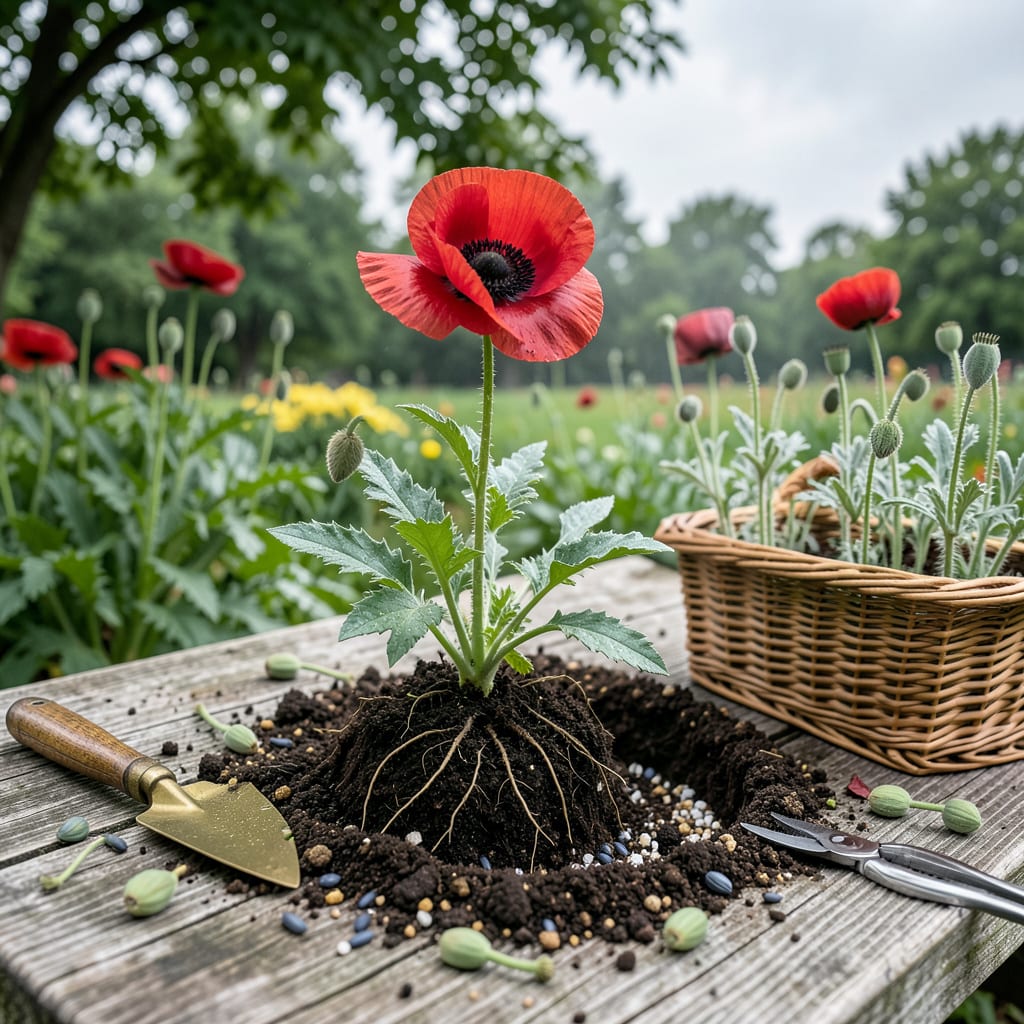
Poppies hate being moved—yet I’ve successfully transplanted dozens by following one golden rule: timing is everything. The secret lies in catching them at the right stage, when roots are established but not bound, and the weather cooperates. Early spring or late fall, just as they’re waking up or winding down, gives them the best shot at thriving in their new home.
What you’ll end up with are stronger plants that bloom more reliably next season. No more wilted transplants or stunted growth—just vibrant poppies that act like they’ve always been exactly where you put them. The process takes less than 20 minutes per plant once you know the tricks, and the payoff lasts for years.
📚 In This Guide
Moving delicate poppies doesn’t have to be stressful—here’s how I do it without losing a single plant.
The ideal window for transplanting poppies is in early spring as new growth emerges, or in early fall at least 6 weeks before your first frost. Avoid moving them during active flowering or summer heat, which stresses the plants beyond recovery. I always pick an overcast day or late afternoon to minimize transplant shock.
Prepare the new location first by digging holes twice as wide as the root ball but no deeper than the current soil level. Poppies resent being buried too deep. Work 1 inch of compost into the bottom of each hole to encourage root growth, but don’t add fertilizer—it can burn the sensitive roots.
Water the poppies deeply 12-24 hours before transplanting to hydrate the roots and help the soil hold together. Use a garden fork to loosen the soil in a 12-inch diameter around each plant, then slide it underneath to lift the entire root system intact. Poppy roots are brittle, so I sacrifice a few outer leaves rather than risk tearing the taproot.
Gently cradle the root ball with both hands as you lift—never pull by the stems. If the soil crumbles away, don’t panic, but move quickly to the new hole. Keep the roots moist by draping a damp towel over them if you’re transporting multiple plants.
Set each poppy in its new hole so the soil line matches the original depth—you should see the same portion of stem above ground. Backfill with native soil, firming gently with your fingers to eliminate air pockets. I create a shallow water basin around each plant by mounding soil in a 3-inch ring to direct moisture to the roots.
Water thoroughly immediately after planting until the soil is saturated and muddy at the surface. This settles the soil around the roots and removes air gaps. Don’t skimp here—poppies need this deep drink to recover. The leaves may wilt initially, but they should perk up within 24 hours if the transplant was successful.
Keep the soil consistently moist (but not soggy) for the first 2 weeks—this is critical while the roots re-establish. I check the moisture daily by feeling 1 inch below the surface; it should feel like a wrung-out sponge. Shield plants from direct afternoon sun for 3-5 days using shade cloth or a temporary screen if your climate is hot.
Avoid fertilizing for at least 4 weeks—transplanted poppies need to focus on root recovery, not leaf growth. Watch for new growth at the center of the plant; this signals successful establishment. If leaves yellow and drop, the plant is stressed but not necessarily lost—poppies often regrow from the crown.
After 3 weeks, gradually reduce watering frequency but increase depth to encourage deep root growth. Poppies in their new location may take a season to reach full blooming potential—that’s normal. I mark the calendar to note when I transplanted, as poppies sometimes skip a bloom cycle after moving.
Remove any mulch you initially applied after 6 weeks—poppies prefer the soil surface to warm naturally. By the second season, your transplanted poppies should perform as vigorously as established plants, with the added benefit of being exactly where you want them in your garden design.
Transplanting poppies successfully comes down to timing and technique. Here’s what I’ve learned from years of moving these delicate beauties without losing a single plant.
The Timing Factor: That 12-24 hour pre-transplant watering window in Step 2 is absolutely critical. I’ve found that 24 hours works best in hotter climates or with larger plants, while 12 hours suffices for smaller poppies in cooler weather. The key is that the soil should hold together like a firm cookie when you lift the plant—if it crumbles, you didn’t water deeply enough or long enough before moving.
Root Protection Secret: When lifting plants as described in Step 2, I always keep a bucket of water and an old towel nearby. If the root ball starts to fall apart during transport, immediately wrap the roots in the damp towel and submerge them in the water bucket until you’re ready to replant. This prevents the fine root hairs from drying out, which is the number one cause of transplant failure with poppies.
Depth Check Technique: In Step 3, here’s how I ensure perfect planting depth every time: Lay a straight stick or ruler across the hole before placing the poppy. The soil line on the stem should align exactly with the stick. I’ve ruined plants by eyeballing this—poppies buried even half an inch too deep will rot, while those planted too high dry out.
Post-Transplant Monitoring: During those first 24 hours after replanting (mentioned in Step 3), I set up a temporary shade structure using bamboo stakes and burlap if I’m transplanting in spring. The leaves will tell you everything—if they’re still wilted after 24 hours, the roots aren’t making good soil contact. Gently firm the soil again and water deeply a second time.
Transplanting poppies in summer is risky due to heat stress. The best time is early fall (6-8 weeks before frost) or early spring (before new growth starts). Cooler temps and moist soil help roots establish without shock. If you must move them in summer, do it on a cloudy day and water deeply afterward.
Wilting for 2-3 days post-transplant is normal—roots need time to recover! Red flags: Blackened stems, mushy roots, or no new growth after 2 weeks. Check for overwatering (poppies hate soggy soil) or pests. If the crown (base) stays firm and green, it’s likely just adjusting.
Poppies can transplant successfully if done carefully (especially young plants or container-grown ones). However, taproot varieties (like Oriental poppies) dislike disturbance. For finicky types, seeds may be easier! Pro tip: If transplanting, keep as much root intact as possible.
Yellow leaves often signal transplant shock or overwatering. Poppies prefer well-draining soil—soggy roots suffocate! Trim damaged foliage, reduce watering (let the top inch dry), and avoid fertilizer for 2-3 weeks. If yellowing spreads, check for root rot (smelly, dark roots = trouble).
Choose a deep pot (12+ inches) with drainage holes to accommodate their long roots. Use a gritty, well-draining mix (add perlite or sand). Water when the top 1-2 inches are dry. Warning: Potted poppies may need winter protection in cold climates—mulch or move to a sheltered spot.
