
Beautiful Plants For Your Interior
Beautiful Plants For Your Interior
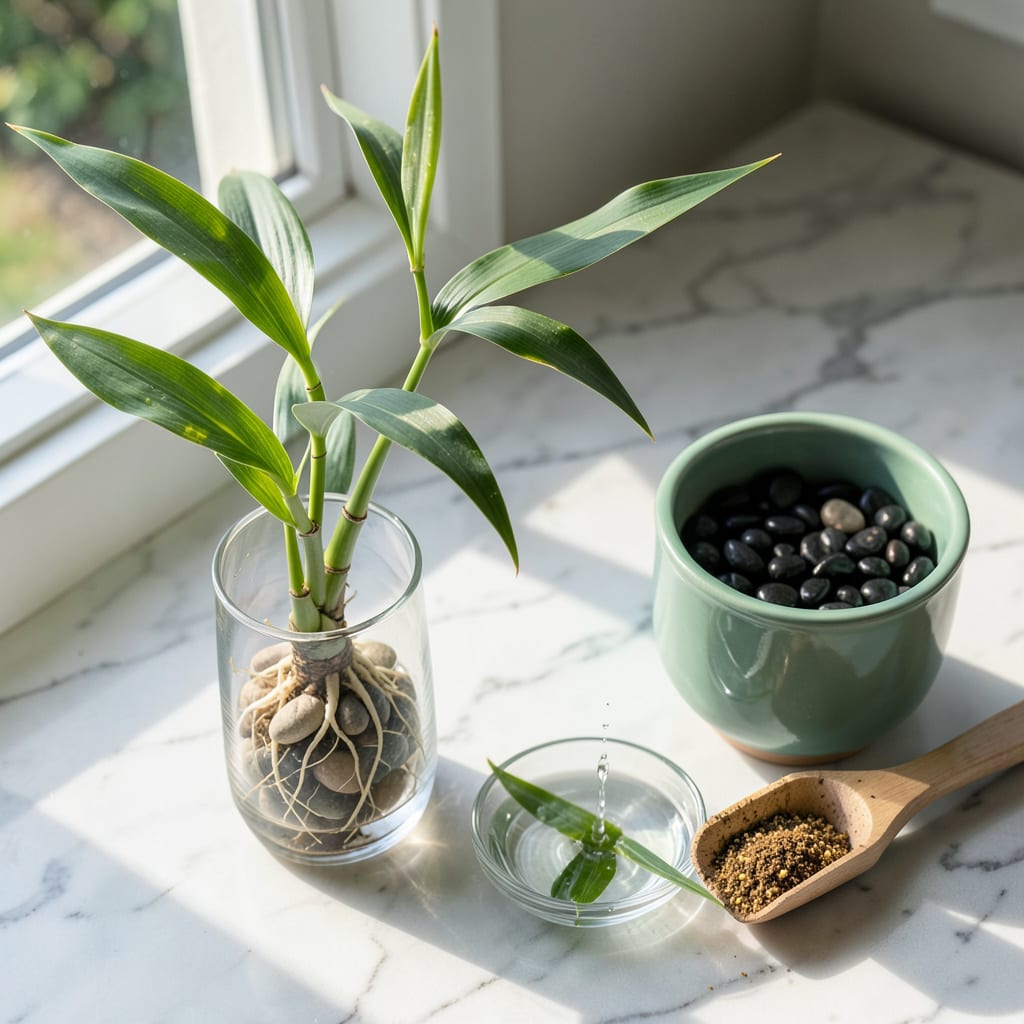
That moment when your lucky bamboo outgrows its home is actually good news—it means you’ve kept it alive long enough to thrive. I’ve transplanted dozens of these resilient plants, and the process is simpler than most guides make it seem. The key is timing: when roots circle the container or water stays murky after 24 hours, it’s time for an upgrade.
Whether you’re moving to fresh water, decorative pebbles, or actual soil, the technique stays foolproof. You won’t need fancy tools—just clean hands, room-temperature water, and a container that’s 1-2 inches wider than the current one. The plant tells you what it needs if you know where to look (hint: check those roots first).
📚 In This Guide
This simple process ensures your bamboo thrives in its new home with minimal stress.
Choose a container that’s 1-2 inches wider than the current one, with drainage holes if using soil. I prefer clear glass or ceramic pots—they complement the bamboo’s elegant look while letting you monitor root health. Wash the new container with mild soap and rinse thoroughly to remove any residue.
Place the container in a spot with bright, indirect light—east or north-facing windows work best. Avoid direct sun, which can scorch leaves. If your room is dry, set up a humidity tray nearby or mist the area lightly. Lucky bamboo thrives in 60-70°F with moderate humidity.
Water the bamboo lightly 1-2 hours before transplanting to reduce shock. If it’s in water, simply lift it out; if in soil, loosen the edges with your fingers and tilt the pot to slide the plant free. Hold the stalks near the base—never pull by the leaves, which can snap easily.
Inspect the roots while you have it out. Healthy roots are firm and white or pale yellow. If you see mushy, dark roots, trim them with clean scissors and rinse the remaining roots in lukewarm water. This prevents rot from spreading to the new environment.
For water culture, fill the new container with 1-2 inches of distilled or filtered water—tap water can contain chlorine or fluoride, which harm the plant. Place the bamboo in the center, ensuring the roots are fully submerged but the stalks remain above water. Add decorative pebbles to anchor the stems if needed.
For soil transplanting, use a well-draining mix like African violet potting soil. Plant the bamboo at the same depth as before, firming the soil gently around the base. Water lightly until moisture drips from the drainage holes, then let excess drain completely before returning it to its spot.
Keep the bamboo in its new container for 24-48 hours without moving it. This lets the roots adjust to their new environment. Check the water level daily if using water culture—top it off as needed to keep roots covered. For soil plants, wait until the top inch feels dry before watering again.
Watch for signs of stress over the next week: yellowing leaves may indicate too much light, while brown tips suggest low humidity. If the stalks feel soft, the roots might not be getting enough oxygen—change the water or aerate the soil gently. Most bamboo recovers within 7-10 days with proper care.
Transplanting lucky bamboo doesn’t have to be stressful—these practical insights will help your plant transition smoothly.
Root Health Check: When you remove the bamboo in Step 2, take a moment to really examine the roots. Healthy roots should be firm and pale, not mushy or dark. If you find any blackened sections, trim them immediately with clean scissors and rinse the remaining roots in lukewarm water. This small step prevents rot from spreading to the new container and gives your bamboo a fresh start. I learned this the hard way after losing a plant to unchecked root damage.
Water Quality Matters: In Step 3, the instructions mention using distilled or filtered water, and there’s a good reason for this. Tap water often contains chlorine, fluoride, or minerals that can damage lucky bamboo over time. If you don’t have distilled water, you can use tap water that’s been left out uncovered for 24 hours—this allows chlorine to evaporate naturally. For soil transplants, make sure your water is room temperature to avoid shocking the roots.
The 24-48 Hour Rule: Step 4 emphasizes leaving your bamboo undisturbed for 24-48 hours after transplanting, and this isn’t just arbitrary timing. This period allows the roots to begin establishing themselves in their new environment without additional stress. Resist the urge to move the plant or check on it constantly during this time. I’ve found that plants left undisturbed for the full 48 hours show less transplant shock and recover faster.
Environmental Consistency: The 60-70°F temperature range mentioned in Step 1 is more important than you might think. Lucky bamboo is sensitive to temperature fluctuations, so avoid placing it near drafty windows, air conditioning vents, or heating sources. If your home tends to be dry, consider placing a small humidity tray filled with pebbles and water beneath the container—this creates a microclimate that mimics the bamboo’s natural tropical environment without overwatering.
Yes! Lucky bamboo thrives in well-draining potting mix (avoid heavy garden soil). Mix 50% peat moss with 50% perlite or sand for best results. Keep the soil lightly moist—overwatering causes root rot. If switching from water, rinse roots gently first to remove debris.
Spring or early summer ( growing season) is ideal—your plant recovers faster! Avoid transplanting in winter (dormant phase) or extreme heat. If roots are overcrowded or water smells foul, transplant _ASAP_ regardless of season to prevent stress.
Yellowing often means shock or overwatering. Trim yellow leaves with clean scissors, ensure indirect light, and check drainage. If in water, change it every 2–4 weeks; if in soil, let the top inch dry between waterings. Add a drop of houseplant fertilizer (diluted) after 2 weeks to boost recovery.
Wait 2–4 weeks post-transplant before fertilizing—roots need time to adjust! Use a balanced liquid fertilizer (10-10-10) diluted to half-strength. Over-fertilizing burns roots; once monthly in growing season is plenty. Skip fertilizer in winter.
If your plant has long stems, cut a 4–6″ section with at least two leaf nodes. Place in water (change weekly) until roots sprout (3–4 weeks), then transplant. Use sterile shears to avoid disease. The parent plant will regrow from the cut!
