
Beautiful Plants For Your Interior
Beautiful Plants For Your Interior
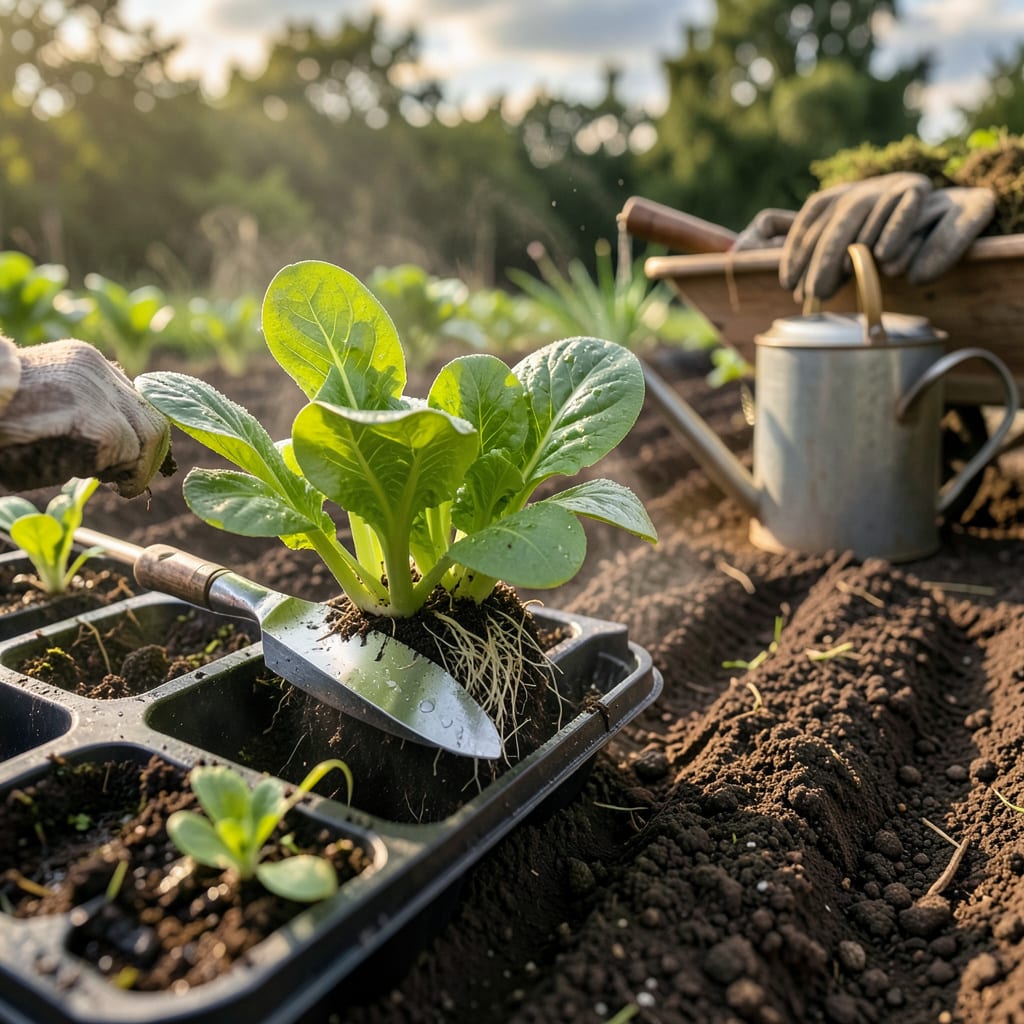
Moving lettuce seedlings is where many gardeners lose their crop—but it doesn’t have to be that way. I’ve transplanted hundreds of lettuce plants, and the ones that thrive follow a simple rule: timing and tenderness. Wait until seedlings have 2-3 true leaves, then handle them like they’re made of spun sugar. The difference between wilted disappointment and crisp, flourishing greens often comes down to those first 10 minutes after the move.
Here’s the thing—lettuce hates drama. No blaring sun, no bone-dry soil, no rough handling. Transplant on a cloudy evening, keep the roots moist, and tuck them into cool, rich soil. Do it right, and you’ll watch them double in size within a week. Skip the hardening-off step or crowd them too close, though, and you’ll be replanting before you know it. Let’s get this move smooth.
📚 In This Guide
Moving lettuce without stress is all about timing and gentle handling—here’s how I do it for perfect results every time.
Transplant lettuce in late afternoon or on a cloudy day when temperatures are below 75°F. The cooler conditions reduce transplant shock by minimizing moisture loss through the leaves. I check the forecast to ensure no extreme heat or heavy rain is expected within 24 hours of moving the plants.
Lettuce seedlings should have 3-4 true leaves (not counting the initial cotyledons) before transplanting. This stage, typically 3-4 weeks after germination, indicates the root system is developed enough to handle the move but young enough to adapt quickly to new soil conditions.
Work the soil to a fine tilth, removing any clumps larger than a pea. Lettuce roots are shallow and spread horizontally, so I create a 6-8 inch wide zone of loose, crumbly soil for each plant. Incorporate a 1-inch layer of compost into the top 4 inches of soil to provide immediate nutrients without burning tender roots.
Space planting holes 8-12 inches apart for leaf varieties or 12-15 inches apart for heading types. The wider spacing prevents competition and allows air circulation that deters fungal diseases. I use a dibble or my finger to create holes just deep enough to accommodate the seedling’s root ball without burying the stem.
Water the seedlings thoroughly 1-2 hours before transplanting. This ensures the root ball holds together during the move and reduces root damage. I slide a plastic plant label or butter knife around each seedling to loosen it before gently lifting by the leaves—not the stem—to avoid crushing the delicate vascular system.
Examine the roots as you lift each plant. Healthy lettuce roots should appear white and fibrous. If any roots are circling the container, I gently tease them apart with my fingers to encourage outward growth in the new location. Never pull or tug at the roots during this process.
Set each seedling in its hole so the soil line matches the original container level. Burying the stem causes rot, while planting too high exposes roots. I firm the soil gently around the base, creating a slight depression to hold water. This “basin” ensures moisture reaches the roots during the critical first week.
Water immediately after planting with a gentle shower from a watering can. The goal is to saturate the soil without displacing it. I apply enough water that it ponds briefly in the basin before absorbing—typically 1 pint per plant. This initial deep watering eliminates air pockets around the roots that could otherwise stress the plant.
Install shade cloth or use row covers to provide 30-50% shade for the first 3-5 days post-transplant. This protection reduces moisture loss while the roots reestablish. I prop the covers on hoops to prevent direct contact with leaves, which can cause heat buildup or physical damage.
Check plants twice daily during this period. Wilting in the afternoon is normal initially, but leaves should perk up by morning. If wilting persists overnight, the roots may not be making sufficient soil contact—I gently press the soil around the base and water again. Remove shade protection gradually over a week to acclimate plants to full sun conditions.
These key insights will help you avoid common transplanting pitfalls and ensure your lettuce thrives in its new home.
Timing is Everything: The 3-4 true leaves stage mentioned in Step 1 is critical—this isn’t just about size, but root development. I’ve found that seedlings with fewer than 3 true leaves often struggle to establish themselves, while those with more than 4 may become root-bound in their containers. That 3-4 week window after germination is the sweet spot where roots are developed enough to handle the move but still adaptable enough to minimize shock.
Watering Wisdom: The 1-2 hours of pre-transplant watering in Step 3 makes all the difference. Here’s what nobody tells you—this isn’t just about hydrating the plant. The moisture causes soil particles to adhere to the roots, creating a protective coating that reduces damage during handling. I use room-temperature water to avoid shocking the roots, and I’ve noticed that plants watered for the full 2 hours (rather than just 1) show significantly less wilting post-transplant.
Root Handling Technique: When examining roots as described in Step 3, pay special attention to the color and texture. Healthy lettuce roots should be firm and white—if you see brown or mushy spots, those seedlings are already stressed and may not recover well. For circling roots, I gently massage them between my fingers rather than pulling them apart. This stimulates new root growth without causing the tearing that can happen with more aggressive methods.
Post-Transplant Monitoring: During those critical first 3-5 days mentioned in Step 5, I’ve developed a simple test for plant stress: gently press on the soil surface near the stem. If it feels dry just 1/4 inch down, your seedlings need water immediately—even if the surface looks damp. The shallow root system at this stage can’t reach moisture deeper in the soil. This quick check has saved many of my transplants from invisible drought stress.
Not usually! Store-bought lettuce is often trimmed too short to regrow. For success, start with nursery seedlings or home-grown lettuce with intact roots. If you spot a store bunch with a small root base (like romaine hearts), you might get lucky—trim the leaves, plant the base, and keep it moist.
What’s the best time of day to transplant lettuce?
Early morning or late afternoon is ideal to avoid heat stress. Cool, overcast days are perfect! If transplanting in summer, work in the evening and provide temporary shade (like a cardboard box) for 2-3 days to help seedlings adjust without wilting. Bury seedlings slightly deeper than their original container—about ¼ inch deeper than the soil line on the stem. Press soil gently around the base to eliminate air pockets, but avoid compacting it too tightly. Leave lower leaves above soil to prevent rot. Wilting often means transplant shock (too much sun/wind) or underwatering. Yellowing? Overwatering or poor drainage could be the culprit. Trim damaged leaves, water deeply but less frequently, and shield plants until they perk up (usually 3-5 days). Lettuce hates heat! In summer, opt for heat-tolerant varieties (like ‘Jericho’ romaine) and transplant in partial shade. Alternatively, start seeds indoors and move them outdoors in early fall. For spring/summer crops, use shade cloth to keep soil temps below 75°F.
2
How deep should I plant lettuce seedlings?
3
Why is my transplanted lettuce wilting or turning yellow?
4
Can I transplant lettuce in summer, or should I wait?
