
Beautiful Plants For Your Interior
Beautiful Plants For Your Interior
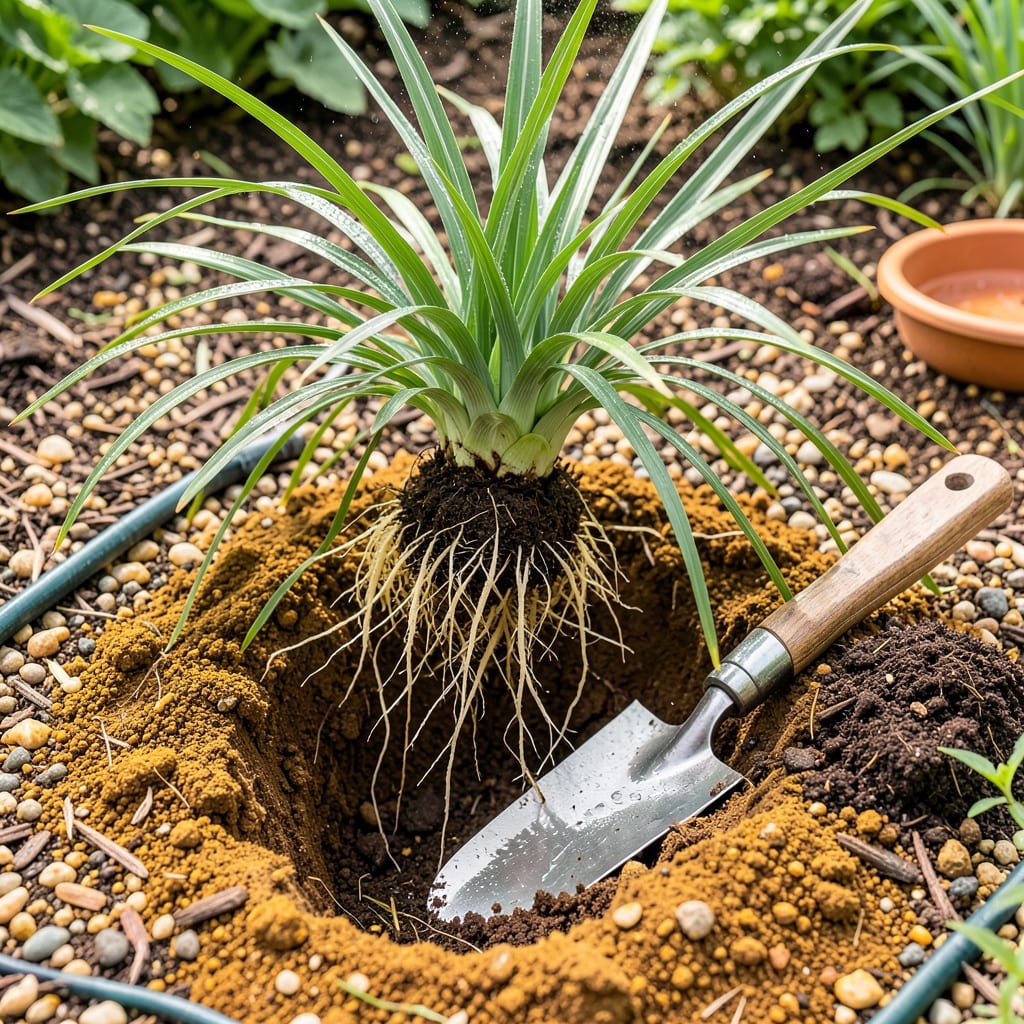
Moving lemongrass feels intimidating until you realize how forgiving this plant actually is. I’ve transplanted clumps in spring, summer, and early fall—each time learning that the key is timing and root care. The stalks bounce back fast when you handle the roots gently and give them the right start in their new spot.
You’ll know it’s working when fresh green shoots appear within 7-10 days. The trick is preparing the new location first (full sun, well-draining soil) and keeping the roots moist but never soggy during the transition. Even my most neglected transplants have thrived with this approach—no green thumb required.
📚 In This Guide
Transplanting lemongrass is simpler than you might expect—follow these steps for vigorous growth and abundant harvests.
Choose a site with full sun exposure (at least 6-8 hours daily) and well-draining soil. Lemongrass thrives in warm conditions, so avoid low-lying areas where cold air settles. I recommend working the soil to a depth of 12 inches, removing any rocks or debris that could obstruct root expansion.
Amend the soil with compost or aged manure to improve fertility, but avoid excessive nitrogen—this encourages leafy growth at the expense of stalk development. Test drainage by digging a 1-foot hole and filling it with water. If it drains within 30 minutes, your site is ideal. If not, consider raised beds or mounding the soil.
Water the existing lemongrass plant thoroughly 24 hours before transplanting to reduce shock. Use a sharp spade to dig around the clump, working 6-8 inches outward from the base to avoid severing roots. Lift the entire plant gently, shaking off excess soil to expose the root ball and individual stalks.
Separate the clump into smaller sections, each with 3-5 healthy stalks and an intact root system. I use a clean knife to slice through dense roots if needed. Discard any brown or mushy stalks—they won’t recover after transplanting. Trim the leaves to 6 inches tall to reduce moisture loss during the transition.
Dig holes 2 inches deeper than the root ball and space them 24 inches apart—lemongrass spreads aggressively once established. Place each division in the hole, ensuring the base of the stalks sits 1 inch above soil level. This prevents rot while allowing new shoots to emerge freely.
Backfill with native soil, firming gently around the roots to eliminate air pockets. Water immediately with 1-2 gallons per plant to settle the soil. I create a shallow basin around each plant to direct water toward the roots during the critical first week. Avoid fertilizing at this stage—it can burn recovering roots.
Maintain consistent moisture for the first 10-14 days, keeping soil evenly damp but never soggy. You’ll know the plants are establishing when you see new green shoots emerging from the base within 7-10 days. Mulch with 2-3 inches of straw to conserve moisture and suppress weeds.
Withhold fertilizer until you observe active growth (typically 3-4 weeks post-transplant). At that point, apply a balanced organic fertilizer every 4-6 weeks during the growing season. Watch for yellowing leaves—this indicates either overwatering or nitrogen deficiency. Adjust your care accordingly, and you’ll be harvesting fresh stalks in 60-90 days.
These practical insights will help you avoid common pitfalls and ensure your lemongrass thrives after transplanting.
Soil Preparation Secret: When working the soil to the recommended 12-inch depth in Step 1, pay special attention to breaking up any compacted layers. I’ve found that using a garden fork works better than a shovel for this task, as it creates channels for roots to penetrate without further compacting the soil. The 30-minute drainage test is non-negotiable—lemongrass roots will rot in soggy conditions, so if your test fails, consider building a 6-inch raised mound for each plant.
Root Handling Technique: During Step 2, when dividing the clump into sections with 3-5 healthy stalks, use a sharp, clean knife to minimize root damage. Here’s what nobody tells you—soak your divisions in a bucket of water for 10 minutes after separating them. This rehydrates the roots before planting and significantly reduces transplant shock. The 24-hour pre-watering mentioned in the instructions is crucial, but this extra step makes an even bigger difference in survival rates.
Planting Depth Precision: In Step 3, that 1-inch above soil level specification is more important than you might think. I learned this the hard way after losing several plants to stem rot. Use a ruler if needed to ensure accuracy—the base of the stalks should be just visible above the soil line. When creating your watering basin, make it about 12 inches in diameter to match the root zone you’ll be establishing in the first 10-14 days of consistent moisture.
Establishment Monitoring: During the critical 10-14 day period in Step 4, check soil moisture twice daily—morning and evening. The surface should feel damp but not wet when you press your finger into the soil. Those new green shoots appearing within 7-10 days are your signal that the plant is establishing well. If you don’t see them by day 12, gently tug on a stalk—resistance means roots are growing, while easy movement indicates you need to improve your watering technique.
Yes! Look for fresh stalks with intact roots (often sold in bundles). Trim the tops, soak the base in water for 2-3 weeks until roots grow 2-3 inches, then transplant into soil. Avoid wilted or dried-out stalks—they won’t root well.
Aim for late spring or early summer when nighttime temps stay above 50°F (10°C). Lemongrass thrives in heat! In cooler climates, start indoors 6-8 weeks before the last frost or grow in containers to move inside when temps drop.
Yellowing often means overwatering or poor drainage—let soil dry slightly between waterings. Brown tips? Likely underwatering or low humidity. Trim damaged leaves and adjust care. If stems soften, root rot may be the culprit—repot in fresh, well-draining soil.
It craves 6-8 hours of direct sunlight daily. If moving from indoors, harden off plants for 1-2 weeks (gradually increase sun exposure) to prevent shock. In scorching climates, afternoon shade helps avoid leaf burn.
Yes! Use a 12+ inch deep container with drainage holes and sandy, loose soil. Potted lemongrass needs more frequent watering (soil dries faster) but lets you move it indoors in winter. Divide and repot every 2-3 years to prevent crowding.
