
Beautiful Plants For Your Interior
Beautiful Plants For Your Interior
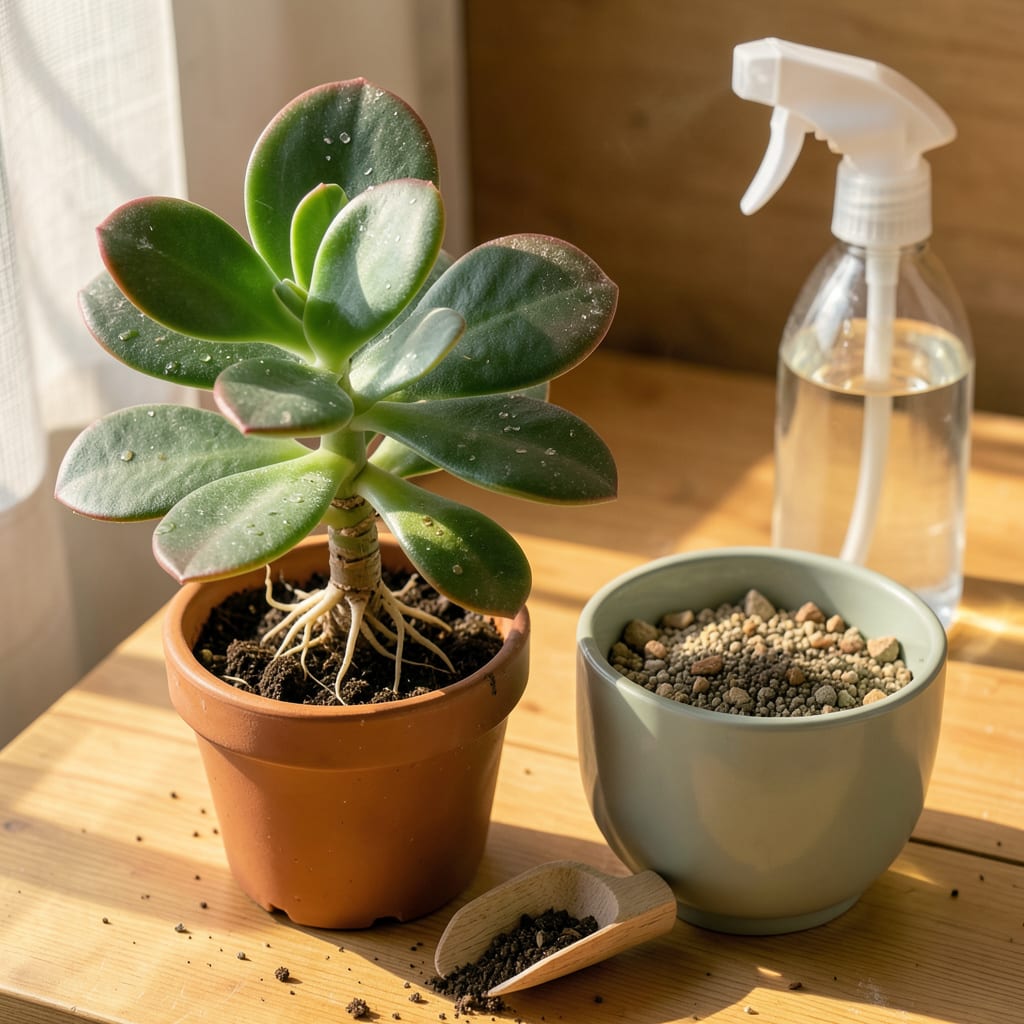
That moment when your jade plant outgrows its pot is exciting—it means you’ve kept it alive long enough to thrive. I’ve transplanted dozens of these resilient succulents, and the process is simpler than you’d think. The key is timing: wait until spring or early summer when the plant is actively growing, and choose a pot just 1-2 inches wider than the current one.
What most people don’t realize? Jade plants bounce back fast if you handle their roots gently and use the right soil mix. I’ve seen wilted, root-bound plants perk up within days after transplanting. You’ll know it’s working when new leaves start plumping up—usually in about 2 weeks. No green thumb required, just a little patience and the right steps.
📚 In This Guide
Transplanting doesn’t have to be stressful—follow these simple steps and your jade will thrive in its new home.
Transplant during spring or early summer when your jade is actively growing. This gives it the best chance to recover quickly. Water your plant 2-3 days before transplanting so the roots are hydrated but not soggy—this makes them easier to handle without breaking.
Gently squeeze the sides of the current pot to loosen the soil. If the plant resists, run a clean knife around the inner edge of the pot to free the roots. Don’t pull the plant out by its stems—always support the base of the plant with one hand while tipping the pot with the other.
Choose a pot that’s only 1-2 inches larger in diameter than the current one. Jade plants prefer being slightly root-bound, and too much extra space holds excess moisture, which leads to root rot. Ensure the new pot has drainage holes—non-negotiable for succulents.
If you’re reusing a pot, scrub it with soapy water and rinse well to remove any salt buildup or pathogens. For clay pots, soak them in water for 30 minutes before planting—this prevents them from pulling moisture away from the soil. Place a small piece of mesh or a coffee filter over the drainage hole to keep soil from escaping while allowing water to flow freely.
Fill the new pot one-third full with fresh, well-draining cactus or succulent mix. I avoid regular potting soil because it stays too wet. Center your jade plant in the new pot at the same depth it was growing before—burying the stem too deep can cause it to rot.
Hold the plant steady while you fill in around the roots with more soil mix. Tap the pot gently to settle the soil, but don’t press down hard—you want the roots to have room to breathe. Leave about ½ inch of space at the top of the pot for watering. Don’t water immediately after transplanting—wait 5-7 days to let any damaged roots heal.
Place your newly transplanted jade in bright, indirect light for the first week. Direct sun can stress the plant while it’s adjusting. Keep it in a spot with temperatures between 65-75°F—avoid drafty windows or heating vents that create temperature swings.
Resist the urge to water until the soil is completely dry. When you do water, soak the soil thoroughly until water runs out the drainage holes, then empty the saucer immediately. You’ll know your jade is settled when you see new growth appearing, usually within 2-3 weeks. This is your signal that the transplant was successful.
Transplanting your jade plant can feel intimidating, but these practical insights will help you avoid common pitfalls and set your plant up for success.
Timing is Everything: The recommendation to transplant during spring or early summer isn’t arbitrary—this is when your jade is in its active growth phase and can recover most quickly. I’ve found that plants transplanted in late summer or fall often take twice as long to establish new roots. If you must transplant outside this window, be extra gentle with the roots and extend the 5-7 day waiting period before watering to 7-10 days.
Pot Preparation Matters: That 30-minute soak for clay pots makes a surprising difference. I learned this the hard way when my first jade transplant struggled because the unsoaked clay pot absorbed too much moisture from the soil. For plastic or glazed ceramic pots, you can skip the soaking, but always clean reused pots thoroughly—residual salts or pathogens can stress your plant during this vulnerable time.
Root Handling Technique: When removing your jade from its old pot, resist the urge to pull it out by the stems. I’ve damaged more plants this way than I’d like to admit. Instead, support the base of the plant with your palm while gently tipping the pot sideways. If it’s really stuck, run that knife around the edges as mentioned in Step 1—this prevents root tears that could lead to rot during recovery.
Post-Transplant Patience: Those 5-7 days without watering feel counterintuitive, but trust the process. I’ve ruined transplants by watering too soon, thinking I was helping. The waiting period allows any microscopic root damage to callous over, preventing rot when you finally water. During this time, keep your plant in that bright, indirect light and maintain temperatures between 65-75°F—consistency here reduces stress on the plant.
Got questions about moving your jade plant to a new home? You’re not alone! Here are the most common concerns—with quick, actionable answers.
Aim for early spring or summer when your jade is actively growing. Avoid winter—cold stress slows recovery. If roots are circling or poking out of drainage holes, don’t wait! Transplant ASAP to prevent stunted growth.
Nope! Jade plants hate soggy roots. Mix 50% cactus/succulent soil with 50% perlite or coarse sand for sharp drainage. Regular potting soil retains too much moisture, risking root rot.
Watch for droopy, yellowing leaves or a soft stem—classic signs of shock or overwatering. Hold off on watering for 5–7 days post-transplant, and keep it in bright, indirect light (no direct sun!) until it perks up.
For big plants, prune leggy branches first to reduce stress. Lay the pot sideways, gently squeeze the sides, and slide the root ball out. If stuck, run a knife around the pot’s inner edge. Teamwork helps—ask a friend to steady the plant!
Wait 4–6 weeks! Fresh soil has enough nutrients, and fertilizer can burn tender new roots. Once settled, use a diluted succulent fertilizer (half-strength) every 2–3 months in growing season.
