
Beautiful Plants For Your Interior
Beautiful Plants For Your Interior
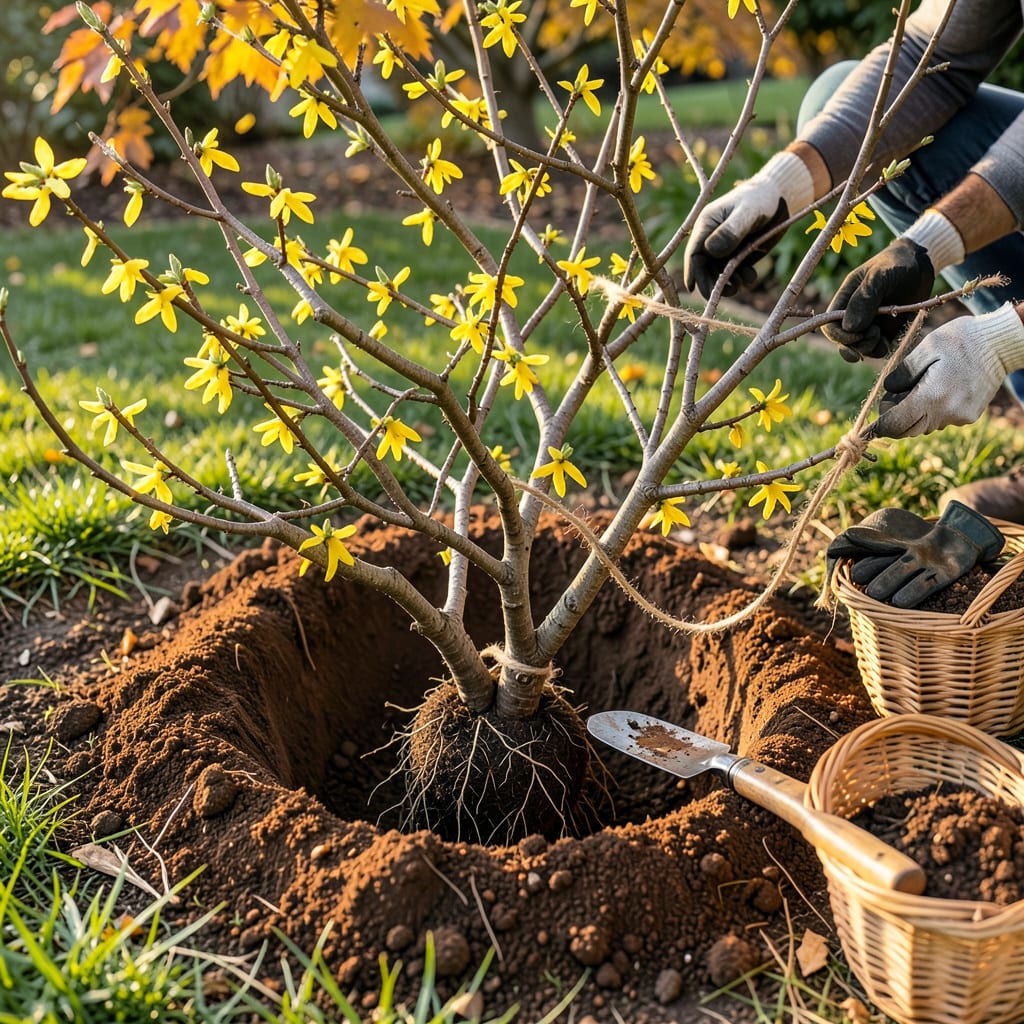
That burst of yellow in early spring doesn’t happen by accident. I’ve moved dozens of forsythia bushes over the years, and the ones that thrive next season always follow the same simple rules: right timing, careful roots, and a smart new home. The difference between a shrub that sulks and one that explodes with blooms comes down to what you do in the first 24 hours after transplanting.
Here’s the thing—forsythia are tougher than they look, but they hate being moved at the wrong time. Do this in late fall after leaf drop or early spring before buds swell, and you’ll get a head start on next year’s show. We’re talking about a 30-minute project with tools you already own, not some complicated horticultural surgery. The payoff is worth it when those golden branches light up your yard again.
📚 In This Guide
Moving your forsythia doesn’t have to be stressful—follow these simple steps for a smooth transition and better blooms next spring.
The best time to transplant forsythia is in late fall after leaf drop or early spring before new growth. This gives roots time to establish without the stress of summer heat or winter cold. I always mark the north-facing side of the plant with a piece of twine—this helps me orient it the same way in its new location.
Water the plant deeply 2-3 days before moving to reduce transplant shock. The soil should feel moist 6 inches down when you dig. Use clean, sharp pruners to remove any dead or damaged branches—this directs the plant’s energy toward root recovery instead of maintaining weak growth.
Start by digging a trench around the plant, about 12-18 inches from the main stems. Forsythia roots spread wider than you’d expect. Work your way inward, gradually undercutting the root ball. For a mature shrub (about 4-5 feet tall), aim for a root ball at least 18 inches in diameter.
Once you’ve exposed the root ball, slide a tarp underneath to help lift and transport the plant. Don’t shake off the soil—keeping the root ball intact is critical. If the plant resists, sever any stubborn roots cleanly with your pruners rather than tearing them. The cleaner the cut, the faster the recovery.
Dig the new hole twice as wide as the root ball but no deeper. The sides should slope gently to encourage outward root growth. I mix a shovelful of compost into the removed soil—just enough to enrich without overwhelming the plant. Test the hole depth by placing the root ball inside; the top should sit 1-2 inches above the surrounding soil to allow for settling.
If your soil is heavy clay, add a 2-inch layer of coarse sand at the bottom to improve drainage. Avoid peat moss—it can create a “bathtub effect” that holds too much moisture. Rough up the sides of the hole with your shovel to help roots penetrate the surrounding soil more easily.
Position the plant in the hole, making sure it’s oriented the same way as before (north side facing north). Backfill with your amended soil, gently firming as you go to eliminate air pockets. Create a 3-inch-high watering basin around the plant by mounding soil in a circle—this helps direct water to the roots during the critical first weeks.
Water immediately with 5 gallons of water, letting it soak in slowly. Then add another 3 gallons—this ensures the soil settles completely around the roots. I check for air pockets by looking for soil that suddenly sinks; if I spot any, I add more soil and water again. The goal is zero gaps between roots and soil.
Water deeply every 3-4 days for the first 3 weeks, unless rain provides at least 1 inch per week. Keep the soil consistently moist but not soggy—stick your finger 2 inches deep to check. Mulch with 2-3 inches of shredded bark to conserve moisture and regulate soil temperature, but keep it 3 inches away from the stems to prevent rot.
Avoid fertilizing until you see new growth (usually 4-6 weeks after transplanting). When you do fertilize, use a balanced 10-10-10 formula at half strength. Watch for wilting in the afternoon—this is normal for the first week as the plant adjusts. If wilting persists beyond 10 days, the plant may need more water or temporary shade.
Transplanting shrubs can feel intimidating, but these practical insights will help your forsythia thrive in its new home.
Timing Insight: The late fall or early spring window mentioned in Step 1 isn’t just about convenience—it’s about survival. I’ve learned that transplanting during these periods gives roots a full growing season to establish before summer heat or winter freeze. If you must move it during summer, choose an overcast day and provide temporary shade for the first week to reduce stress.
Root Ball Preservation: When digging in Step 2, resist the urge to shake off excess soil from the root ball. I made this mistake my first time and lost nearly half the fine feeder roots that absorb water. That intact soil ball contains beneficial microbes that help the plant recover faster. If the root ball starts crumbling during transport, wrap it in burlap to hold it together.
Watering Technique: The 5-gallon initial watering in Step 4 isn’t arbitrary—it’s calculated to saturate the entire root zone. I use a trick: after the first 5 gallons, I wait 10 minutes for the water to absorb, then add the remaining 3 gallons. This two-stage approach prevents runoff and ensures deep penetration. Check that water reaches at least 12 inches down by probing with a long screwdriver after watering.
Orientation Matters: That north-facing mark you made in Step 1 serves an important purpose beyond just keeping things consistent. Forsythia buds form on the south and west sides where they get more sun. If you rotate the plant 180 degrees, those bud-bearing branches might end up in shade, reducing next spring’s blooms. I use a permanent marker to label “N” directly on the twine so there’s no confusion during planting.
The ideal time is late fall to early spring (after leaves drop or before buds swell). This minimizes stress and gives roots time to establish before summer heat. Avoid transplanting during flowering or extreme temperatures.
It’s risky! Summer’s heat and drought stress the plant. If absolutely necessary, water deeply 2-3 days beforehand, transplant on a cloudy day, and provide shade cloth for 1-2 weeks. Expect slower recovery.
Aim for a root ball 12–18 inches wide for small shrubs (under 3 feet tall) and 24+ inches for mature plants. Depth should match the plant’s current root zone—usually 10–12 inches. Bigger = better survival!
Common causes:
Can I grow forsythia from cuttings instead of transplanting?
Yes! Take 6-inch softwood cuttings in early summer, dip in rooting hormone, and plant in moist potting mix. Cover with plastic to retain humidity. It’s cheaper but slower—expect roots in 4–8 weeks.
