
Beautiful Plants For Your Interior
Beautiful Plants For Your Interior
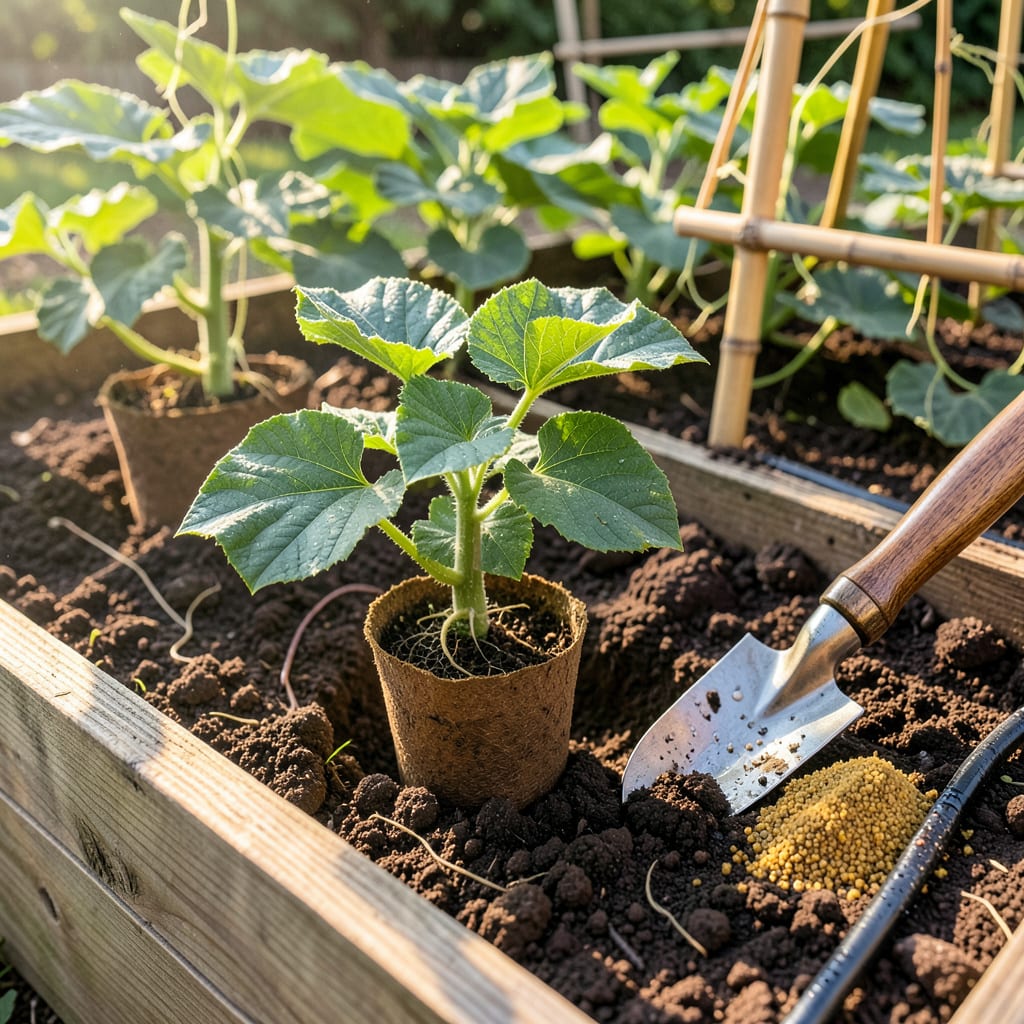
Cucumber transplants can be the difference between a struggling plant and a vine that won’t stop producing. I’ve moved hundreds of seedlings over the years, and the ones that thrive always follow this simple rule: timing and tenderness matter more than you think. Get it right, and you’ll have dark green leaves reaching for the trellis within 48 hours.
Here’s the thing—most people rush this step. They see a few true leaves and assume it’s go time, but cucumbers need warm soil (70°F minimum) and a gradual introduction to outdoor conditions. Skip the hardening-off process, and you’ll watch those tender seedlings wilt faster than you can say “transplant shock.” Let’s do this the stress-free way.
📚 In This Guide
Moving cucumber seedlings to their permanent home doesn’t have to be stressful—here’s how I do it without shocking the plants.
Wait until 2-3 weeks after your last frost date when soil temperatures reach at least 60°F. Cucumbers are extremely sensitive to cold, and even a light frost will kill them. I check the 10-day forecast to ensure no unexpected cold snaps are coming.
Transplant in the late afternoon or on a cloudy day to reduce stress. The softer light and cooler temperatures give seedlings time to acclimate before facing intense sun. You’ll see wilting if you move them during midday heat—this is the moment that matters: timing prevents transplant shock.
Choose a location with full sun (6-8 hours daily) and well-draining soil. Cucumbers thrive in slightly acidic to neutral soil (pH 6.0-6.8). I work 2-3 inches of compost into the top 6-8 inches of soil to improve fertility and drainage.
Space holes 36-48 inches apart for bush varieties or 48-72 inches apart for vining types. Dig each hole slightly larger than the root ball but no deeper. A hole that’s too deep encourages stem rot. I add a handful of balanced fertilizer (10-10-10) to each hole and mix it into the surrounding soil before planting.
Water seedlings thoroughly 1-2 hours before transplanting to reduce root damage. Gently squeeze the container to loosen the root ball, then slide the plant out by supporting the soil—not the stem. Cucumber stems are brittle and snap easily if bent.
Place the seedling in the hole at the same depth it grew in its container. Burying the stem too deep causes rot, while planting too shallow exposes roots. Backfill with soil, pressing lightly to eliminate air pockets. I create a small soil berm around each plant to direct water to the roots during initial watering.
Water deeply right after transplanting until the soil is moist 6-8 inches down. Use a watering can with a gentle shower setting to avoid disturbing the soil. The goal is to settle the roots without compacting the earth. I apply 1-2 inches of mulch (straw or shredded leaves) around plants to retain moisture and suppress weeds.
Install supports (trellises, cages) immediately for vining varieties. Waiting until plants are larger risks damaging roots later. For the first 3-5 days, I provide temporary shade (using row covers or cardboard) to protect seedlings from intense sun while they establish new roots.
Check plants daily for the first week. Wilting in the afternoon is normal initially, but leaves should perk up by morning. If they remain wilted, the plant is stressed—usually from under-watering or transplant shock. I keep soil consistently moist (but not soggy) for the first 7-10 days.
Watch for pests like cucumber beetles, which appear as small yellow-green striped insects. Handpick any you see immediately. Real talk: the first two weeks are critical. Once you see new growth emerging, you’ll know the transplant was successful and the vines are establishing themselves in their new home.
After years of trial and error with cucumber transplants, I’ve learned that success comes down to a few critical details most gardeners overlook.
Timing Precision: The 2-3 weeks after last frost window mentioned in Step 1 isn’t arbitrary—it accounts for soil warming to that critical 60°F threshold. I’ve ruined entire plantings by jumping the gun when daytime temps felt warm but soil was still chilly. Use a soil thermometer rather than guessing. That 10-day forecast check is your insurance policy against late spring surprises.
Root Zone Preparation: In Step 2, when working 2-3 inches of compost into the top 6-8 inches of soil, focus on creating a gradual transition between the amended hole and native soil. A sharp boundary between rich compost and poor soil creates a “bathtub effect” where roots circle instead of expanding outward. I blend the edges thoroughly to encourage outward root growth.
Transplant Day Protocol: The 1-2 hours before transplanting watering in Step 3 serves two purposes: it ensures the root ball holds together during moving, and more importantly, it hydrates the plant to withstand the inevitable root damage. Here’s what nobody tells you—if the soil is too dry, roots become brittle and snap; if too wet, the root ball falls apart. Aim for moist but not soggy—like a wrung-out sponge.
Post-Transplant Critical Window: Those first 3-5 days of shade protection in Step 4 are when 80% of transplant failures occur. I’ve found that row covers work better than cardboard because they allow airflow while diffusing light. Remove them completely after 5 days regardless of weather—prolonged shade creates weak, leggy growth that’s more susceptible to pests later.
Yes! Direct sowing is common for cucumbers in warm climates (soil temp above 70°F). However, starting seeds indoors 2–3 weeks early gives a head start in shorter growing seasons. If transplanting, harden off seedlings first to avoid shock.
Transplant after the last frost when soil is consistently 60–70°F (use a soil thermometer!). Evening transplants reduce stress—water well and provide shade for 2–3 days if temps exceed 85°F.
Wilting often signals transplant shock (too much sun/wind) or overwatering. Yellow leaves may mean nutrient deficiency (nitrogen) or cold stress. Mulch roots, shade plants, and check drainage. Trim damaged leaves to redirect energy.
Both work! Ground growth saves effort, but trellises (or cages) improve air circulation, reduce pests, and save space. If vining, install supports at transplanting to avoid disturbing roots later. Bush varieties thrive without them.
First, check for over/underwatering—soil should be moist but not soggy. Apply a balanced fertilizer (10-10-10) or compost tea for a boost. Protect from wind/chill with row covers, and prune dead foliage to encourage new growth.
