
Beautiful Plants For Your Interior
Beautiful Plants For Your Interior
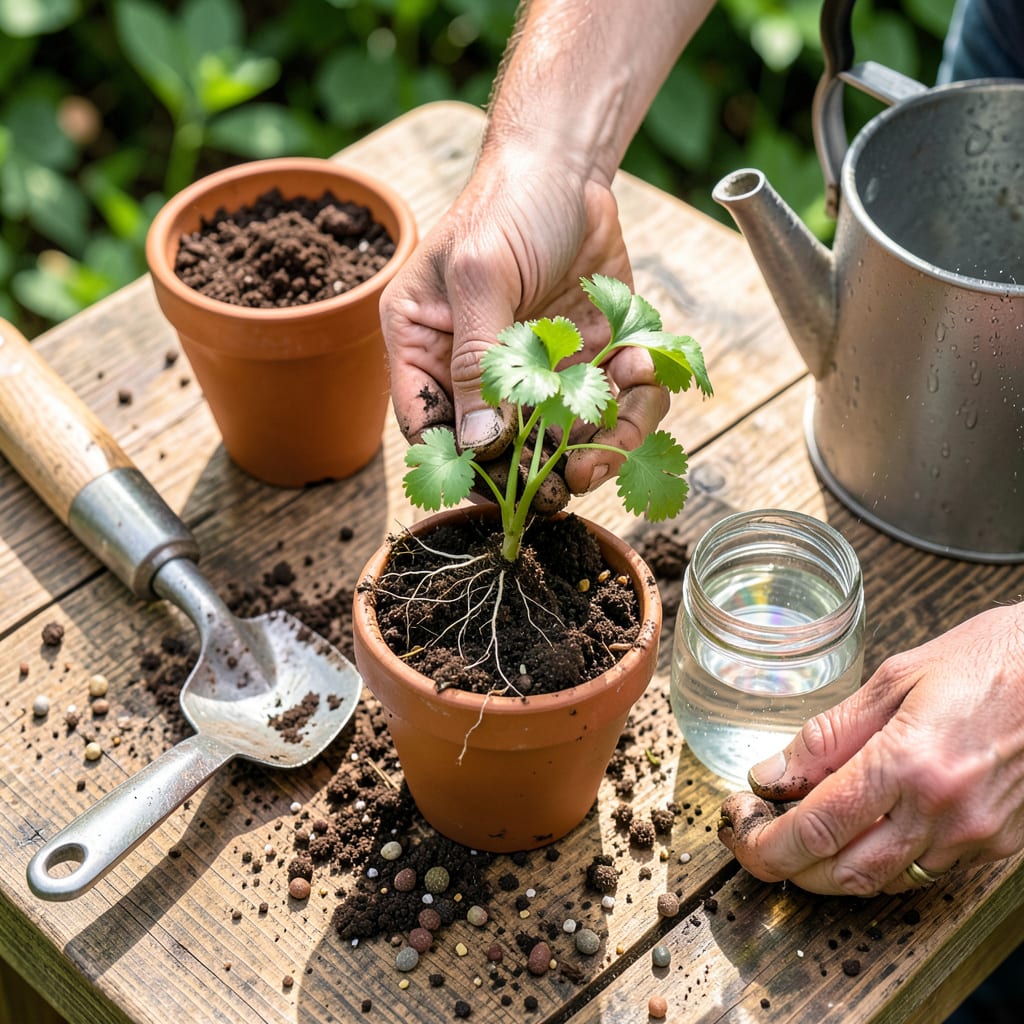
Cilantro doesn’t like being moved—but when it’s leggy, overcrowded, or outgrowing its pot, transplanting becomes necessary. I’ve lost my share of cilantro to shock until I learned the trick: timing and gentle handling make all the difference. Move plants in early morning when they’re hydrated, and you’ll see them bounce back faster than you’d expect.
The secret lies in protecting that delicate taproot while giving the plant exactly what it needs after the move. Within 3-5 days, properly transplanted cilantro perks up with fresh growth—no wilted drama, no wasted effort. Here’s how to do it without the usual stress (for you or the plant).
📚 In This Guide
This method ensures your cilantro survives the move with minimal shock and keeps producing those flavorful leaves.
Choose a location with full sun to partial shade—cilantro prefers 4-6 hours of direct sunlight daily but tolerates afternoon shade in hot climates. For containers, select a pot at least 8 inches deep with drainage holes. I always test drainage by pouring water through—if it pools on the surface, the holes are insufficient.
Work the soil to a depth of 6-8 inches, removing any debris or clumps. For garden beds, mix in 1-2 inches of compost to improve fertility. In containers, use a well-draining potting mix (cilantro despises soggy roots). The soil should feel loose and crumbly when squeezed—if it forms a tight ball, it’s too dense.
Water the cilantro thoroughly 1-2 hours before transplanting. This hydrates the roots and helps the soil hold together around them. Use a trowel to dig a wide circle around the plant, at least 3-4 inches from the base, to avoid slicing through roots. I slide the trowel under the root ball at a 45-degree angle to lift it cleanly.
Grasp the plant by the base of the stems—not the leaves—and lift it gently. If roots break, don’t panic, but minimize damage. Shake off excess soil only if it’s heavy or muddy; otherwise, leave the root ball intact. The goal is to disturb the roots as little as possible during this transition.
Dig a hole in the new location slightly wider than the root ball but no deeper. Place the cilantro in the hole so the soil line matches its original depth—burying the stem causes rot. For multiple plants, space them 6-8 inches apart to allow airflow and prevent disease. I use my fingers to press the soil lightly around the base, eliminating air pockets without compacting.
Water immediately after transplanting until the soil is evenly moist but not waterlogged. You’ll see the soil darken and settle slightly—that’s the signal you’ve watered enough. Avoid wetting the leaves, as this can invite fungal issues. A light mulch (like straw) helps retain moisture, but keep it 1 inch away from the stems to prevent rot.
Keep the soil consistently moist (but not soggy) for the first 7-10 days. Cilantro wilts dramatically when stressed, but don’t overreact—it often recovers by the next morning if watered properly. If transplanting in hot weather, provide temporary shade (like a cardboard box) for 2-3 days to reduce shock.
Watch for signs of distress: yellowing leaves indicate overwatering, while crispy edges mean underwatering. I avoid fertilizing for the first week—let the plant focus on root establishment. Once you see new leaf growth (usually within 10-14 days), your cilantro has successfully adapted to its new home.
Transplanting cilantro doesn’t have to be stressful—these key insights will help your herbs thrive in their new home.
Timing is Everything: The 1-2 hours of pre-transplant watering in Step 2 makes all the difference. I’ve found that plants watered for the full 2 hours handle the move with significantly less shock. The extra time allows roots to fully hydrate and the soil to cohere around them, protecting delicate root hairs during the transfer. Don’t rush this step—it’s your best insurance against transplant failure.
Root Ball Integrity: When digging your cilantro in Step 2, that 3-4 inch radius around the base isn’t arbitrary. Cilantro roots spread wider than you’d expect, and cutting them too close to the stem severs the feeder roots responsible for water uptake. I use a hand fork to gently loosen the soil in a circular motion before sliding my trowel underneath—this minimizes root damage while maintaining that critical root ball structure.
The Critical First Week: The 7-10 day monitoring period in Step 4 isn’t just about watering—it’s about observing plant behavior. Cilantro will often wilt dramatically in the afternoon sun during this transition, which can be alarming. Resist the urge to overwater; instead, check soil moisture at dawn when plants are naturally most turgid. I’ve saved countless plants by watering deeply at sunrise rather than reacting to afternoon wilting, which is often just heat stress rather than true dehydration.
Sunlight Strategy: While cilantro needs 4-6 hours of direct sunlight as mentioned in Step 1, the quality of that light matters during transplant recovery. Morning sun is gentler and more beneficial than harsh afternoon rays during the first week. If your planting location gets intense afternoon sun, consider using that 2-3 day shade protection period from Step 4 even if temperatures seem moderate. A simple cardboard box propped on stakes creates perfect diffused light conditions for recovery.
Cilantro thrives in cool weather, so the best time to transplant is in early spring or fall. Avoid extreme heat (above 85°F), as it triggers bolting (premature flowering). In mild climates, winter transplanting works too—just protect plants from frost with row covers or mulch.
Seedlings should have 2-4 true leaves (not just the initial sprouts) and be 2-3 inches tall. Gently tug the base—if roots resist slightly, they’re established enough. Avoid waiting too long; overcrowded seedlings weaken and transplant poorly.
If transplant shock strikes, try direct sowing next time—cilantro dislikes root disturbance. For a quick fix, plant fast-growing substitutes like parsley or dill, which share similar flavors. Or, regrow cilantro from grocery-store stems in water before transferring to soil!
Wilting often means underwatering, root damage, or transplant shock. Water deeply after transplanting and keep soil moist (not soggy) for 1-2 weeks. Shield plants from harsh sun for 3-5 days post-transplant. If roots were disturbed, trim damaged ones before replanting.
Yes! Harden off indoor plants for 7-10 days first (gradually expose them to outdoor conditions). For ground-to-pot moves, dig widely to preserve roots and use a well-draining potting mix. Potted cilantro may bolt faster—harvest leaves early to delay flowering.
