
Beautiful Plants For Your Interior
Beautiful Plants For Your Interior
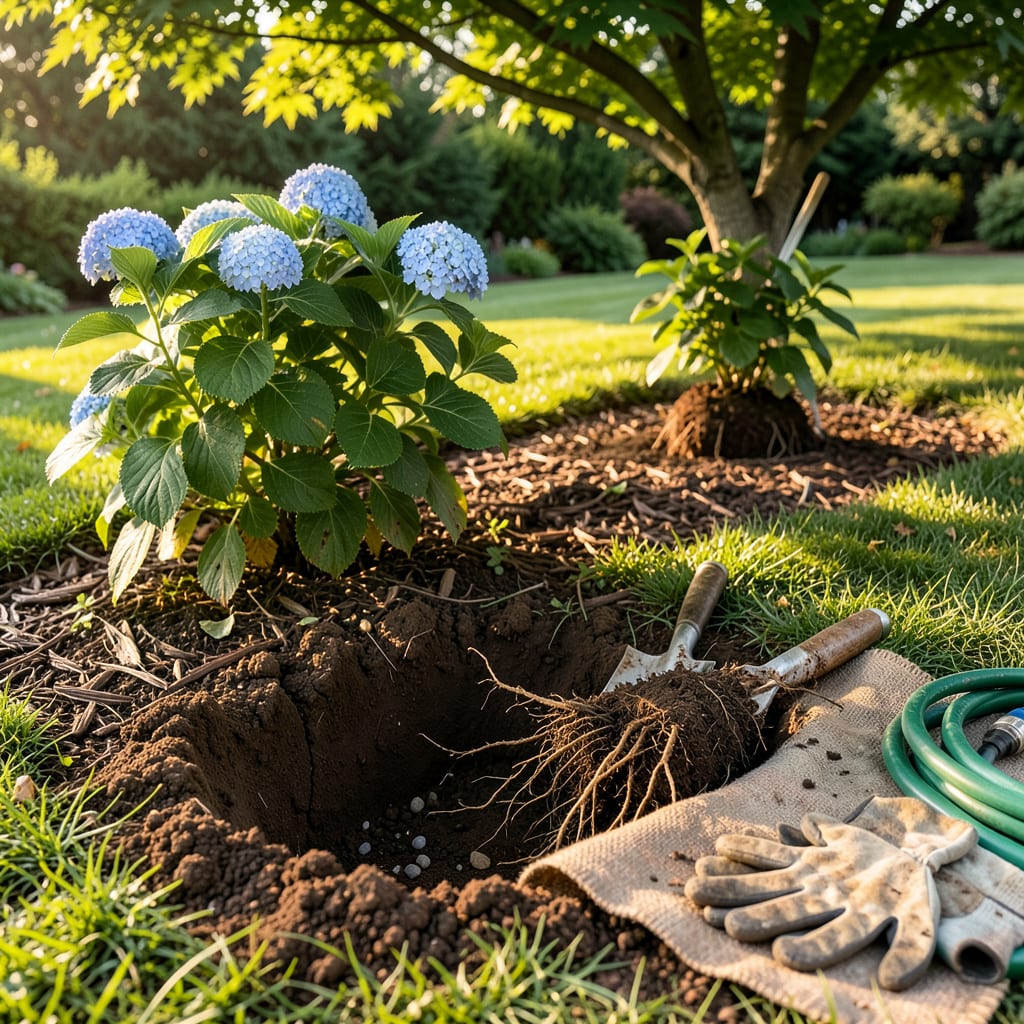
Moving a bush isn’t just about digging it up and hoping for the best. I’ve learned the hard way that timing and technique make all the difference—transplant at the wrong time or damage the roots, and you’ll spend months nursing a struggling plant. The sweet spot is early spring or fall when temperatures are mild and roots have time to establish before summer heat or winter cold.
What surprised me most? How simple the right tools make this process. A sharp spade, sturdy pruners, and some burlap for root protection turn what seems intimidating into a straightforward afternoon project. The key is keeping that root ball intact—every broken root means more transplant shock. Done properly, your bush won’t just survive the move, it’ll thrive in its new location.
📚 In This Guide
Moving established shrubs doesn’t have to be stressful—here’s my tried-and-true method for giving your plants a fresh start.
Start by digging the new hole before you disturb the bush. Make it twice as wide as the root ball but no deeper—you want the top of the root flare to sit slightly above ground level. I use a shovel to loosen the soil around the edges of the hole, creating a rough texture that helps roots penetrate more easily.
Mix a few handfuls of compost into the soil you removed. This gives the roots a nutrient boost as they establish in their new location. Check that the hole’s depth is correct by placing your shovel handle across it—the top of the root ball should align with the handle when placed in the hole.
Water the bush thoroughly 24 hours before transplanting to ensure the roots are hydrated and the soil holds together. Use a sharp spade to dig a trench around the drip line (the outer edge of the branches), working your way deeper until you can slide the spade under the root ball.
For bushes under 3 feet tall, you can usually lift them by the base of the stem. Larger shrubs may require two people or a tarp to drag the root ball. I always wrap the root ball in burlap or a tarp immediately after digging to prevent soil from falling away—this protects the delicate feeder roots.
Transport the bush to its new home right away. If you must delay, keep the root ball wrapped and place it in a shaded area. Set the bush in the prepared hole, making sure it’s straight and at the correct depth. The top of the root flare should be 1-2 inches above the surrounding soil to allow for settling.
Backfill the hole with the amended soil you removed earlier, gently firming it around the roots to eliminate air pockets. Create a 3-inch-high water ring around the perimeter of the hole to help direct water to the roots during the first few waterings.
Water the transplanted bush deeply immediately after planting, using 5 gallons of water for small shrubs and up to 10 gallons for larger ones. This settles the soil around the roots and removes air pockets. I like to water in stages—apply half, let it soak in, then add the rest.
Apply a 2-3 inch layer of mulch around the base, keeping it 3 inches away from the trunk to prevent rot. Use organic mulch like wood chips or shredded bark, which will break down over time and feed the soil. The mulch helps retain moisture and regulates soil temperature during the critical establishment period.
Check the soil moisture daily for the first week, then every 2-3 days for the next month. The soil should feel moist but not soggy 1-2 inches below the surface. New transplants often need watering more frequently than established plants because their root systems are temporarily disrupted.
Watch for signs of transplant shock like wilting or yellowing leaves—this is normal for the first week or two. If you see significant leaf drop after 10 days, the bush may need more water or temporary shade. I’ve found that most shrubs recover fully within 4-6 weeks when given proper aftercare.
Transplanting bushes becomes much easier when you know these key details that most guides overlook. Here’s what I’ve learned from years of moving plants successfully.
Hydration Timing: The 24-hour pre-watering mentioned in Step 2 is absolutely critical—don’t skip it or shorten it. I’ve found that deeply watering the bush exactly one day before moving ensures the roots are fully hydrated but the soil isn’t waterlogged. This makes the root ball hold together better when you dig, preventing those frustrating moments where soil crumbles away from the roots.
Root Ball Protection: When wrapping the root ball in Step 2, use damp burlap rather than dry material. The moisture helps maintain root contact with soil during the move. I keep a bucket of water nearby to rewet the burlap if there’s any delay in replanting. For bushes taller than 3 feet, consider using a tarp underneath the burlap to make dragging easier without damaging the root structure.
Depth Verification: In Step 3, don’t just eyeball the planting depth—use this foolproof check: after placing the bush in the hole, lay a straight board or your shovel handle across the hole. The root flare (where roots meet trunk) should be 1-2 inches above this line. I’ve saved countless plants from being buried too deep by using this simple trick that takes just seconds to do.
Water Ring Technique: The 3-inch water ring mentioned in Step 4 does more than just direct water—it creates a mini reservoir. After watering, I gently mound some of the ring inward toward the trunk to create a slight basin. This helps channel water directly to the root zone during those critical first few waterings when the plant is most vulnerable to drought stress.
Early spring (before new growth starts) or fall (4-6 weeks before frost) are ideal . These seasons give roots time to establish in mild temperatures. Avoid transplanting during extreme heat or dormancy—stress levels spike, and survival rates drop.
Aim for a root ball 10–12 inches wide per inch of trunk diameter (e.g., 30–36″ wide for a 3″ trunk). Depth should match the plant’s current root zone—usually 12–18″ deep. Pro tip: Use a sharp spade to minimize root damage!
Yes! Reduce shock by:
For oversized bushes, consider:
Common causes: underwatering, sun scorch, or broken roots. Check soil moisture (should be damp but not soggy), provide temporary shade, and trim dead branches. If wilting persists after 2 weeks, inspect for pests or disease.
