
Beautiful Plants For Your Interior
Beautiful Plants For Your Interior
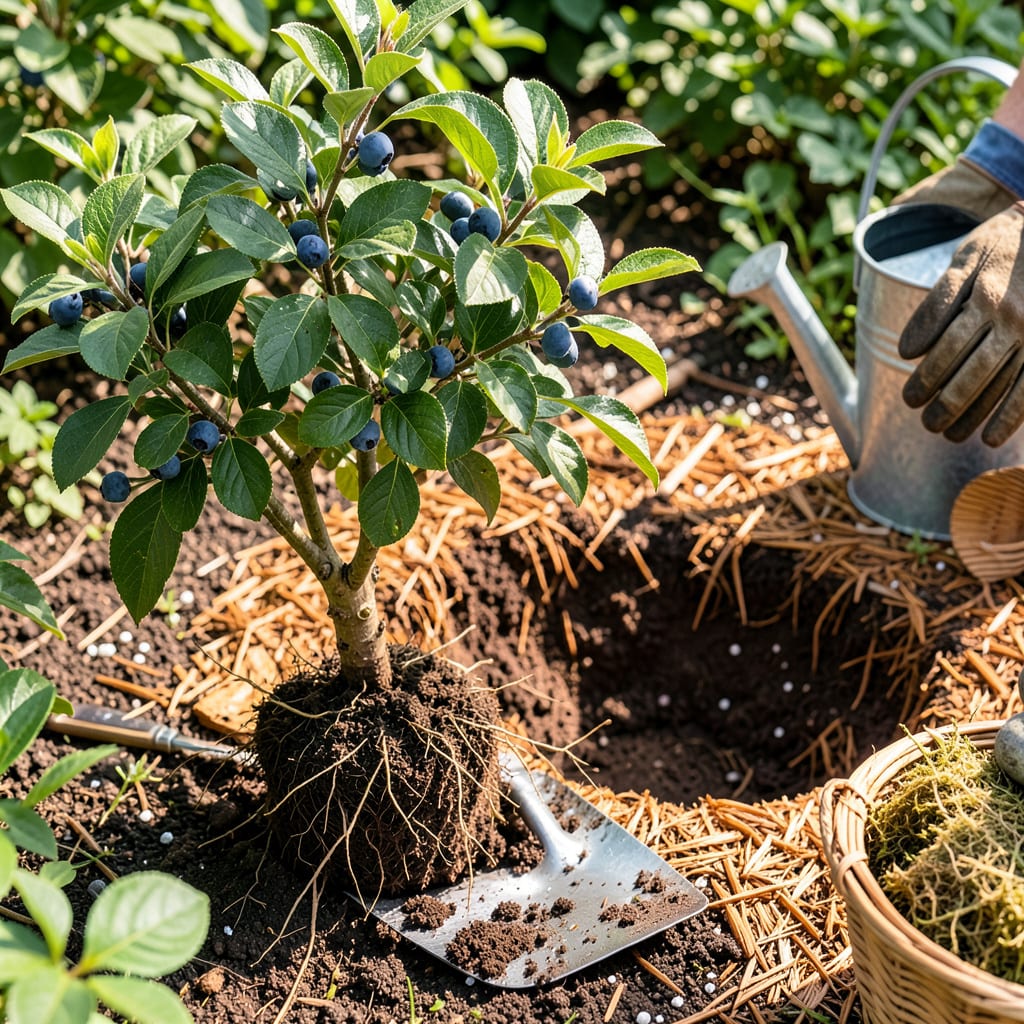
Moving blueberries is one of those projects that feels intimidating until you realize how forgiving these plants actually are. I’ve successfully transplanted dozens of bushes over the years, and the ones that struggled were always because I rushed the process—not because blueberries are delicate. The key is timing: late fall or early spring, when plants are dormant but the ground isn’t frozen.
What you’re really doing is giving them a better home. A spot with full sun, acidic soil (pH 4.5–5.5), and room to spread means your bushes will reward you with bigger harvests in just a couple seasons. The first year after moving, they focus on roots—not fruit—so don’t panic if berries are sparse. That’s actually the sign of a job well done.
📚 In This Guide
Moving blueberries doesn’t have to be stressful—follow these tested steps and your bushes will thrive in their new home.
Early spring or late fall, when plants are dormant, is ideal for transplanting. I always pick a cloudy day to reduce stress on the bushes. Start by preparing the new planting hole first—it should be twice as wide as the root ball but no deeper than the plant currently sits in the ground.
Blueberries need acidic soil with a pH between 4.5-5.5. Test your soil and amend with sulfur if needed. Mix in plenty of organic matter like peat moss or pine bark fines—this mimics their natural woodland environment and improves drainage.
Water the blueberry bush deeply 24 hours before transplanting—this helps the root ball hold together. Use a sharp spade to dig in a circle around the plant, starting about 12-18 inches from the base to capture the entire root system.
Work the spade underneath the root ball, angling slightly inward to create a cone shape. Once you’ve loosened the soil all around, gently lift the plant by grasping the base of the stems—not the branches. If the root ball starts to crumble, wrap it in burlap to hold it together during the move.
Place the bush in the prepared hole at the exact same depth it grew before—the soil line should remain at the same point on the stem. Planting too deep suffocates the roots, while planting too shallow exposes them. Backfill with your amended soil, gently firming it around the roots to eliminate air pockets.
Create a water basin by mounding soil in a circle around the plant, about 6 inches from the stem. This helps direct water to the roots. Water immediately after planting until the soil is thoroughly moistened—you should see water pooling in the basin before it soaks in.
After transplanting, prune back about one-third of the top growth. This reduces water loss through the leaves while the roots re-establish. Use clean, sharp pruners to make cuts just above outward-facing buds to encourage bushier growth.
Apply a 3-4 inch layer of organic mulch like pine bark or wood chips around the base, keeping it 2 inches away from the stem to prevent rot. Mulch conserves moisture, suppresses weeds, and gradually adds organic matter to the soil as it breaks down.
Check the soil moisture daily for the first week—it should stay consistently moist but never soggy. After that, water deeply 2-3 times per week unless you receive at least 1 inch of rain. The first growing season is critical for root establishment.
Watch for signs of transplant shock like wilted leaves or leaf drop. This is normal for the first few weeks. Avoid fertilizing until you see new growth—usually about 4-6 weeks after transplanting. When you do fertilize, use a product formulated for acid-loving plants.
Transplanting blueberries successfully comes down to a few key details that make all the difference. Here’s what I’ve learned from years of moving these finicky bushes.
Timing is Everything: The 24 hours of pre-watering mentioned in Step 2 isn’t just helpful—it’s critical. I’ve found that deeply watering the bush exactly one day before moving creates a cohesive root ball that holds together during transplanting. If you skip this step, you risk losing half your root system when digging, which sets the plant back significantly. Trust me on this: set a reminder on your phone so you don’t forget.
Root Ball Protection: When digging your circle 12-18 inches from the base as described in Step 2, work slowly and methodically. I like to use a clean tarp placed next to the bush before starting—once you’ve loosened the root ball, you can gently roll the plant onto the tarp for easy transport. This prevents the root ball from breaking apart during the move, which is especially important for mature bushes with extensive root systems.
Depth Precision: Step 3 emphasizes planting at the same depth, and here’s why it matters so much: blueberries are particularly sensitive to being planted too deep. I use a simple trick—lay a straight board or garden tool across the hole to check that the soil line on the stem matches the surrounding ground level. Even being off by an inch can stress the plant and delay establishment.
Pruning Strategy: The one-third pruning in Step 4 might seem aggressive, but it’s the single most important step for reducing transplant shock. Focus on removing the oldest canes completely and just tipping back the newer growth. This directs all the plant’s energy toward root establishment rather than maintaining foliage. I’ve found that bushes pruned this way recover twice as fast as unpruned ones.
The ideal time is late fall (after leaf drop) or early spring (before buds swell). This minimizes stress on the plant while giving roots time to establish before summer heat or winter dormancy. Avoid transplanting during flowering or fruiting seasons.
It’s risky! Summer heat stresses plants, even with extra water. If absolutely necessary, choose a cool, overcast day, prune back ⅓ of the foliage to reduce water loss, and mulch heavily. Monitor soil moisture daily for the first month.
Plant at the same depth as their original container or ground level—burying the stem can cause rot. For bare-root plants, ensure the root crown (where roots meet stems) sits 1–2 inches above soil. Firm the soil gently to eliminate air pockets.
First, check for underwatering (dry soil) or overwatering (soggy roots). Prune dead branches, apply a 2–3 inch layer of acidic mulch (pine needles or wood chips), and use a balanced acidic fertilizer (10-10-10 for blueberries). Avoid heavy pruning until the plant recovers.
Yes! Harden off potted plants for 7–10 days by gradually exposing them to outdoor conditions. Gently loosen roots if root-bound, then plant in a well-draining, acidic hole (pH 4.5–5.5). Water deeply and mulch to retain moisture.
