
Beautiful Plants For Your Interior
Beautiful Plants For Your Interior
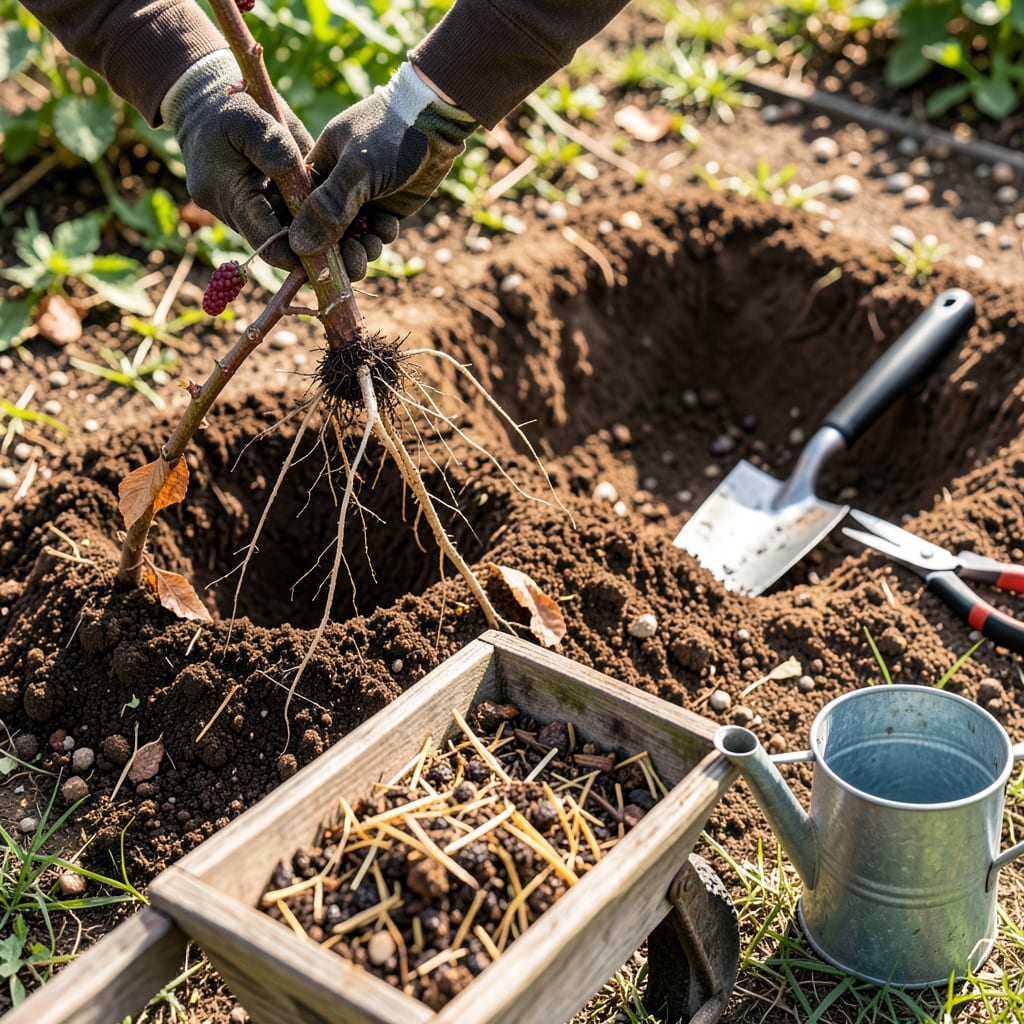
Moving blackberries feels intimidating until you realize they’re tougher than they look. I’ve transplanted dozens of canes over the years, and the ones that thrive always follow the same simple rules: right timing, proper prep, and gentle handling. Early spring or late fall—when plants are dormant—gives roots time to settle before growth kicks in.
You’ll end up with stronger canes that produce more fruit next season. The key is giving them enough space (5-6 feet apart) and well-draining soil amended with compost. I’ll walk you through each step, from digging the hole to that first post-transplant watering that makes all the difference.
📚 In This Guide
Moving blackberry plants doesn’t have to be stressful—I’ll show you how to do it with minimal shock and maximum success.
Early spring, just as new growth begins but before leaves fully emerge, is the ideal time to transplant. I’ve found this timing gives roots a chance to establish before summer heat. If you must move plants in fall, do it at least 6 weeks before your first frost so they can settle in.
Select a sunny spot with 6-8 hours of direct sunlight daily and well-draining soil. Blackberries hate wet feet, so avoid low areas where water pools. Test drainage by digging a 12-inch deep hole, filling it with water, and checking that it drains completely within 2-3 hours.
Start by pruning the canes back to 2-3 feet tall—this reduces water loss and makes handling easier. Use a sharp spade to dig a trench around the plant, about 12 inches out from the base, cutting through roots cleanly. Blackberry roots spread widely, so expect to dig up a root ball at least 18 inches in diameter.
Lift the plant gently from below, keeping as much soil intact around the roots as possible. If the root ball breaks apart, don’t panic—just try to preserve at least 70% of the root system. Wrap the roots in burlap or place them in a bucket with damp soil if you can’t replant immediately.
Dig a hole twice as wide as the root ball but no deeper than it was originally planted. The crown (where stems meet roots) should sit 1-2 inches above soil level to prevent rot. Mix some compost into the backfill soil—about 25% compost to 75% native soil works well.
Position the plant in the hole, spreading roots outward naturally. Fill the hole halfway with your soil mix, then water deeply to eliminate air pockets. Finish filling, then create a 3-inch high water basin around the plant to direct moisture to the roots. Water thoroughly again until the soil is saturated.
Apply 2-3 inches of organic mulch (straw or wood chips) around the base, keeping it 3 inches away from the stems to prevent rot. This helps retain moisture and regulate soil temperature. Water deeply every 2-3 days for the first two weeks, then taper to weekly watering unless rain provides at least 1 inch per week.
Don’t fertilize immediately—wait until you see new leaf growth (usually 3-4 weeks), then apply a balanced fertilizer. Watch for wilting in the first week, which is normal as the plant adjusts. If leaves remain wilted after 24 hours, the plant needs more water or the roots may have been damaged during transplant.
Transplanting blackberries successfully comes down to timing and technique—here’s what I’ve learned from years of trial and error.
Timing is Everything: The early spring window mentioned in Step 1 is absolutely critical. I’ve found that transplanting when daytime temperatures consistently reach 50°F gives roots the perfect conditions to establish. If you’re transplanting in fall, use a soil thermometer to ensure ground temperatures stay above 50°F during those 6 weeks before frost. This gives roots enough warmth to grow before winter dormancy.
Root Preservation Technique: When digging up the plant in Step 2, I always keep a spray bottle of water handy. Lightly misting exposed roots during the process prevents them from drying out. Remember that 70% root preservation guideline—it’s not just about quantity but keeping the fine feeder roots intact. These hair-like roots absorb most of the water and nutrients, so handle them as gently as possible.
Watering Wisdom: The 2-3 day watering schedule in Step 4 is designed to encourage deep root growth. I use a simple finger test—insert your finger 2 inches into the soil near the plant. If it feels dry at that depth, it’s time to water. The 3-inch water basin you create is more important than you might think; it directs water exactly where the new roots are trying to establish in that critical first zone of soil.
Transplant Shock Management: Don’t be alarmed if your blackberry plant looks sad for the first week—some leaf drop is normal. What’s not normal is if the canes become brittle or the leaves turn brown and crispy. In that case, increase your watering frequency to daily for a few days. I’ve saved many plants by acting quickly at this stage and providing temporary shade with a lightweight fabric during the hottest part of the day.
Early spring (before new growth starts) or late fall (after dormancy begins) are ideal. Avoid extreme heat or freezing temps—aim for mild weather when plants are inactive but soil is workable. In warmer zones (7+), fall transplanting often works best.
It’s risky! Summer heat stresses plants, and transplant shock can kill canes. If absolutely necessary, choose a cloudy day, prune aggressively (reduce foliage by 50%), and water deeply for 2+ weeks. Mulch heavily to retain moisture.
Plant at the same depth as their original spot—the crown (where stems meet roots) should sit just above soil level. Too deep? Risk rot. Too shallow? Roots dry out. For bare-root plants, spread roots outward in a wide, shallow hole.
This is normal transplant shock—don’t panic! Trim wilted leaves, water daily (1–2 inches/week), and avoid fertilizer for 3–4 weeks. If yellowing persists, test soil pH (ideal: 5.5–6.5) or check for pests like spider mites.
Yes! Choose a 10+ gallon pot with drainage, use acidic potting mix (pH 5.5–6.5), and pick thornless compact varieties like ‘Baby Cakes’ or ‘Raven’.
