
Beautiful Plants For Your Interior
Beautiful Plants For Your Interior
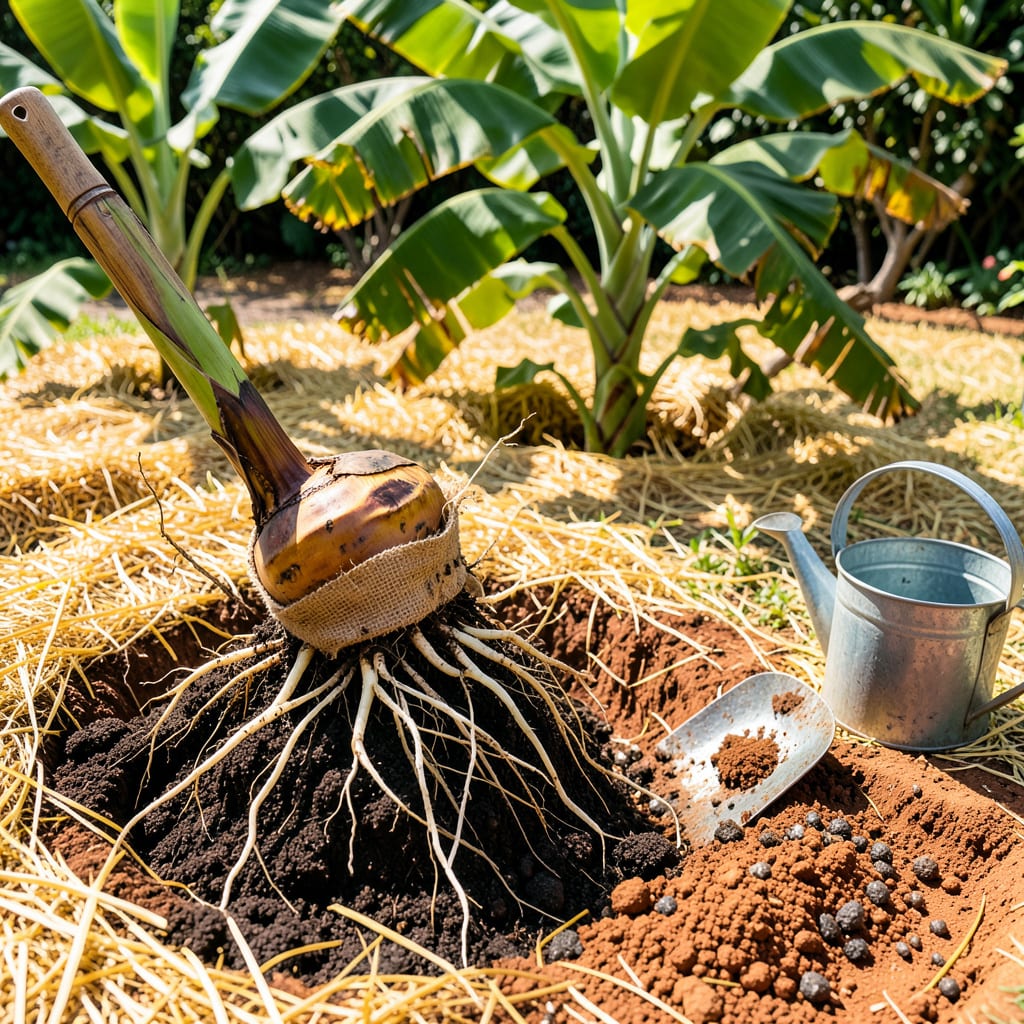
Moving a banana tree feels like relocating a small jungle—until you know the tricks. I’ve transplanted dozens, from tiny pups to towering mature plants, and the difference between a thriving transplant and a struggling one comes down to timing and technique. Do it right in warm weather (never during dormancy), and your tree will reward you with faster recovery and bigger bunches next season.
The secret isn’t just digging a hole—it’s about preserving the root ball, choosing a sheltered spot with full sun and rich soil, and babying the plant through the first critical weeks. Skip the guesswork: I’ll walk you through every step, from lifting the tree without shock to the post-move care that ensures it doesn’t just survive, but thrives.
📚 In This Guide
Moving a banana tree can feel intimidating, but this method ensures minimal shock and faster recovery for healthier growth.
Choose a location with full sun (at least 6-8 hours daily) and protection from strong winds that can tear the large leaves. Banana trees thrive in well-draining soil, so amend the site with organic matter like compost or aged manure to improve fertility and drainage.
Dig a hole twice as wide and deep as the root ball you’ll be transplanting. This loose soil allows roots to spread easily into their new environment. I always test drainage by filling the hole with water—if it doesn’t drain within 30 minutes, the site needs more organic matter or sand mixed in.
Water the tree deeply 24 hours before transplanting to hydrate the roots and reduce stress. Use a sharp spade to cut a clean circle around the plant, starting about 12-18 inches from the pseudostem (the main trunk) to preserve as many feeder roots as possible.
Angle the spade downward to create a cone shape, then gently pry the root ball upward. For mature trees, you may need help—banana root systems can weigh 50-100 pounds when properly excavated. Never pull by the pseudostem, as this can separate it from the corm (the true base of the plant).
Place the tree in the prepared hole at the same depth it was growing previously—the soil line should remain at the same point on the pseudostem. Backfill with native soil mixed with compost, firming gently as you go to eliminate air pockets that could dry out roots.
Create a 3-4 inch high watering basin around the base to direct moisture to the roots. Stake the pseudostem with three bamboo stakes arranged in a triangle, securing with soft tree ties. This prevents wind rock while allowing some natural movement that strengthens the trunk.
Water deeply immediately after planting, then maintain consistent moisture for the first 2-3 weeks. The soil should feel damp but never soggy—bananas hate waterlogged roots. Apply 2-3 inches of organic mulch to conserve moisture and regulate soil temperature.
Remove any damaged or yellowing leaves to reduce water loss through transpiration. Expect some leaf dieback—this is normal. New growth typically emerges within 3-4 weeks if the transplant was successful. Withhold fertilizer for 6 weeks to avoid burning tender new roots.
Check the stakes daily for the first week—banana trees can shift as the soil settles. Adjust ties as needed to prevent rubbing that could damage the pseudostem. The stakes can typically be removed after 3-4 months once the root system has re-established.
Watch for signs of transplant shock like wilting or leaf yellowing. If these persist beyond 2 weeks, provide temporary shade cloth to reduce stress. The first new leaf unfurling after transplant is your confirmation that the tree has successfully adapted to its new location.
Transplanting banana trees successfully comes down to careful preparation and avoiding common pitfalls that stress the plant.
Preparation is Key: The 24-hour deep watering mentioned in Step 2 isn’t just helpful—it’s essential for root hydration and stress reduction. I’ve found that adding a layer of mulch around the base after this watering helps maintain moisture right up until transplant time. This small step makes the root ball easier to work with and reduces transplant shock significantly.
Root Ball Preservation: When cutting that 12-18 inch circle around the pseudostem in Step 2, resist the temptation to go smaller for easier handling. Those outer feeder roots are critical for quick recovery. I learned this the hard way after losing a mature tree that never fully recovered from a too-narrow excavation. The extra effort preserving the full root system pays off in faster new growth.
Stabilization Technique: The three-stake triangle method in Step 3 isn’t just about support—it’s about creating a stable base that allows for natural movement. I use soft cloth strips instead of plastic ties to prevent bark damage as the tree sways. Check these ties daily during the first week as the pseudostem can expand slightly with hydration, requiring adjustments to prevent constriction.
Watering Wisdom: During those critical first 2-3 weeks mentioned in Step 4, I’ve found that morning watering works best. This allows foliage to dry before evening, reducing fungal risks while ensuring roots have moisture during their most active absorption period. The 3-4 inch watering basin you create will help direct this water exactly where it’s needed most—right to the root zone.
Spring or early summer (when temperatures stay above 60°F) is ideal for transplanting. Avoid winter or extreme heat—cold shocks roots, while heat stresses new growth. In tropical zones, transplant during the rainy season for easier establishment.
Aim for pups (suckers) that are 3–4 feet tall with their own roots (check by gently tugging). Smaller pups may struggle, while overgrown ones can damage their root ball during removal. Sword suckers (narrow leaves) transplant better than water suckers (broad leaves).
Wilting is normal for 1–2 weeks (transplant shock). Keep soil moist but not soggy. Yellow leaves? Trim damaged ones and check for overwatering or poor drainage. Shield from direct sun for 3–5 days post-transplant to reduce stress.
No! Wait 2–3 weeks to avoid burning tender new roots. Start with a balanced 8-10-8 fertilizer (diluted) once the plant shows new growth. Over-fertilizing early can hinder root recovery.
Yes, but choose dwarf varieties (like ‘Dwarf Cavendish’) and a 15+ gallon pot with drainage. Potted bananas need more frequent watering and yearly repotting. Expect smaller fruit—ground-planted trees yield better in most climates.
