
Beautiful Plants For Your Interior
Beautiful Plants For Your Interior
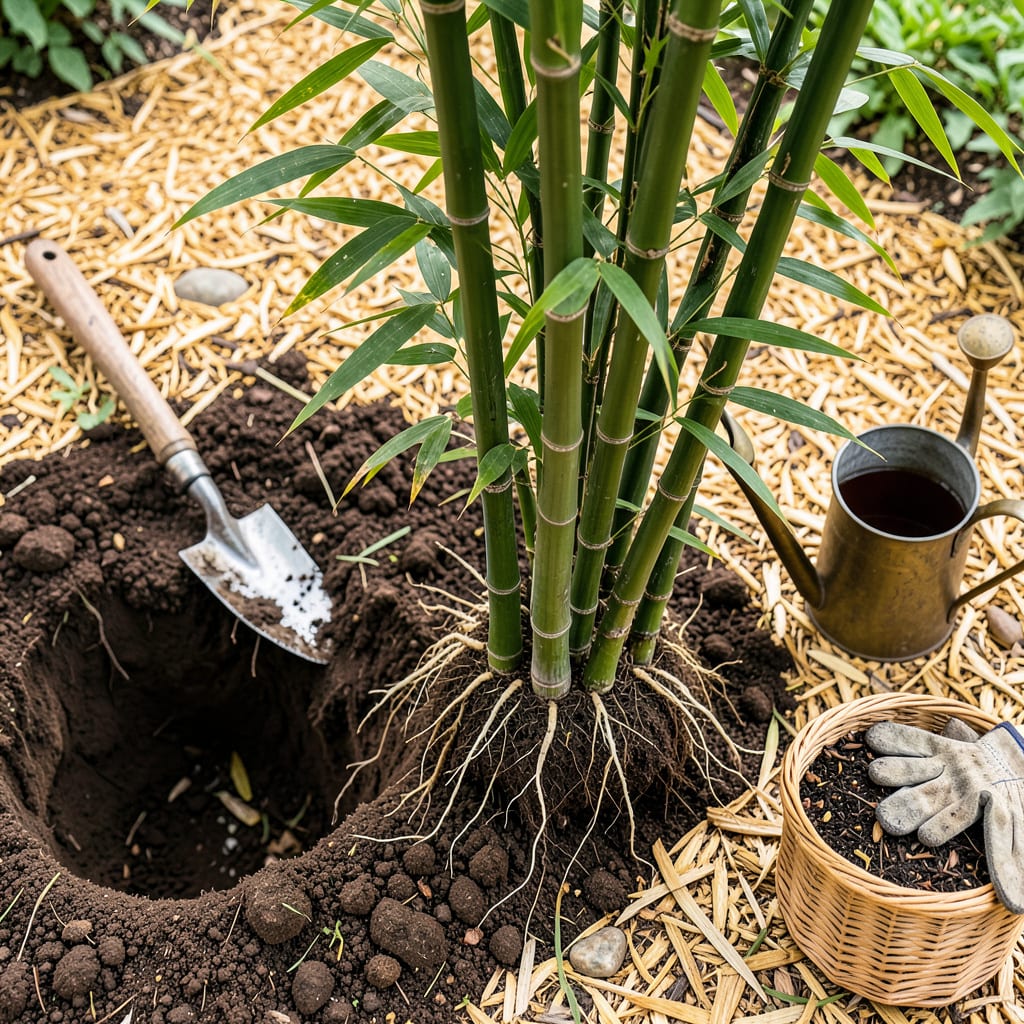
I used to think bamboo was impossible to move without killing it—until I figured out the timing and technique. The secret is working with the plant’s natural growth cycle, not against it. Transplant during early spring or late fall when roots are dormant but soil is workable, and you’ll avoid the shock that dooms most attempts.
What changed everything for me was learning how to handle the roots differently for clumping versus running types. One wrong cut can set back growth for years, but do it right, and you’ll see new shoots within weeks. The key is keeping the root ball intact while giving it room to establish in its new spot. No fancy tools required—just a sharp spade, some patience, and this method.
📚 In This Guide
Moving bamboo doesn’t have to be intimidating—here’s how I do it with zero transplant shock.
Early spring or late fall works best when bamboo is semi-dormant. I avoid summer moves because the heat stresses plants during recovery. Start by digging your new hole twice as wide as the root ball but only as deep—this gives roots room to spread horizontally without sinking.
Test the soil drainage by filling the hole with water. If it doesn’t drain within 30 minutes, mix in compost or sand. Bamboo hates soggy roots, so I always plant on a slight mound if my soil is heavy clay. Position the hole where it’ll get partial shade for the first week after moving.
Water the plant deeply 24 hours before moving—this helps the root ball hold together. Use a sharp spade to cut a 12-inch diameter circle around the base for small clumps, or 18 inches for established plants. Go deep: bamboo roots spread down 12-18 inches even when the plant looks small.
Lever the root ball out gently. If roots resist, don’t yank—cut through them cleanly with pruners instead. I wrap the root ball in burlap immediately if I can’t replant within 2 hours to prevent drying. Keep the roots moist with a spray bottle while you work.
Set the plant in the new hole so the soil line matches its original depth. Planting too deep suffocates the crown, while too shallow exposes roots. I use a stick laid across the hole to check that the top of the root ball sits 1 inch above the surrounding soil—it’ll settle perfectly after watering.
Backfill with native soil, tamping gently every 3 inches to eliminate air pockets. Create a 3-inch-high water ring around the perimeter to direct moisture to roots. Water immediately with 2 gallons until soil is saturated but not pooling.
Shield the plant from direct sun and wind for 5-7 days using shade cloth or a temporary windbreak. I mist the leaves daily during this period—it reduces transpiration stress. Check soil moisture twice daily; bamboo needs consistently moist (not soggy) soil for 3 weeks after moving.
Don’t fertilize for 4 weeks—new roots are tender and burn easily. Instead, I apply a 2-inch mulch layer of wood chips to conserve moisture and regulate temperature. You’ll know the plant has recovered when you see new shoot growth, usually within 3-4 weeks.
Yellowing leaves in the first week are normal, but if you see brown leaf tips after 10 days, the plant needs more water. Wilting that doesn’t improve overnight means either underwatering or root damage. I stake taller varieties immediately if they lean—bamboo establishes better when upright.
Watch for new cane emergence—this is your confirmation the transplant succeeded. If no new growth appears after 6 weeks, check for root rot by gently excavating the base. Healthy roots are firm and white; mushy brown roots indicate overwatering.
Transplanting bamboo successfully comes down to understanding its root system and recovery needs. Here’s what I’ve learned from years of moving these resilient plants without stress.
Timing is Everything: The 24-hour pre-watering in Step 2 isn’t just helpful—it’s critical. I’ve found that deeply saturated soil makes the root ball hold together like a cohesive unit when you dig, preventing the tearing that leads to transplant shock. If you’re moving multiple plants, water them all the day before and tackle them in order of size, starting with the smallest clumps that need just that 12-inch diameter circle.
Root Ball Protection: That 2-hour window mentioned in Step 2 for replanting isn’t arbitrary. Bamboo roots dry out shockingly fast when exposed to air. If you can’t replant immediately, wrap the root ball in damp burlap (not plastic—it traps too much moisture) and keep it in full shade. I once lost a prized black bamboo by leaving its roots exposed for just 90 minutes on a breezy day. Now I work with a spray bottle handy to mist roots every 15 minutes if delays happen.
The Water Ring Trick: The 3-inch-high water ring from Step 3 does double duty. It doesn’t just direct water to roots—it also creates a microclimate of higher humidity around the base, which bamboo adores during recovery. After that initial 2 gallons of water, I add a capful of liquid seaweed extract to the ring. The potassium helps roots recover faster, and I’ve noticed new shoots emerge about a week earlier when I use it.
Post-Transplant Vigilance: During those first 5-7 days of shade protection in Step 4, watch for something most guides don’t mention: leaf curl. If you see edges curling inward by afternoon, that’s your plant’s way of saying it’s losing moisture faster than the roots can replace it. When this happens, I mist the leaves every 2-3 hours (not just daily) and add an extra gallon to the water ring. This usually resolves the curl within 24 hours.
The ideal time is early spring (March–April) or late fall (September–October) when bamboo is dormant. Avoid extreme heat or frost—mild weather reduces transplant shock. For tropical climates, aim for the start of the rainy season to help roots establish faster.
It’s risky but possible with extra care! Water deeply 2–3 days before and after transplanting. Provide temporary shade (like burlap) for 1–2 weeks to prevent wilting. Avoid midday heat—work in early morning or evening for best results.
Keep roots moist (never soggy) and trim 1/3 of the leaves to reduce water loss. Use a root stimulator (like seaweed extract) when planting. Mulch heavily (2–3 inches) to retain moisture and regulate soil temp—this cuts shock risk by 50%+!
For running bamboo, try root pruning: Sever roots in a circle around the plant 6–12 months before transplanting. This forces new growth into a compact area, making removal easier. For clumping types, division (splitting the root ball) works well with minimal digging.
Yellowing often signals overwatering or poor drainage. Check soil moisture—it should feel like a wrung-out sponge. If roots are mushy, improve drainage with sand or perlite. Yellow lower leaves? That’s normal post-transplant shedding; new growth should stay green.
