
Beautiful Plants For Your Interior
Beautiful Plants For Your Interior
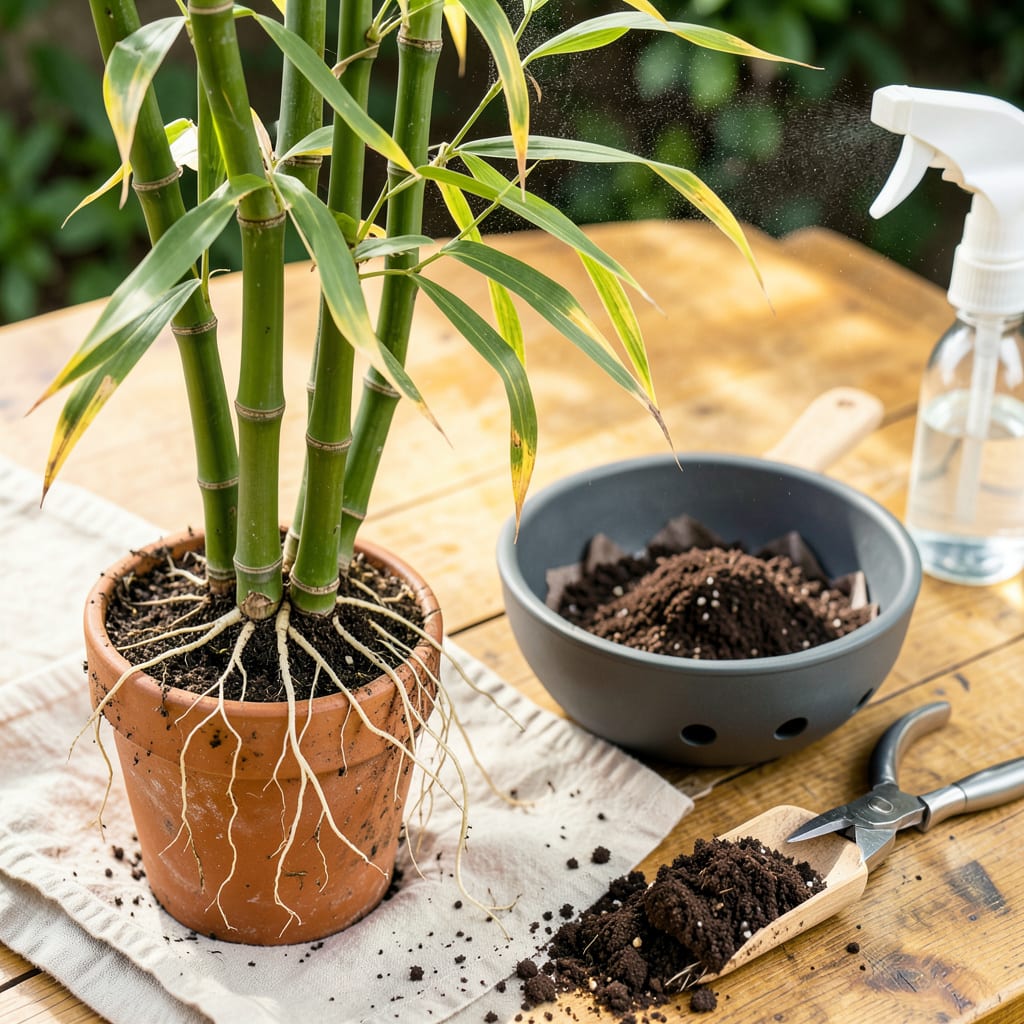
That moment when your bamboo plant outgrows its pot is exciting—until you realize moving it wrong can set it back for months. I’ve transplanted dozens of these resilient plants, and the difference between a smooth transition and a stressful one comes down to three things: timing, root care, and the right soil mix.
You’ll know it’s working when you see new shoots within 2-3 weeks and leaves that stay firm, not droopy. No fancy tools required—just a slightly larger pot, well-draining soil, and a gentle hand. The best part? Bamboo bounces back faster than most houseplants if you handle the roots right. Here’s how to do it without the guesswork.
📚 In This Guide
This gentle approach ensures your bamboo transitions smoothly with minimal stress and maximum growth potential.
Select a container that’s 2-3 inches wider than the current one—bamboo roots need room to expand but hate excessive space. I always choose containers with multiple drainage holes to prevent root rot. Place a coffee filter or mesh screen over the holes to keep soil from washing out while allowing water to drain freely.
Fill the new container with 1-2 inches of fresh, well-draining potting mix. I prefer a blend containing perlite or orchid bark for extra aeration. Set up your workspace near a sink or with a drop cloth—this gets messy. Have your pruning shears, watering can, and gloves ready before disturbing the plant.
Water your bamboo thoroughly 1-2 hours before transplanting—this helps the root ball hold together. Gently squeeze the current pot’s sides to loosen the root mass, then turn it upside down while supporting the stems between your fingers. Tap the pot’s bottom if needed, but don’t pull on the stems.
Once free, examine the roots carefully. Healthy roots appear firm and white or light tan. If you see dark, mushy roots, trim them away with sterilized shears. Loosen the outer root layer gently with your fingers to encourage outward growth in the new container—this prevents circling roots that can eventually strangle the plant.
Center the bamboo in the new container at the same depth it was previously growing. The soil line should remain at the same level on the stems. Add potting mix around the sides, pressing lightly to eliminate air pockets. I use a chopstick to work soil into tight spaces without compacting it too firmly.
Leave about 1 inch of space between the soil surface and container rim for watering. This gap prevents overflow when you water thoroughly. Gently rock the plant back and forth to settle it into position—you should feel slight resistance when it’s properly anchored. Don’t firm the soil too much; bamboo roots need some breathing room.
Water immediately after transplanting until you see moisture coming from the drainage holes. This initial deep watering helps settle the soil around roots and eliminates remaining air pockets. Place the plant in bright, indirect light for 3-5 days—direct sun now would stress the recovering roots.
Expect some leaf yellowing during this adjustment period—it’s normal. Mist the leaves daily to maintain humidity while roots reestablish. Don’t fertilize for 4-6 weeks; fresh soil contains enough nutrients, and fertilizer could burn tender new roots. You’ll know the plant has recovered when you see new leaf growth emerging from the top.
Transplanting bamboo doesn’t have to be stressful—these practical insights will help your plant thrive through the transition.
Container Selection: When choosing your new container in Step 1, remember that bamboo grows quickly but dislikes being drowned. The 2-3 inch wider recommendation is perfect—too much extra space leads to waterlogged soil. I’ve found that unglazed terracotta pots work exceptionally well because they allow excess moisture to evaporate through the sides, preventing root rot that bamboo is particularly susceptible to.
Root Handling Technique: During Step 2, I can’t emphasize enough how important it is to be gentle with the root ball. After that 1-2 hour watering, the roots should be pliable but not falling apart. Here’s what nobody tells you—if you encounter resistance when trying to loosen the root mass, don’t force it. Instead, run a knife around the inside edge of the pot to separate the roots from the container walls. This prevents the tearing that can set back your plant’s recovery.
Soil Settlement Trick: In Step 3, when you’re positioning the plant, here’s a method that changed everything for me: after placing the bamboo in its new home but before adding all the soil, gently lift the plant about an inch and let it drop. Do this 2-3 times. This helps settle the roots into their natural position and eliminates those problematic air pockets better than any amount of patting or pressing the soil.
Acclimation Period Care: The 3-5 days of bright, indirect light mentioned in Step 4 are absolutely critical. I learned this the hard way after losing a beautiful bamboo to sun scorch. During this time, your plant is focusing all its energy on root reestablishment. Think of it like recovery time after surgery—any stress (like direct sunlight or temperature fluctuations) can delay healing. That daily misting isn’t just about humidity; it also helps wash away dust that could clog the stomata on the leaves.
Spring or early summer is ideal—this is when bamboo enters its active growth phase. Avoid transplanting in winter or during extreme heat, as stress can stunt growth. If your plant is root-bound (roots circling the pot), act promptly regardless of season, but keep conditions mild.
How do I know if my bamboo needs transplanting?
Look for these signs: roots growing through drainage holes, soil drying out too quickly (within 1–2 days), or stunted growth despite proper care. Gently remove the plant from its pot—if roots are densely packed or circling, it’s time for a bigger home!
No! Bamboo thrives in well-draining, slightly acidic soil (pH 5.5–6.5). Mix 60% potting soil with 40% perlite, sand, or orchid bark for aeration. Avoid heavy garden soil—it retains too much moisture and can cause root rot.
Transplant shock is common! Ensure you:
If wilting persists, trim yellow leaves and check for overwatering.
If your bamboo has multiple stalks, gently separate them at the roots (use clean shears) and pot individually. For lucky bamboo (Dracaena sanderiana), cut healthy stalks at a 45° angle and root in water. Just avoid dividing stressed or diseased plants.
