
Beautiful Plants For Your Interior
Beautiful Plants For Your Interior
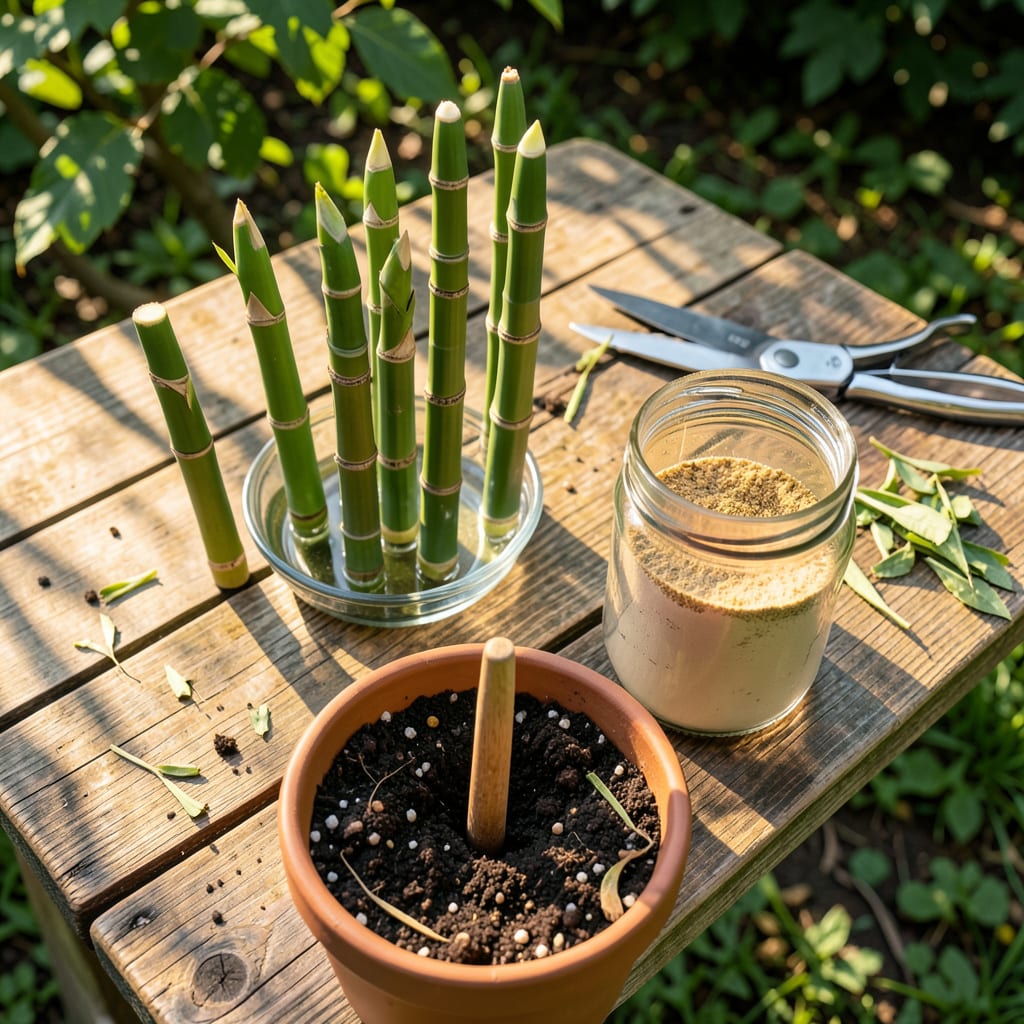
I used to think bamboo was impossible to propagate—until I tried this method. The secret isn’t fancy equipment or perfect timing, but understanding how bamboo naturally spreads. With the right cuttings (look for healthy culms with visible nodes) and a simple setup, you can turn a single stalk into a thriving new plant in weeks.
What changed everything for me? Skipping the guesswork. No more rotting stems or limp cuttings—just a straightforward process that works whether you’re rooting in water or soil. By the end of 4-6 weeks, you’ll see the first signs of new roots, and within months, you’ll have a plant ready for its permanent home. Let’s get those cuttings started.
📚 In This Guide
Here’s the reliable method I use to give bamboo cuttings the best start in their new home.
Start by selecting healthy cuttings with at least two nodes (the thick rings where leaves emerge). I always trim the bottom leaves to expose these nodes—they’re where new roots will form. Use clean, sharp pruners to make a clean cut at a 45-degree angle just below the lowest node.
Soak the cuttings in room-temperature water for 24 hours before planting. This hydrates the plant tissue and kickstarts root development. You’ll notice the water may turn slightly cloudy, which is normal as the plant releases some sap. Don’t skip this step—it dramatically improves survival rates.
Bamboo thrives in well-draining soil with partial to full sun (at least 6 hours daily). Dig a hole twice as wide as the cutting’s root area but only as deep as the container it’s coming from. I always loosen the soil at the bottom of the hole to encourage roots to penetrate deeply.
Mix a handful of compost into the removed soil—this gives your cutting a nutrient boost without overwhelming it. Test the hole by filling it with water. If it drains completely within 30 minutes, you’ve got good drainage. If not, amend with sand or perlite before planting.
Place the cutting in the hole so the top node sits just above soil level. The buried nodes will develop roots while the exposed ones will produce new shoots. Backfill gently with your soil-compost mix, firming lightly as you go. I create a small soil mound around the base to help direct water to the roots.
Water immediately after planting until the soil is thoroughly moist but not soggy. You want to see water pooling briefly at the surface before it absorbs. This initial deep watering eliminates air pockets around the roots and helps the cutting establish contact with the soil.
For the first 2-3 weeks, keep the soil consistently moist but never waterlogged. I check daily by sticking my finger 1 inch deep—if it feels dry, it’s time to water. Morning watering works best as it allows foliage to dry before evening, preventing fungal issues.
Protect new plantings from strong winds and direct afternoon sun for the first week. A simple shade cloth or even an upside-down laundry basket works well. You’ll know your cutting has taken when you see new leaf growth, typically within 4-6 weeks depending on the variety and conditions.
Once established, gradually reduce watering frequency but increase the amount each time. This encourages deep root growth. I watch for yellowing leaves, which often indicates overwatering, or curled leaves, which suggests underwatering or too much sun.
After 8-12 weeks, you can begin light fertilization with a balanced, water-soluble fertilizer. Apply at half strength every 4-6 weeks during the growing season. The real test comes when you see multiple new shoots emerging—this means your transplanting was successful and the plant is thriving in its new location.
After years of transplanting bamboo, I’ve learned these key details make all the difference between struggling cuttings and thriving new plants.
Hydration Secret: That 24-hour soaking in Step 1 isn’t just about hydration—it’s about triggering root development. I’ve found that using rainwater or distilled water (rather than tap water) during this soak reduces stress on the cuttings. The water may turn cloudy, but that’s actually a good sign—it means the plant is releasing growth hormones that will help establish roots faster.
Node Placement Matters: When planting in Step 3, pay close attention to node positioning. The top node should sit just above soil level—I use a ruler to measure exactly 1/4 inch above the soil. This precise placement prevents rot while ensuring the buried nodes get enough soil contact to develop roots. I’ve ruined cuttings by planting them too deep, so this small detail is crucial.
Watering Wisdom: During those first 2-3 weeks mentioned in Step 4, I use a spray bottle to mist the leaves in the early morning. This mimics the humid conditions bamboo loves while preventing overwatering at the roots. The finger test (1 inch deep) is perfect for checking moisture—just be sure to check in multiple spots around the cutting, as soil can dry unevenly.
Protection Strategy: That first week of protection from afternoon sun is more important than you might think. I lost several cuttings before realizing that even partial shade cloth wasn’t enough in hot climates. Now I use a double layer of 30% shade cloth or move potted cuttings to complete shade between 12-3 PM. The upside-down laundry basket trick works surprisingly well for wind protection too.
Most bamboo cuttings develop roots within 4–8 weeks if kept in warm (70–80°F), humid conditions. Fast-growing varieties (like Phyllostachys) may root in 3 weeks, while slower types (e.g., Fargesia) can take up to 12 weeks. Keep soil moist but not soggy, and mist leaves daily to speed up the process!
You can do both, but soil transplanting is more reliable for most species. Water-rooting works for tropical clumping bamboo (e.g., Bambusa), but roots formed in water often struggle to adapt to soil. For best results, use a well-draining potting mix and skip the water step unless propagating aquatic varieties.
Late spring to early summer (May–July) is ideal—warm temps and active growth boost success rates. Avoid winter or extreme heat (above 90°F). In tropical climates, you can transplant year-round, but avoid rainy seasons to prevent rot. Pro tip: Take cuttings in the morning when plants are most hydrated!
Yellowing or wilting usually signals stress from overwatering, poor drainage, or transplant shock. Check for:
Yes! Honey (1 tsp in 2 cups warm water) has mild antifungal properties, while cinnamon (dust on cut ends) prevents rot. However, they’re less effective than commercial rooting hormones (e.g., Clonex Gel). For best results, dip cuttings in honey solution then cinnamon before planting.
